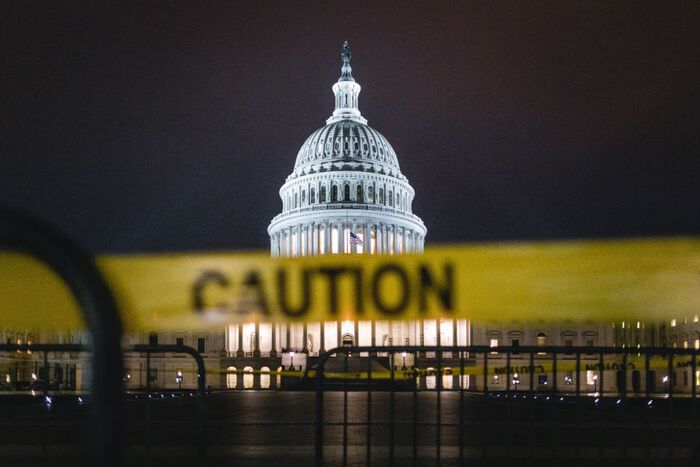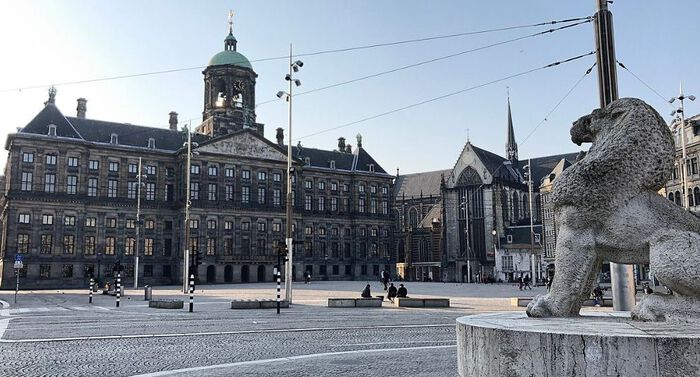
Over the last few weeks, the Dutch radical right has used curfew controversy to portray the government as a danger to the freedom of the average citizen. C-REX scholar Iris Beau Segers asks if the liberal-conservative VVD party might have themselves to blame, and argues that their ‘doctrine of normalcy’ has mainstreamed radical right ideas that now pose a challenge to the government’s covid-19 measures.
RightNow! - Page 6
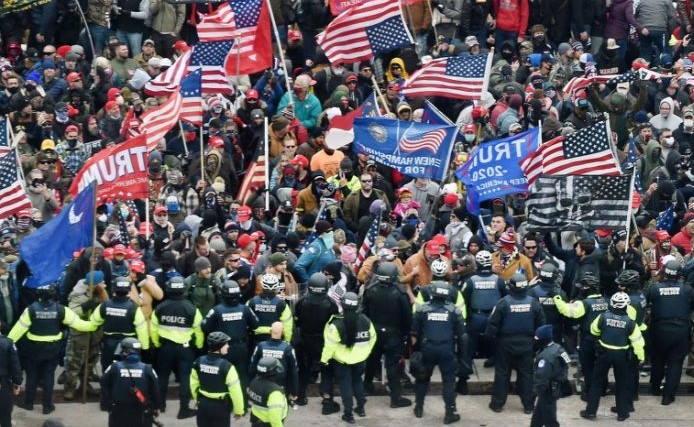
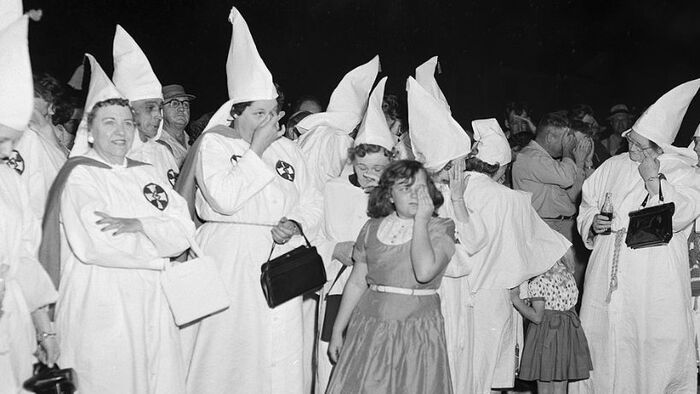
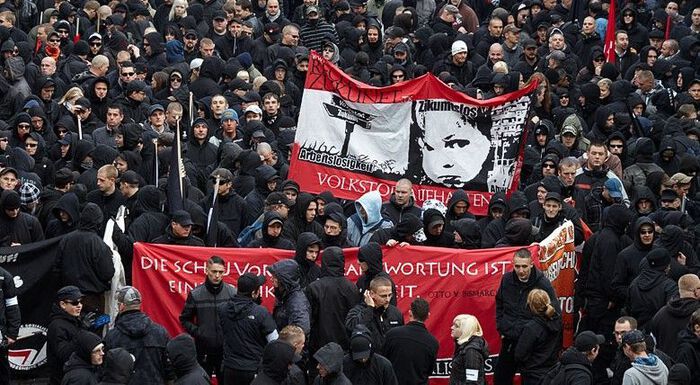
From fascistic rallies in the 20s, to the recent storming of the US Capitol: far right demonstrations are complex events, with large societal and political implications. German sociologist Fabian Virchow highlights the importance of analyzing how many people attend such demonstrations, and how they interact with their environment, in order to reach a more complex understanding of far right protest in their historical context.
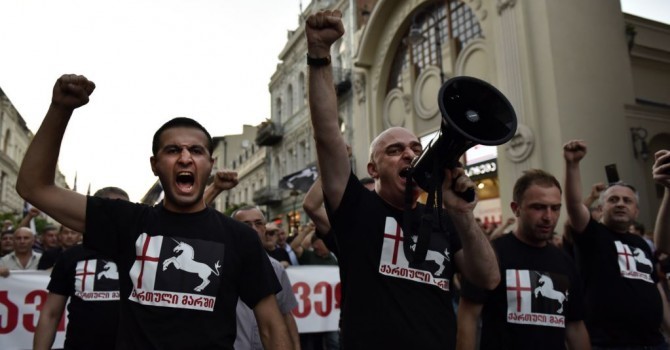
Taken together, the emerging groups of the Georgian far right obtained less than 5% in the October 2020 elections to the national Parliament. But limited electoral success does not mean that the far-right has limited political power, in Georgia and elsewhere in the world.
As seen on January 6th, 2021, once disparate tendencies within the radical right are mixing and collaborating as never before. The very core technological features of the internet and world wide web have played a crucial role in this process of integration.
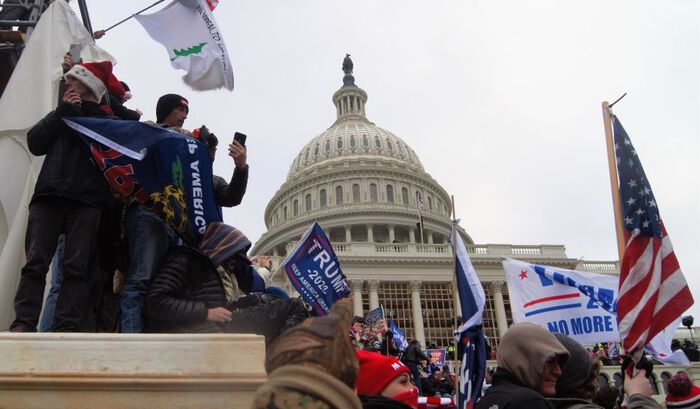
With the siege on the U.S. Capitol Building, right-wing extremists with disparate agendas and goals seized a political opportunity to move into violent action and accelerate social chaos. While there are still many unknowns, six questions are likely to be key to what will happen in the U.S. in the near future.
The January 6 attack on the US Capitol was not unexpected. It was anticipated by numerous warning signs, and it built upon a years-long process of radicalisation that involves, but is not limited to, Trump supporters.
Policies to prevent radicalization and violent extremism frequently target militant Islamists, right-wing and left-wing extremists. In a recent study we have examined what distinguishes the ways in which local practitioners perceive and respond to each of the milieus. Our results show that there is a clear discrepancy between the uniform way violent extremism is presented in policy, and how front line practitioners experience the different forms of extremism at the local level.
White women have long been part of white supremacist movements in the U.S. and elsewhere. That continues today. But what place do they occupy in deeply misogynist movements that force white women into idealized categories of white mother, sexual partner, or racial fighter?
Discussions on the fourth wave of far-right politics, referring to its mainstreaming and normalization, can not ignore the role of social media platforms in current-day politics.
This week the Dutch Forum for Democracy (FvD) experienced yet another scandal, but this time the infighting did not favor Thierry Baudet. And so, four years after founding the party, and less than half a year before the next Dutch parliamentary election, Baudet has resigned as party leader, and withdrawn from the top spot on the electoral list, and we can all refocus our attention on the real leader of the Dutch far right, Geert Wilders.
As the volume of research on terrorism and far-right extremism (FRE) grows, so too does a corresponding recognition for a need to pay greater attention to research methodology, especially as this applies to participant interviews.
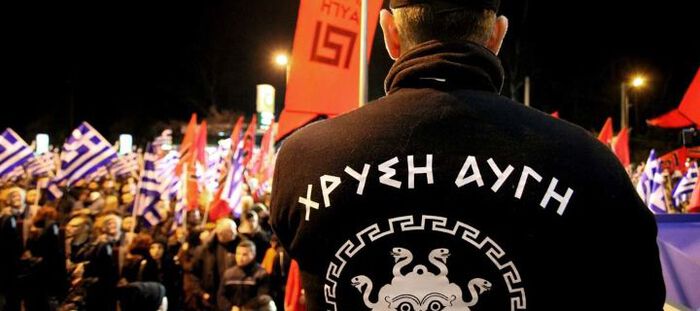
While the Golden Dawn verdict is a positive step for Greek democracy, it is still important to understand why circa 500,000 Greek citizens voted this criminal organization in the parliament, despite the fact that its violence was well known. The Golden Dawn is an openly neo-Nazi party and its rise in Greek politics should be understood not just as the product of Greece’s economic malaise, but rather of the culmination of the economic crisis into an overall crisis of democracy and political representation.
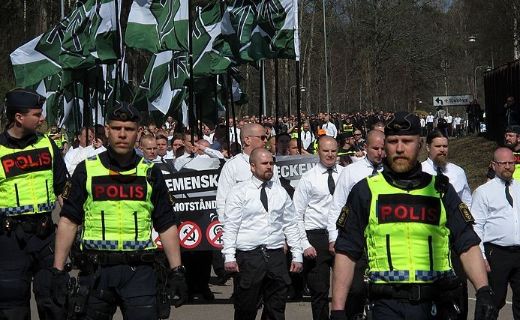
The Supreme Court of Finland issued a ban on the neo-Nazi Nordic Resistance Movement in the September of 2020. The historical decision follows a case that has been ongoing for several years and has already seen the Finnish right-wing extremist scene change in different ways.
Suicide attacks are virtually absent in far-right terrorism. A recent study of the subcultural, strategic, and historic references to martyrdom, self-sacrifice, and suicide in the contemporary far right shows the potential reasons for this, highlighting the peculiar political mythology of “martyrdom” that characterizes this extremist environment.
Focusing on fixed categories of far-right membership both obscures an important source of information about the far right and mistakenly identifies youth as having static identifications with political and ideological scenes.
What are the consequences of being labeled as a “violent extremist”? How does labeling affect individual activists, their organizations, and the social movement they are part of? In a recent study, we show that labeling – and the associated stigma – affects different radical groups in different ways and that it sometimes fails to demobilize the primary targets of the repressive actions, that is, the most militant groups. Rather, the effects are most evident amongst organizations that mobilize inclusively and openly, using primarily conventional protest tactics. From this we highlight the potential “backfire effects” of labelling, as the most militant groups might be further radicalized by this form of soft repression.
Efforts to implement “Muslim bans” and “extreme vetting” as a way to prevent Jihadism are rooted in a fundamental misconception: that Muslim immigrants bring violence and that Islam is more prone to violence than other religions. Our study shows that Jihadism is not like an exotic virus that one can “keep out”. Rather, it is like a cancer: it can appear anywhere in the world, and it is more likely under certain environmental circumstances, notably relative deprivation. Policy makers may therefore find it more effective to reduce the threat of Jihadism by reducing the stigmatization of Muslims living in the West, rather than banning Muslim migrants.
In recent years, Greece has experienced more severe right-wing violence per capita than any other country in Western Europe. It is long past time for a more comprehensive and effective response to far-right extremism.
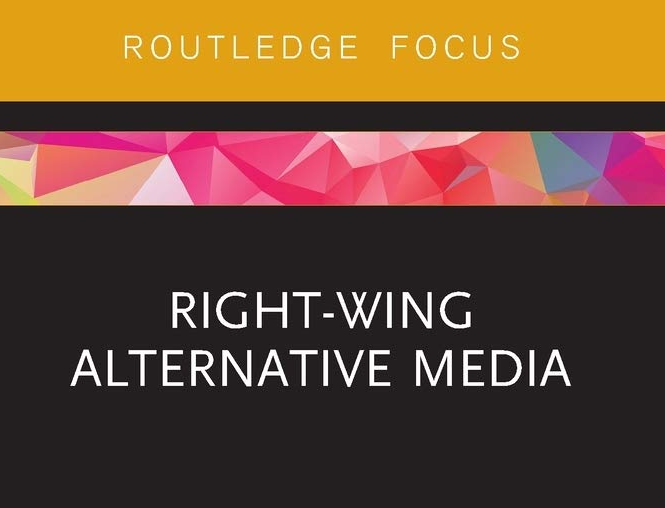
Every month, Right Now! publishes the book reviews that have appeared in the latest volume of E-Extreme the newsletter of the ECPR Standing Group on Extremism & Democracy. In this post, David Jofré (University of Glasgow) discusses Kristoffer Holt's Right Wing Alternative Media.
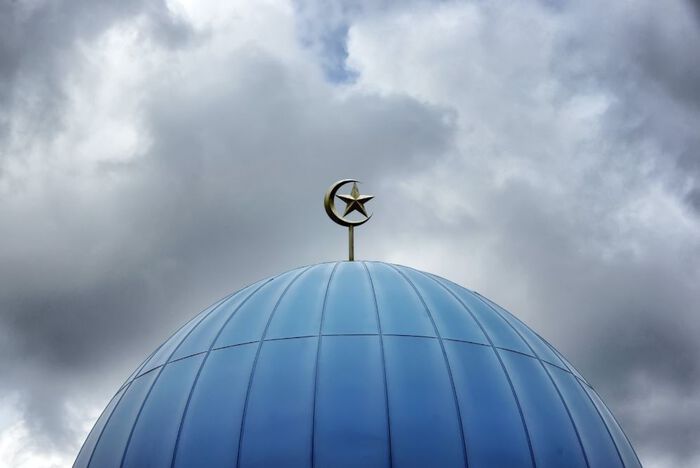
Are European party systems experiencing the emergence of a ‘new’ religious cleavage originating from the exclusion of Islam? In a study recently published in Party Politics, Jakob Schwörer and Belén Fernandez-García show how religious discourses have increased substantially among radical right parties since the turn of the century and that nativist out-group constructions are a crucial driver for positive references to Christianity and secularism.
No other country in Western Europe has in recent decades experienced as much severe and deadly right-wing violence as Germany. Moreover, the nature of this violence is more complex than in other countries, making it even more difficult to prevent.
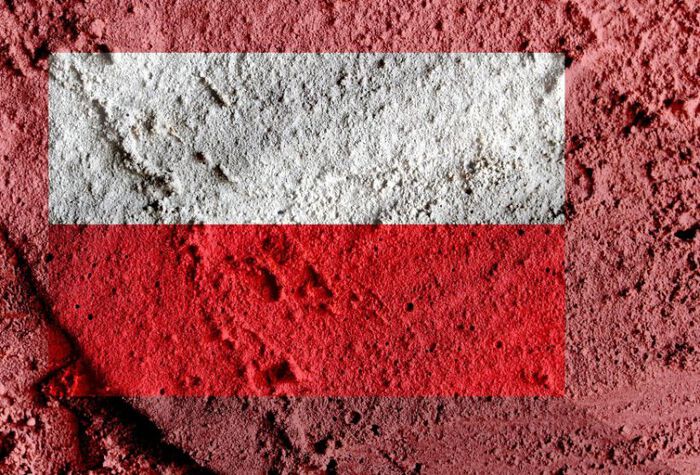
In less than two weeks, and amid much turbulence, Poland will choose its next President. Far-right politics plays a complex role in the election. While incumbent Andrzej Duda adopted strong anti-LGBTQI stances in the first round, the run-off seems to become framed as a broader contest over voters of far-right challenger Konfederacja. For the liberal opposition such strategy might nonetheless turn out to be double-edged. The stakes are high, as the outcome of the close race between Duda and his pluralist challenger Rafał Trzaskowski can mark a turning point for liberal democracy in Poland.
Few countries in Western Europe experience as much severe right-wing violence as Spain. However, the nature of right-wing violence in Spain differs from most other countries as it is seems more related to old, rather than new, political conflicts.
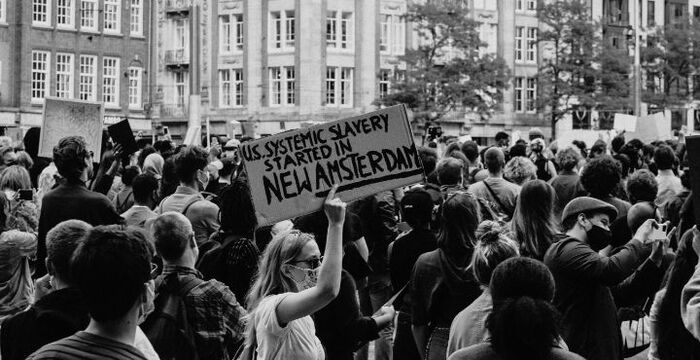
Black Lives Matter has shaken up political discussions about racism across the globe. In the Netherlands, it has led to yet another escalation around the ‘Black Pete’ controversy, discussed in this blog earlier this year. Despite the widespread protests and the unprecedented public engagement against racism and police violence in the country, Iris Beau Segers argues that the empty rhetoric, inaction and opportunism of (radical) right politicians indicates their continued reluctance to tackle institutional racism at its roots.
While the year 2019 in Western Europe was neither very violent in terms of fatal attacks, nor particularly deadly in terms of fatalities, we witnessed a worrying emerging global trend of right-wing lone-actor terrorists carrying out, or trying to carry out, mass-casualty attacks. Here are some main findings from the RTV Trend Report 2020.

RightNow!
Welcome to the “RightNow!” blog where you will find commentary, analysis and reflection by C-REX’s researchers and affiliates on topics related to contemporary far right politics, including party politics, subcultural trends, militancy, violence, and terrorism.
“RightNow!” also provides a platform for republishing op-eds by our core team of experts (with due acknowledgement of course) which have been published by newspapers and on other blogs in order to further highlight the breadth of our work here at C-REX. The articles give the views of the authors, not the position of the Centre for Research on Extremism.
To submit proposals and comments, contact the RightNow! editor Nina Høy-Petersen.
.jpg)