Anti-Muslim racism can hide behind a friendly smile, an offer of help or a declaration of support for equality. Uzair Ahmed and Nina Høy-Petersen explore Muslims’ encounters with exclusion in their daily life, and why a tolerant self-image does not necessarily translate into equal opportunities.
RightNow!
Welcome to RightNow! Explore insights from C-REX researchers and other experts on contemporary far-right politics, including party dynamics, cultural trends, militancy, violence, and terrorism.
In light of knowledge about the perpetrators of far-right extremist attacks in Norway, Alida Skiple questions the Norwegian strategy to prevent radicalisation and identifies a distinct set of blindspots in the Norwegian approach.
The Great Replacement theory is sanitized and mainstreamed in political debates through the policy proposal of ‘remigration’. As the conspiracy narrative is translated into the more palatable language of public policy, it gains ground and legitimacy, explains Luca Mancin.
Outlining the characteristics of violent and non-violent right-wing extremism in Norway since the terrorist attack on July 22, 2011, Anders Ravik Jupskås and Jacob Aasland Ravndal argue that we need a better understanding of where the “battle” is being fought.
Fossil fuels are once again driving US foreign policy. Under Trump 2.0, resource power is back—at home, abroad and with consequences for the global climate.
Muhammet Derviş Mete examines how terrorism charges increasingly function as a powerful political instrument across different established democracies to silence opposition, suppress dissent, and undermine freedom of speech and assembly.
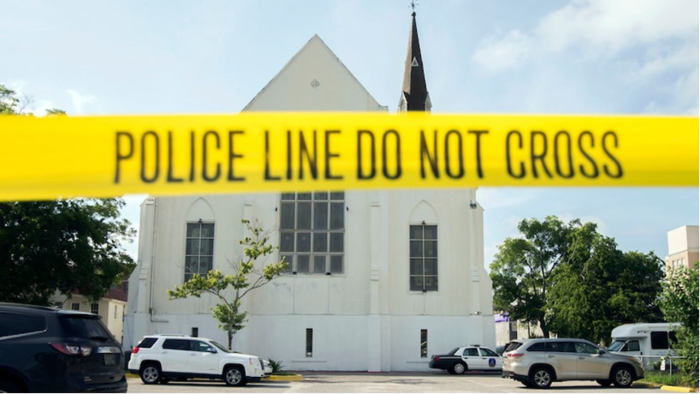
Studies on public responses to terrorism find that right-wing extremist attacks, relative to Islamist extremist attacks, tend to receive less media coverage, are less likely to be labelled as terrorism, and more likely to be perceived as isolated events caused by individual and psychological factors rather than ideology. Consequently, scholars argue that there exists a so-called “double standard” in how Western societies respond to violent extremist attacks depending on who the perpetrator is.
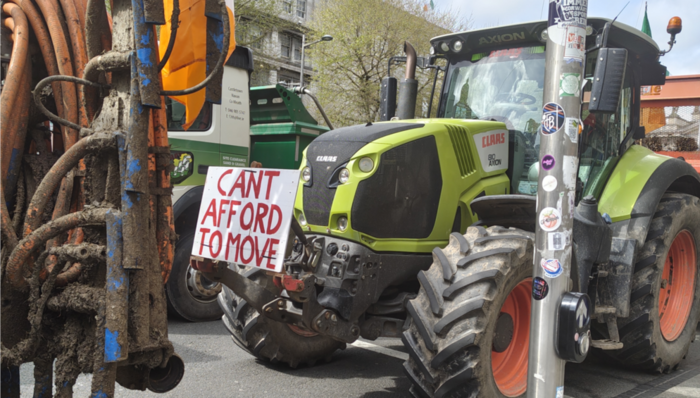
Rising fuel prices in Ireland and ensuing protests have become a far-right rallying point. And while thus far failing to meaningfully unite the far-right domestically, these events have become particularly important for international provocateurs seeking to further their own agenda, explains Shaun McDaid.
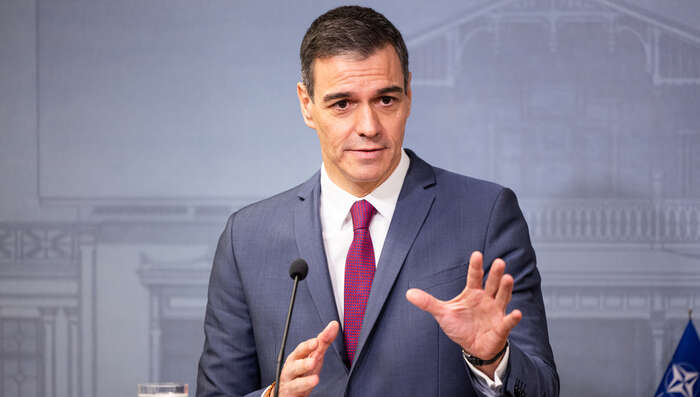
As far-right politics reshape European democracies, Spain's Prime Minister Pedro Sánchez has taken a strikingly different path - doubling down on “NO” to the wars in Gaza and Iran, and progressive, universalist policies rather than accommodating the far-right agenda. Will it cost him power?
In today’s digital age, online harassment has become more common, and researchers are no exception. This particularly affects those who work on politicized or contested topics, especially after they appear in the media or publish their work. How can we prevent and mitigate online harm? In this blog post, we argue that our response must be holistic, including individual, community, and institutional strategies.
Using novel data of organisations and their members in France, Michael C. Zeller shows how organisational bans impact far-right organising more broadly. A short network analysis reveals how bans produce fragmentation, but also adaptation by far-right movement actors.
Political mobilisation against trans people has escalated exponentially since the pandemic. This serves a clear far-right and reactionary agenda, but as demonstrated by the case of the UK, also has significant implications for politics beyond the far right.
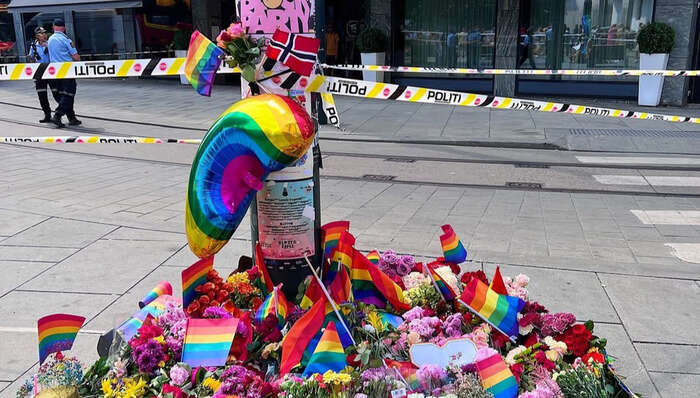
Based on a unique survey of the Norwegian LGBTIQ+ population following the Oslo Pride terrorist attack, Birgitte P. Haanshuus and Øyvind Bugge Solheim examine the consequences for those directly affected and for those indirectly affected through their minority group identity.
Analysing hate speech convictions, the authors find that it is unclear where Norwegian courts draw the line between distasteful expressions and criminal hate speech. Notable variations in individuals’ perceived culpability and legal protection against hate speech are discussed.
Joshua Farrell-Molloy elucidates how masculinity helps explain performances of militant republican aesthetics by Irish far-right actors, who bind a revolutionary past to contemporary opposition to immigration and present themselves as the latest generation of men stepping forward to defend Ireland.
Lara Helmke explores an obscure threat to German democracy posed by 'blood and soil' inspired groups who withdraw from the democratic system and form ethnically homogenous parallel communities.
Jessie Grainger writes about differences in Scandinavian populist radical right parties’ strategic support for LGBT rights to further the exclusion of “intolerant” immigrants and Muslims.
Recent developments suggest a deepening and more systematic convergence between school shooter culture and extreme right ideologies. These developments risk a broadening of the demographic profile, motivations, and strategies of potential perpetrators, writes Daniel Nikolaj Madsen.
The authors outline the many ways in which gender has relevance for violent extremism and propose seeing prevention work through a gender lens.
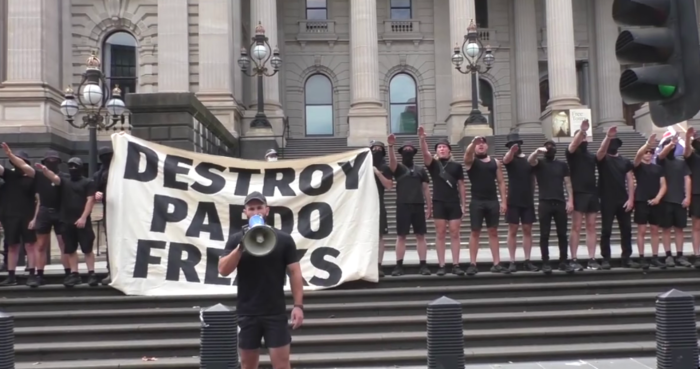
Just a month ahead of the Dutch elections, Léonie de Jonge and Iris B. Segers raise concerns about the growing normalization of extreme-right ideologies and actions, highlighted by the unprecedented violence that erupted during a recent anti-immigration demonstration in the Hague.
The murder of Tamima Nibras Juhar on August 24 is part of a long series of severe far-right and racist attacks in Norway in recent years. To prevent such attacks in the future, it may help to understand what Norwegian far-right violence looks like, who the perpetrators are, and what drives them.
In the era of ‘new’ and subtle forms of racism, it is important to remember that people’s lives increasingly take place online where racism remains overt. Fully comprehending the nature of contemporary racism requires improved knowledge of minorities’ experiences with online racism, its specificities and impact on victims, writes Marjan Nadim.
The organizers of the C-REX and VOX-Pol PhD summer school present key takeaways on the topics of methods, personal safety, ethics, community building for early-career researchers, and the importance of commemoration.
To cope with terrorist attacks, we look for signs that the perpetrators are somehow abnormal or monstrous. Often, they are more similar to the rest of us than we are willing to accept, writes Inger Storm Sandboe.
What prevents LGBTQI individuals from reporting hate crimes, and what are the experiences of those who do report? A new study uncovers why anti-LGBTI hate crimes are frequently left unreported in Norway.

RightNow!
Welcome to the “RightNow!” blog where you will find commentary, analysis and reflection by C-REX’s researchers and affiliates on topics related to contemporary far right politics, including party politics, subcultural trends, militancy, violence, and terrorism.
“RightNow!” also provides a platform for republishing op-eds by our core team of experts (with due acknowledgement of course) which have been published by newspapers and on other blogs in order to further highlight the breadth of our work here at C-REX. The articles give the views of the authors, not the position of the Centre for Research on Extremism.
To submit proposals and comments, contact the RightNow! editor Nina Høy-Petersen.
.jpg)