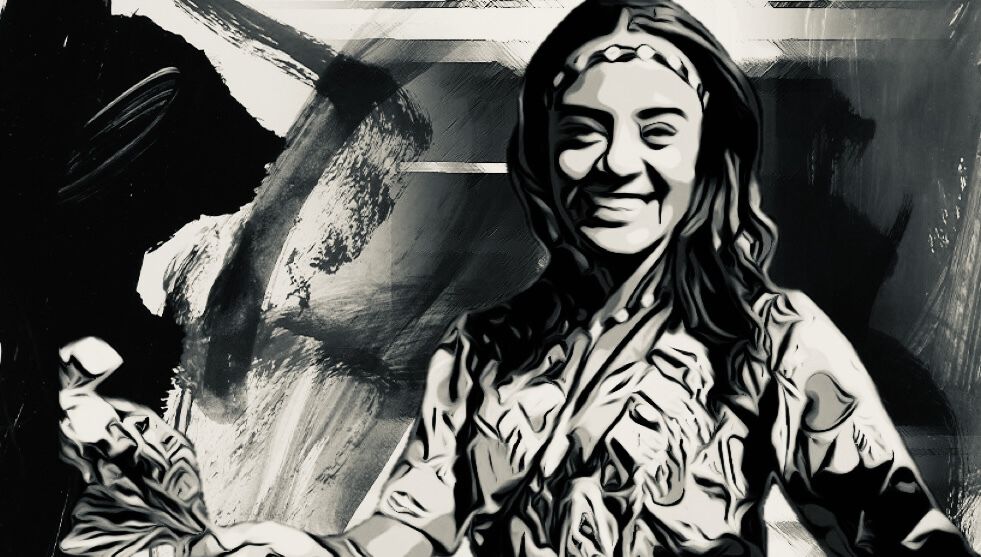
On August 24, just over three weeks ago, Ethiopian-born Tamima Nibras Juhar (34) was brutally killed on her night duty at an institution for child protection by an 18-year-old client with German citizenship who was born in Serbia. The suspect, who allegedly planned to commit further violence at a mosque, had been on the radar of the Norwegian Police Security Service (PST) since 2024 due to his extreme-right views. He expressed admiration for Hitler and strong anti-Muslim sentiments but was not considered an immediate threat by PST. Earlier this year, he participated in a chat group linked to the now-defunct far-right, anti-Semitic party Alliansen, and just days before the murder, he made a monetary transfer to the anti-Muslim, far-right organization Stopp Islamiseringen av Norge (SIAN). The killing is currently being investigated as a terrorist attack.
A long series of severe far-right attacks
The murder of Tamima is part of a long series of severe far-right and racist attacks in Norway in recent years. Since 2010, there have been at least 21 incidents of severe far-right violence, according to the systematic mapping conducted by the Center for Research on Extremism (C-REX) at the University of Oslo (the so-called RTV dataset). This is only the tip of the iceberg, as we only document the most severe incidents. Among 21 incidents, three of them had fatal outcomes, including the attacks on July 22, 2011, August 10, 2019, and now the attack on August 24, 2025. The human losses and suffering are extensive: 79 people have been killed, up to 300 have been severely injured, and many more are grappling with traumatic reactions and complicated grief as a result of far-right violence. The fact that this violence often targets random individuals solely because of their ethnic or religious backgrounds means that it generates significant fear within our minority populations and must be taken very seriously.
Of course, far-right and racist violence is not a new societal problem in Norway. In both the 1970s and 80s, there were several severe attacks, and the 1990s witnessed a wave of racist violence that culminated in the 2001 murder of Benjamin Hermansen. This is by no means a closed chapter; there have been approximately one to two severe attacks per year since 2010. In fact, our data shows that far-right violence is a significant societal problem in Norway, even when compared to many other countries. In terms of the number of attacks per capita, Norway ranks above average in Western Europe, surpassed only by Germany, Sweden, the United Kingdom, and Italy. Norway also has the highest number of victims, largely due to the highly lethal terror attack on July 22, 2011.
Various Forms of Violence
In our ongoing research project examining the perpetrators behind severe attacks that have occurred in Norway since July 22, 2011, we are already seeing the outlines of four distinct types.
The first and most prevalent form is spontaneous yet targeted group violence. This violence is perpetrated by two or more individuals, usually relatively young men, who collectively attack random victims due to their ethnic or religious minority background, often in urban settings. During these attacks, perpetrators frequently make racist claims, asserting that the victims should "go back to where they came from," that there are "too many of them here," or that they are rapists and criminals. One example occurred in Kristiansand in 2017 when a Tunisian man was assaulted at the bus station by two men in their 20s. They uttered a series of racist remarks before beating and kicking the victim while he was lying on the ground.
The second form is racist drunken violence, characterized by perpetrators who are heavily intoxicated at the time of the offense. This violence is also spontaneous and may be committed by both affluent and financially marginalized individuals. While several of these perpetrators claim in the aftermath that they are not racists, the violence appears racially motivated based on statements directed at the victims’ presumed ethnic or religious backgrounds. One example occurred in Florø in 2015, when an affluent man in his 40s attacked a Muslim taxi driver because the driver was unwilling to discuss a recently conducted Islamist terrorist attack in Paris. He later claimed in court that he only hated ISIS and not Muslims in general.
The third form is socially burdened racist violence. This type is characterized by perpetrators who face significant economic, social, and/or mental health challenges. Their motivations for violence are often shaped by personal difficulties combined with diffuse racist notions rather than by strong ideological convictions. In one such instance from 2021, a long-term female drug addict in her late 30s, with an extensive criminal record and a history of compulsory mental health care, attacked a mother of immigrant background and her son in Oslo.
The fourth form is far-right terrorism, characterised by a desire to instill fear in the general population, particularly among minority groups. This category includes the incidents of July 22, August 10, and a lesser known but highly severe attack in 2019, when a young woman was struck in the head with an axe. The perpetrator later explained that he aimed to target "a foreign girl" to scare immigrants, and that he was inspired by the July 22 terrorist. Much of the information available thus far suggests that the murder of Tamima Nibras Juhar was also a far-right terrorist act.
Notably, the organised and ideologically motivated group-based violence that was more prevalent in the 1990s and long viewed as the greatest threat – is now nearly absent in Norway. The only severe attack that may fall under this category since July 22, 2011, occurred in Oslo in 2015, when three heavily intoxicated men with ties to neo-Nazi groups attacked two men of Kurdish descent.
Different dynamics
Far-right terrorism is characterised by quite different dynamics than other forms of racist violence. Although these attacks are typically also perpetrated by young men, just like the group-based violence, they are premeditated rather than spontaneous and usually involve an intention to inflict as much harm as possible. The attacks are all executed by lone actors, meaning that the perpetrators prepare and carry out the attacks alone and at their own initiative, although they are often part of extremist communities online. This trend aligns with a more general pattern observed across Western Europe, where nearly all fatal terrorist attacks are carried out by lone actors.
For some of these lone actors, including the Norwegian terrorists, online radicalisation plays a central role. Online radicalisation occurs when extremist websites and communities supersede other sources of information and alternative forms of social interaction and belonging. The internet also contributes to the development, reinforcement, and legitimisation of these terrorists' ideological beliefs. For instance, the terrorist from the August 10 incident described his encounter with the so-called “intellectual dark web” as a “Matrix moment,” realising that the world he knew was built on lies and falsehoods, and that an alternative truth existed, online. Subsequently, he quickly found himself immersed in the conspiratorial environments of sites like 4chan and 8chan, ultimately drawing inspiration from the manifesto of the terrorist behind the Christchurch attack in New Zealand in 2019. In other words, lone actors commit violence on their own but often see themselves as part of a larger far-right community.
Ideology and Psychiatry
Although also pronounced in the category we presented as socially burdened racist violence, all the cases of far-right terrorism that have occurred in Norway involve perpetrators with varying degrees of mental health issues. This is aside from the attack three weeks ago, of which we currently have limited information. The initial psychiatric evaluation of the July 22 perpetrator concluded that he suffered from paranoid schizophrenia. He was later found to be legally sane, but was diagnosed with narcissistic personality disorder, antisocial personality disorder, and histrionic personality disorder, in addition to possible Asperger syndrome. Similarly, albeit also found to be legally sane, a recent evaluation of the August 10 terrorist argues that he was psychotic at the time of the offense and now suffers from schizoaffective disorder. The perpetrator of the severe axe attack was diagnosed with autism, a developmental disorder, intellectual disability, and paranoid schizophrenia. As a result, and in contrast to the other two cases, he was found not legally sane. What these terrorist acts illustrate, then, is how ideology and psychiatry are not mutually exclusive conditions; rather, the interaction between them can literally be life-threatening.
Tailored Prevention
Summarising the knowledge of Norwegian perpetrators of far-right violence presented here, we see, on the one hand, various forms of spontaneous racist violence, comprising attacks triggered by factors such as substance abuse, group dynamics, and social strain – often a combination of these elements, and on the other hand, premeditated and ideologically motivated terrorist attacks, almost exclusively carried out by lone actors. However, even when it comes to terrorist attacks, online group dynamics, substance use, and crucially (in the Norwegian cases) mental health issues may act as reinforcing factors.
These different forms of far-right violence call for more tailored prevention measures. In Norway, the police have been assigned a central role in preventing radicalization and violent extremism, but this is a challenging task considering the complexity of the violence. Many relevant preventive measures lie outside of the responsibilities and capabilities of the police, instead falling under municipalities, schools, child welfare systems, and health services. While the police play a key role in countering terrorist attacks in collaboration with the Police Security Service (PST), it is difficult to achieve this without closer cooperation and improved information-sharing among public agencies and authorities.
A Shared Societal Responsibility
One common denominator for all the incidents described here is that the victims are chosen based on racist and far-right beliefs. Such beliefs cannot be countered by the police. This is rather a shared societal responsibility, involving strengthened democratic resilience against racism, anti-Muslim sentiments, and other forms of xenophobia. Particularly important is countering the notion that individuals with minority backgrounds, like Tamima Nibras Juhar, pose a threat to Norway. In reality, it is far-right violence that represents a persistent threat to Norwegian minorities and, by extension, to our democracy.
This post presents a re-worked version of an op-ed originally published in Aftenposten 10.09.2025 (in Norwegian).