Published
Oct. 26, 2026 12:02 PM
“Civil servants are not elected by the people, unlike politicians,” says Alicia Saes-Louarn.
Sign up for our newsletter to get news and invitation to events.
“Civil servants are not elected by the people, unlike politicians,” says Alicia Saes-Louarn.
Listen to the ARENA Lecture 2025 as a podcast episode.
“I think if the planetary grand strategy of the EU continues 2050 will pass with a little less sense of potential doom,” says Mai’a Cross.
And how is this relationship shaped by Donald Trump’s tariffs on trade, and by the war in Ukraine? Learn more in the latest episode of Arena Europa.
“They were not ready for the radical nature of the changes that the Trump administration brought with it,” says Erik Jones in an episode of the podcast Arena Europa.
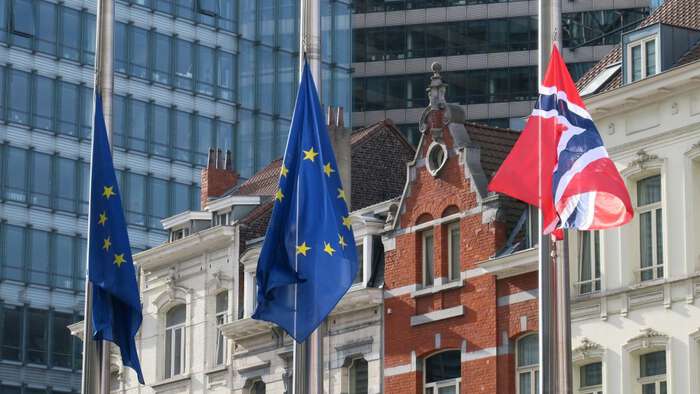
How is Norway connected to the EU power market? And who benefits from this cooperation?
The US under Donald Trump is breaking with the liberal values that international cooperation is based on. How did we end up here? And what is Europe doing?
In this first episode of Arena Europa, Professor Craig Parsons explains how the American and European internal markets work and which ideologies lie behind them.
Elena Escalante-Block has arrived at ARENA on a Marie Sklodowska-Curie fellowship to study the big antitrust cases in the European Commission.
"It is a persistent democratic problem that Norwegian citizens have no influence over laws and regulations that come from the EU and apply in Norway," says political scientist Guri Rosén. She has been the secretary leader for a government-appointed EEA committee, delivering its recommendations on April 11.
COMPLEX welcomes submission of papers for a workshop on coherence in multi-level orders in Oslo on 22 April 2024. Deadline for paper proposals: Friday 1 March.
Researchers from the ARENA coordinated project EU3D explain the key takeaways from their research in short videos about main findings.
Are you interested in migration or the interaction of Norwegian and EU law? ARENA offers two master’s grants of 20,000 NOK each for students submitting their thesis Spring 2024.
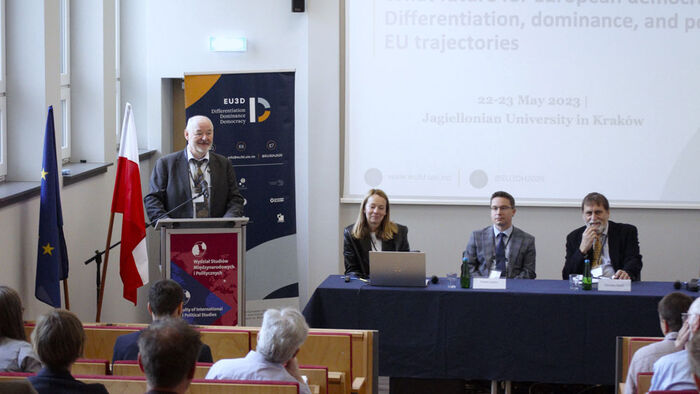
The EU3D concluding conference was spent looking back at four years of research – and discussing the reforms, challenges and future trajectories of the EU.
The NAV scandal showed several weaknesses in national agencies’ understanding and implementation of EU law. How did this happen and what can we learn from it? ARENA hosted a workshop to discuss these topics.
The IUROPA project launched the CJEU Database in January 2023. It is the most comprehensive research-oriented database on the Court of Justice of the EU.
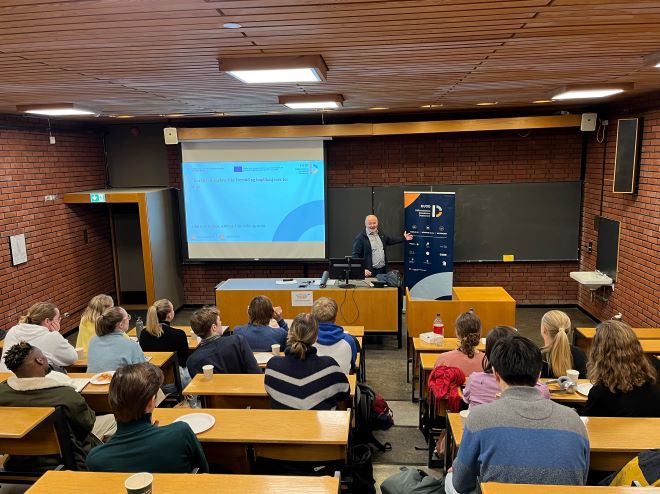
EU3D coordinator John Erik Fossum held a presentation and engaged in discussions with students about possible scenarios for Europe’s future and what those might entail for Norway.
Which direction is Europe developing and what are the most likely scenarios for the Union’s future? And how does the war in Ukraine affect the outcomes? These were among the questions raised in the Future of Europe Debate in Oslo.
In a new project, researchers will examine what the EU can do to prevent democratic backsliding among its own member states. – We are happy that we can finally launch the project, says ARENA Director Daniel Naurin.
A first-of-its-kind ARENA project compares political attitudes about internal-market governance in the EU and the US.
Through the project DiCE, ARENA has launched the world's first comprehensive online directory on differentiation and differentiated integration - DifferentiGate.
For four years, EUREX researchers have studied the ‘expertization’ of the political order. The recently finished project shows how more and more academics find their way to the public committees.
GLOBUS researchers have spent the last four years critically analysing the EU’s impact on global justice.
The project GLOBUS – Reconsidering European Contributions to Global Justice – has ended after four years of critical analysis of the EU’s global role. The final review of GLOBUS describes the project as “academically top-notch” and commends it for providing “a true value added for the research on the EU as a global player”.
Bringing together 20 partners across sectors and disciplines, the PhD network PLATO equips 15 researchers with innovative training at doctoral level. We asked our project partners about the benefits of collaborating with other sectors during a doctorate.