Webpages tagged with «democracy»

Jürgen Habermas, who died on 14 March 2026, devoted his academic life to examining the conditions for the public use of reason. He linked the hope for a society guided by public reason to the fact that, in democracies, there is no alternative to the human capacity for argumentation and learning.


What will be the final outcome of the European election and how will this affect Norway? Prominent researchers, journalists and politicians will discuss this during our event at Arendalsuka.
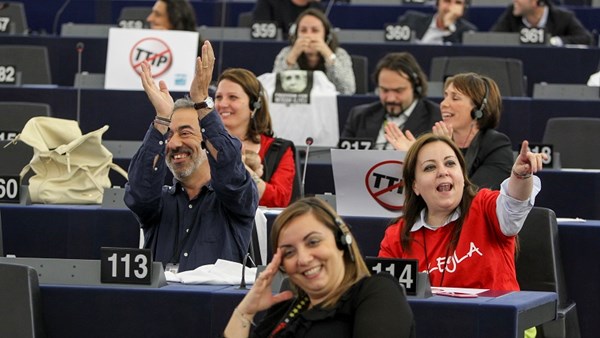
Members of the European Parliament have gained great influence in trade policy, thereby challenging the national monopolies of power. Often, they are perceived as a disturbing element in international negotiations.
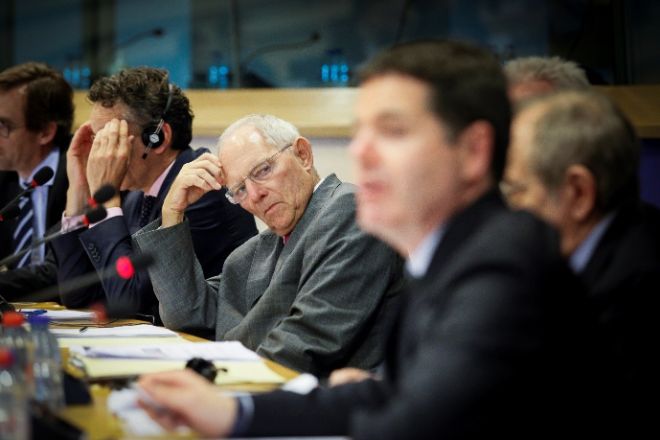
European decision-makers point to flexible relationships with the EU as a way to maintain their countries’ independence and autonomy. New research from ARENA suggests that political differentiation might in fact lead to the opposite, which does not bode well for the UK after Brexit.
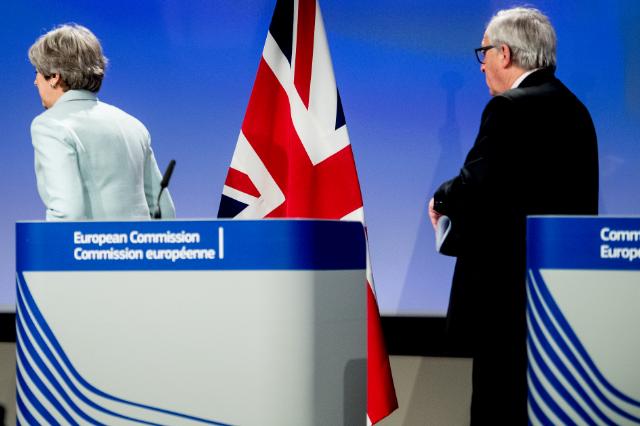
In this guest blog post, professor Christopher Lord of ARENA gives an alternative take on how to understand the struggle behind the Brexit negotiations.


The RECON-project (Reconstituting Democracy in Europe), concluded on 31 December 2011. The project that was initiated and coordinated by ARENA is now evaluated; mark: Excellent.

This is Erik O. Eriksens introduction to ARENA’s annual lecture May 2 2012: Challenges to Cosmopolitanism in Contemporary Europe, held by Professor Seyla Benhabib.

Some claim that the Norwegian ‘No’-campaigners won in 1994, but have lost ever since. Every government since 1994 has brought Norway closer to the EU. Where does this leave democracy?

Can there be democracy beyond the nation state, and in that case: which democracy for Europe?

Geert Mak has followed in John Steinbeck's path on his trip to the USA. Euope has much to learn from the American project whether we like it or not.
In this paper, Pieter de Wilde, Hans-Jörg Trenz and Asimina Michailidou analyse Euroscepticism as a form of EU legitimacy contestation.
ARENA Working Paper 14/2010 (pdf)
Pieter de Wilde, Hans-Jörg Trenz and Asimina Michailidou
The paper critically examines the democratic theory that informs the German Federal Constitutional Court’s Lisbon Treaty ruling, and argues that the ruling and the justification speak to several – distinctly different – models of democracy.
ARENA Working Paper 09/2010 (pdf)
Erik Oddvar Eriksen and John Erik Fossum
This paper contributes to the philosophical exchanges of Nussbaum’s version of the capability approach. Nussbaum herself presents her contribution as an alternative to John Rawls’ theory of justice, and following her lead, this paper compares Nussbaum and Rawls.
ARENA Working Paper 16/2010 (pdf)
Cathrine Holst
This paper evaluates the mediatizing potential of the internet on the politics of European integration and the process of enhancing the democratic legitimacy of the European Union (EU) through an analysis of online debates during the 2009 EU elections.
ARENA Working Paper 06/2010 (pdf)
Asimina Michailidou and Hans-Jörg Trenz
In this paper, Erik O. Eriksen claims that the EEA Agreement to a large extent has made Norway a de facto EU member. Norway's democratic deficit will increase as the cooperation within the EU expands and the institutions are reformed.
ARENA Working Paper 21/2008 (pdf)
Erik. O. Eriksen
In this paper, the author adopts a pragmatist approach to the European transformation from an order of largely independent nation-states to an integrated order with some capacity to rule in the name of all.
ARENA Working Paper 07/2010 (pdf)
Erik Oddvar Eriksen
In this paper Cathrine Holst looks at the gender justice in the EU. The paper is a critical discussion of the normative assumptions in the EU gender justice index that is to be launched in the near future.
ARENA Working Paper 22/2008 (pdf)
Cathrine Holst
In this article Trenz argues that the tension between normative standards and legitimating practice should be considered as constitutive for the emergence of a European public sphere. Against recent attempts to define the European public sphere in purely descriptive terms, this implies the need to re-introduce the normativity of the public sphere as part of the dynamics of an evolving communicative space in Europe.
ARENA Working Paper 12/2008 (pdf)
Hans-Jörg Trenz
In this paper Daniel Gaus seeks to counter assumptions about the structure of the interpretive pattern regarding the legitimacy of political rule. He claims to show an internal contradiction in the type of normative justification that aims to overcome a “touch of stateness” by explaining the EU’s legitimacy with its assumed non-statal character.
ARENA Working Paper 17/2008 (pdf)
Daniel Gaus
In this essay Fossum is discussing the politically divising issue in Norwegian politics- membership in the European Union. Through the EEA agreement Norway has become tightly incorporated in the EU, and this incorporation poses challenges to the Norwegian democracy. Fossum is treating this issue thorugh Holmes' notion of 'gag rules'.
ARENA Working Paper 04/2008 (pdf)
John Erik Fossum
In spite of relentless criticism over many years bureaucracies and bureaucrats are possibly experiencing a renaissance. The aim of this paper is to make sense of this puzzle by exploring bureaucracy as a specific way of organizing public administration in democratic societies. Through what processes and under what conditions is administrative organization likely to come close to the Weberian ideal type?
ARENA Working Paper 14/2007 (pdf)
Johan P. Olsen
This paper examines challenges and opportunities linked to democratisaton by constitutionalisation, drawing parrallels between the emerging European polity and experience from comparable entities such as Canada.
ARENA Working Paper 10/2006 (pdf)
John Erik Fossum
This paper is on whether the parameters of power politics in Europe are changing and whether the EU can be described as a cosmopolitan polity in the making. In other words: Is it the case that the popular sovereignty principe must yield to fundamental human rights?
ARENA Working Paper 09/2005 (pdf)
Erik Oddvar Eriksen