
Transitions, whether driven by new technologies or by normative goals like sustainability, are inherently political. Which solutions to prefer, how to regulate new technologies, which challenges to prioritize, and which problems to ignore? These are core political questions at the heart of transformation. And they raise another one: Who stakes the overall direction of change – and how do they go about doing it? These are the questions Sabine de Graaff explores in her PhD.
News from TIK
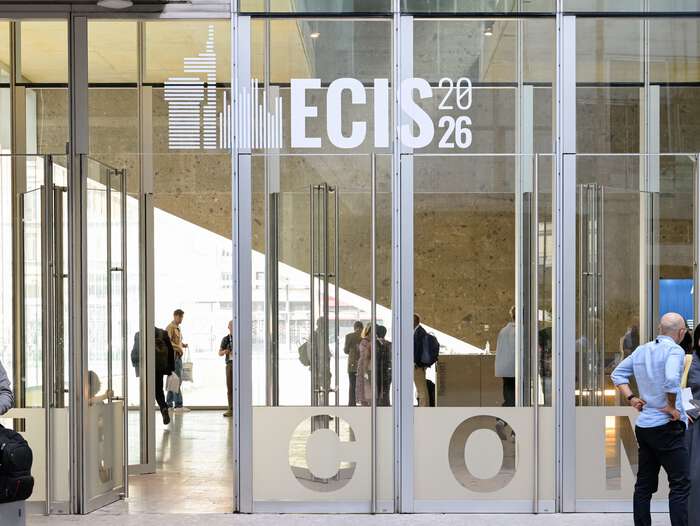
From Valencia to Milan to Zurich, our researchers have been out presenting work, organizing tracks, and connecting with the international innovation and transitions research community. Here's a quick tour of where we've been and where we're going.
As electrification, hydrogen, digitalisation, and circular economy initiatives spill across sectoral boundaries, this book highlights that researchers and policymakers can no longer afford to look at one system at a time. Transitions in energy ripple through mobility; shifts in mobility reshape mining, materials, and manufacturing; digital platforms reconfigure entire industries. The freely available book examines the complex, multi-system dynamics shaping industrial transformation in the context of climate change, digitalisation, and evolving policy frameworks. These dynamics are essential to research and policy design for the next stage of the transition.
What happens when theory meets the realities of policymaking? That is the question at the heart of Silje Svartefoss’ PhD project. Her research takes an up-close look at the process of implementing a mission-oriented innovation policy in practice.
On 27 February, Associate Professor Bård Lahn will give the talk "Unburnable oil: The geo-economic tools of making and unmaking fossil fuels" at Chalmers University of Technology in Gothenburg.
Ola Innset from TIK is this year's winner of the Eilert Sundt research award, which is awarded by Oslo Arbeidersamfunn. The awardee is pleased that his research has relevance beyond academia.
The research project and group Stakes of Democracy (University of Oslo) is offering a PhD course at the Centre Universitaire de Norvège à Paris.
Markus M. Bugge at the Centre for Technology, Innovation and Culture has been awarded NOK 12 million from the Research Council to examine the role of public administration in the ongoing energy transition.
The government's AI billion has been distributed. Six research centres for artificial intelligence have each received a share, with the Faculty of Social Sciences involved in half of them.
On 11 June, Professor Fulvio Castellacci presented a paper at a seminar hosted by RISIS - European Research Infrastructure for Science, Technology and Innovation Policy Studies.
Postdoctoral Fellow Bård Lahn was invited to the University of Vienna's event series on 10 April to give the talk "Unburnable oil: The geo-economic tools of making and unmaking fossil fuels".
On 8 April, Head of Department Kristin Asdal and Associate Professor Tone Huse gave the talk "The great economization of the Ocean: Following cod and doing empirical economy".
On 25 April, Head of Department Kristin Asdal held the talk "Nature-Made Economy: Cod, Capital, and the Great Economization of the Ocean" at Chalmers University of Technology in Gothenburg.
The TIK-researcher is awarded 12 million Norwegian kroner from the Research Council to map the digitalization of biodiversity's genetic resources in Norway and Brazil. She will particularly examine how this affects and challenges legal frameworks and governance mechanisms.
TIK Centre for Technology, Innovation, and Culture has been appointed as the coordinator for the SPARK programme at the University of Oslo (UiO), and this week hosted the kick-off for five SPARK projects – two of which are from the Faculty of Social Sciences.
The TIK researcher receives 12 million Norwegian kroner from the Research Council of Norway to map the long-term societal consequences of artificial intelligence in Norway and other European countries.
– The researchers at TIK have managed to demonstrate how collaboration across disciplines can contribute to generating new ideas and methods that are extremely important, especially in research on major societal issues, says Vice-Rector at the University of Oslo, Mette Halskov Hansen.
On November 8th, 160 participants from academia, as well as the public and private sectors, gathered for the final event. The conference summarized the results from eight years of research conducted by OSIRIS and its sister center, R-QUEST (Centre for Research Quality and Policy Impact).
Magnus Gulbrandsen at TIK Centre for Technology, Innovation and Culture receives 7.6 million NOK from the Research Council of Norway to investigate how research in the health sector is utilized.
As part of the 25th anniversary programme of the Nordic Embassies in Berlin, the Nordic Embassies, in cooperation with the University of Oslo and Humboldt-Universität zu Berlin, hosted a talk and panel discussion titled “Stakes of Democracy: Trust, Nature and Value in Times of Crises”.
Does asking researchers about the potential impact of their planned research have an impact? The need to solve grand societal challenges has increasingly moved to the fore in terms of legitimising public spending on research. Correspondingly, the potential societal impact of applicants’ proposed research projects is now commonly incorporated into research funders’ selection procedures. This shift does not seem to reduce the emphasis on excellence.
The evaluation of research impact has typically sought to assess the value of a research investment – an organisation, a funding programme, or a project. Focusing on the investment and connecting it to consequential outputs and impacts provides a clearly definable methodological starting point for evaluating impact. But research has value only in its use. So, what evaluation challenges appear if we want to shift our eye to the perspective of research users? How can we trace their roles in multiple processes of research valorisation and appreciate how they benefit? Sounds difficult. Here we propose five methodological principles for getting started.
The hiatus between the various editions of the UK REF exercise always seems to lead to debate about its future. Is it too expensive? Is it too burdensome? Is it the best way to allocate performance-based funding? Seven years ago, we looked at the relationship between the 4* research and 4* impacts submitted to REF 2017. Then, we found that the relationship between excellent research and societal impact in most fields was heterogenous, leading us to posit this diversity as a strength of the UK university system. Here we do the same for REF 2021, to see what has changed and consider whether there are any implications to be drawn for the proposed REF 2029.
Professor Timothy Mitchell at University of Colombia delivered "The big lecture" in a packed Auditorium 1. He painted with broad strokes the line of action from the economy and growth to the climate catastrophe in this year’s Eilert Sundt lecture.
Science can be metamorphically viewed as reservoir of knowledge. Just like a reservoir where water is stored in large quantities so that it may be drawn off for later use, science literally serves the same purpose. Knowledge and data can be stored for future uses when the need arises, but unlike water, the knowledge from science can be reused an indefinitely number of times. Obviously, use and reuse presupposes access to the stock of knowledge.