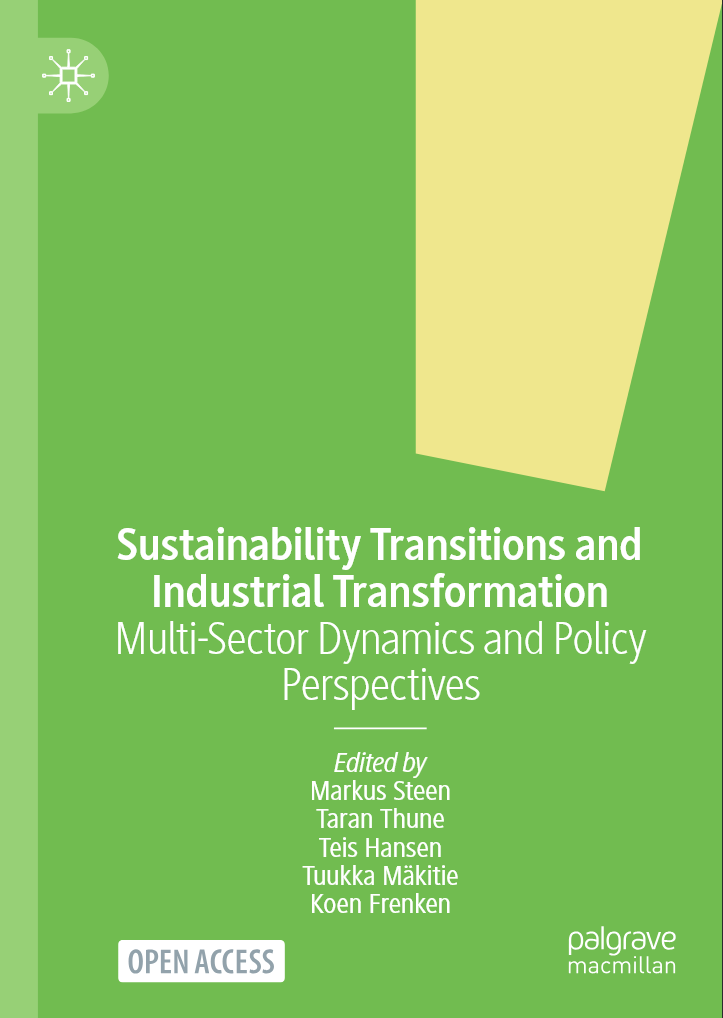
Buy or download the book: Sustainability Transitions and Industrial Transformation: Multi-Sector Dynamics and Policy Perspectives
Bringing together leading scholars and early-career researchers, the chapters are organised around three interconnected themes:
Multi-system dynamics in transitions. Chapters in this section develop and apply new conceptual frameworks for analysing how systems interact. Contributors examine how electrification and hydrogen forge new couplings across energy, mobility, industry, and food systems, how upstream value chains shape transition dynamics in focal sectors, and how institutions respond when disruptive innovations cross sectoral boundaries.
Firms and industries in transitions. This section foregrounds the role of agency - particularly that of incumbent firms in hard-to-abate sectors. Contributors examine how actors contest the meaning of circularity, how value-chain relationships shape sustainability reorientation, and how digitalisation often makes existing operations smarter and more efficient rather than fundamentally greener.
New perspectives on policy in transitions. The final section engages with the recent resurgence of industrial policy and the rise of mission-oriented and transformative innovation policy frameworks. Chapters analyse interactions between competing missions, the transformative potential (and limits) of green industrial policy, and whether 'twin transition' policy frameworks can credibly align digital and sustainability goals. Across these contributions, a recurring puzzle emerges: every transformative policy approach insists on the need for coordination across silos - yet how to make such coordination actually work in practice remains poorly understood. The recent rise of geopolitical and security priorities is making the question harder still.
 resurgence of industrial policy and the rise of mission-oriented and transformative innovation policy frameworks. Chapters analyse interactions between competing missions, the transformative potential (and limits) of green industrial policy, and whether 'twin transition' policy frameworks can credibly align digital and sustainability goals. Across these contributions, a recurring puzzle emerges: every transformative policy approach insists on the need for coordination across silos - yet how to make such coordination actually work in practice remains poorly understood. The recent rise of geopolitical and security priorities is making the question harder still.
Broad empirical reach
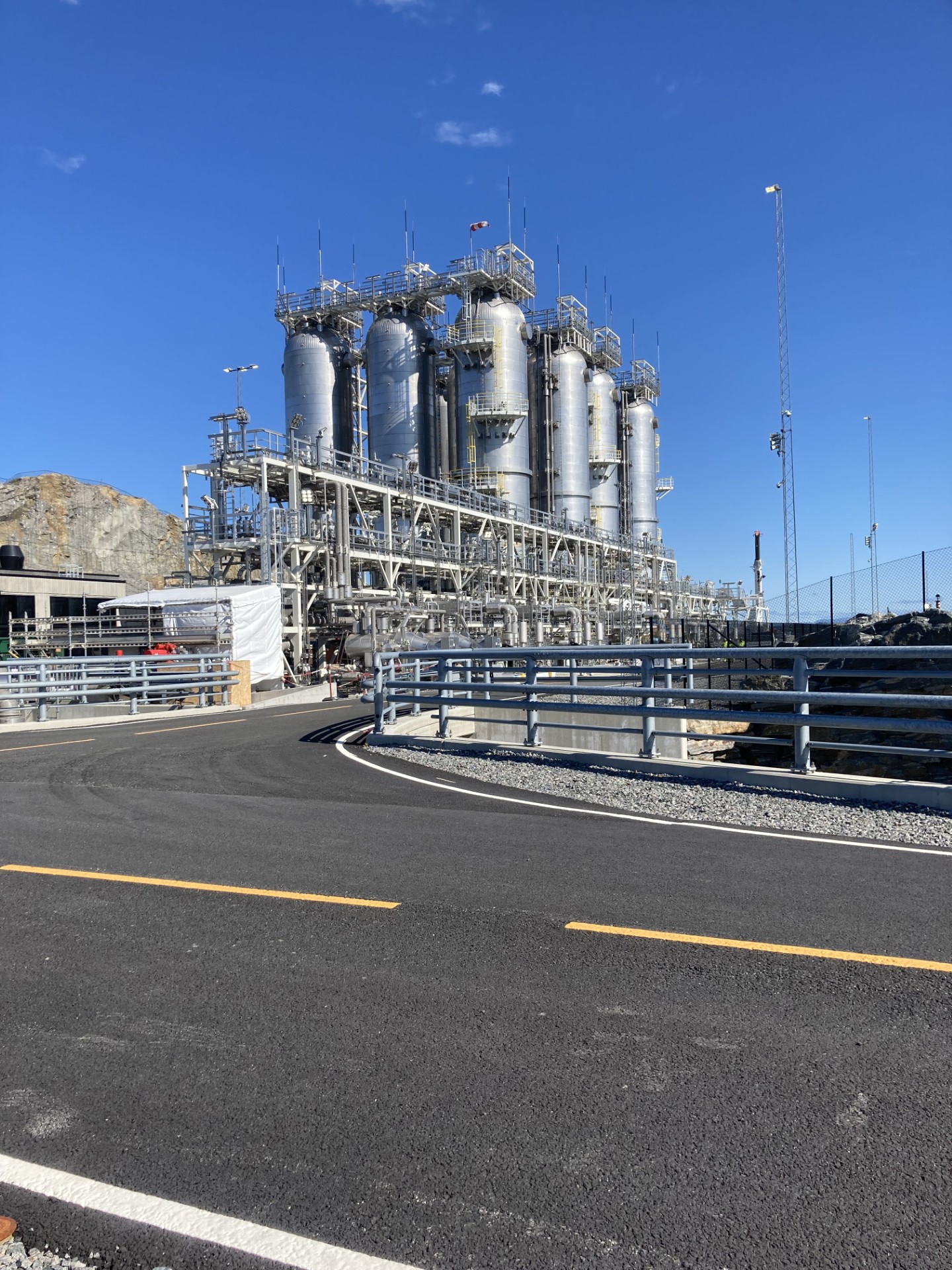
The book brings empirical attention to sectors that have historically received less coverage in transitions research: process industries, heavy-duty transport, shipping, oil and gas, aquaculture, and the upstream supplier industries needed to make decarbonisation physically possible. These sectors are now squarely in the firing line of post-Paris climate policy, yet the analytical toolkit for understanding their transformation remains underdeveloped.

The book also engages directly with digitalisation as a transformation force in its own right and subjects the much-discussed 'twin transition' to critical scrutiny. Several chapters show that while digital technologies can accelerate radical change they can, just as easily, entrench existing unsustainable regimes by optimising rather than transforming them.
Open access INTRANSIT book
Edited by Markus Steen (SINTEF), Taran Thune (University of Oslo), Teis Hansen (University of Copenhagen / SINTEF), Tuukka Mäkitie (SINTEF / University of Oslo), and Koen Frenken (Utrecht University), the book gathers seventeen chapters from researchers working at the intersection of innovation studies, economic geography, management, and policy analysis. The book is a flagship output of INTRANSIT — the Centre for the Study of Innovation Policy for Industrial Transformation, Sustainability and Digitalization.
Published by Palgrave Macmillan as an open access title under a Creative Commons Attribution 4.0 license, the book is freely available to researchers, policymakers, students, and stakeholders worldwide.