Transitions, whether driven by new technologies or by normative goals like sustainability, are inherently political. Which solutions to prefer, how to regulate new technologies, which challenges to prioritize, and which problems to ignore? These are core political questions at the heart of transformation. And they raise another one: Who stakes the overall direction of change – and how do they go about doing it? These are the questions Sabine de Graaff explores in her PhD.
News
From Valencia to Milan to Zurich, our researchers have been out presenting work, organizing tracks, and connecting with the international innovation and transitions research community. Here's a quick tour of where we've been and where we're going.
As electrification, hydrogen, digitalisation, and circular economy initiatives spill across sectoral boundaries, this book highlights that researchers and policymakers can no longer afford to look at one system at a time. Transitions in energy ripple through mobility; shifts in mobility reshape mining, materials, and manufacturing; digital platforms reconfigure entire industries. The freely available book examines the complex, multi-system dynamics shaping industrial transformation in the context of climate change, digitalisation, and evolving policy frameworks. These dynamics are essential to research and policy design for the next stage of the transition.
What happens when theory meets the realities of policymaking? That is the question at the heart of Silje Svartefoss’ PhD project. Her research takes an up-close look at the process of implementing a mission-oriented innovation policy in practice.
In our recent research in the oil and gas sector, we started observing the phenomena of ‘climate quitting’. For our research, we interviewed dozens of people, and got a sneak preview of our results published in ‘the Conversation’.
An important (and somewhat contentious) question in the energy transition is the role of large established actors, like oil and gas companies. We know these companies have a lot of resources, competencies, and influence that could contribute to a transition, but we also know they are companies that may benefit from the status quo. This means that how established organizations change and react to change, becomes an important question. We sat down with PhD candidate, Hannah Schupfer, to learn more about her research into these questions.
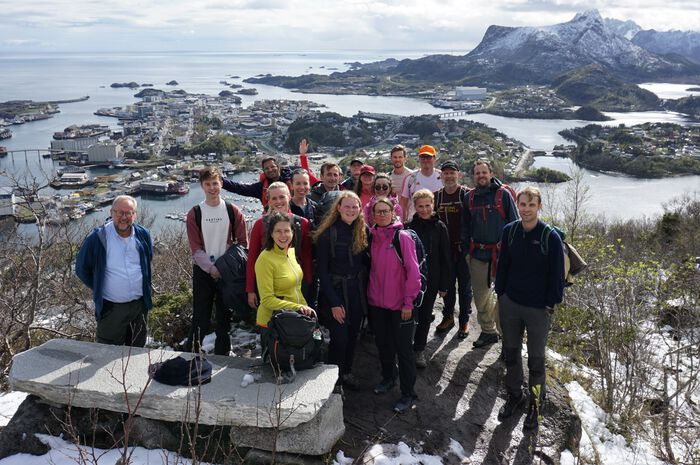
INTRANSIT gathered in Lofoten to reflect on our research and discuss avenues for further work. Among fishing boats and shipbuilders in Svolvær, we discovered we have much to say about industrial transformation. And among June snow and mid-night sun, our fantastic group of people had a chance to connect.
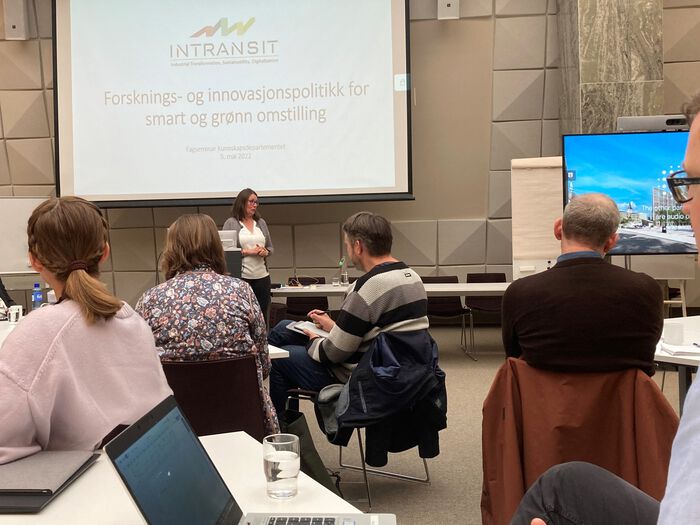
A challenge in transitions is how to efficiently link research with policymakers' current issues, problems, and questions. With that in mind, INTRANSIT, the Norwegian Research Council, and the Ministry of Education and Research hosted a seminar for informal discussions between researchers and bureaucrats from different ministries.
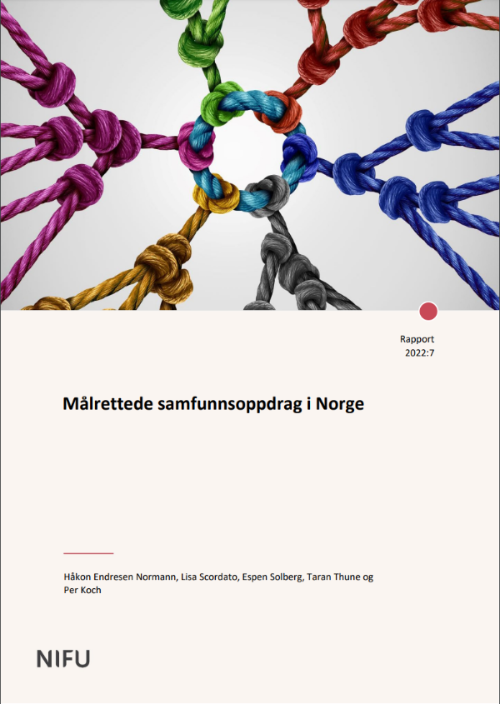
Centre director, Taran Thune, has contributed to a new report on how missions can be used for tackling grand societal challenges in Norway.