This text has been translated from Norwegian with the assistance of GPT UiO.
88 applications were evaluated in this round of applications for groundbreaking research through the Research Council's FRIPRO program. Now, 23 of them will receive funding totaling 216 million kroner to promote new knowledge initiated by the researchers.
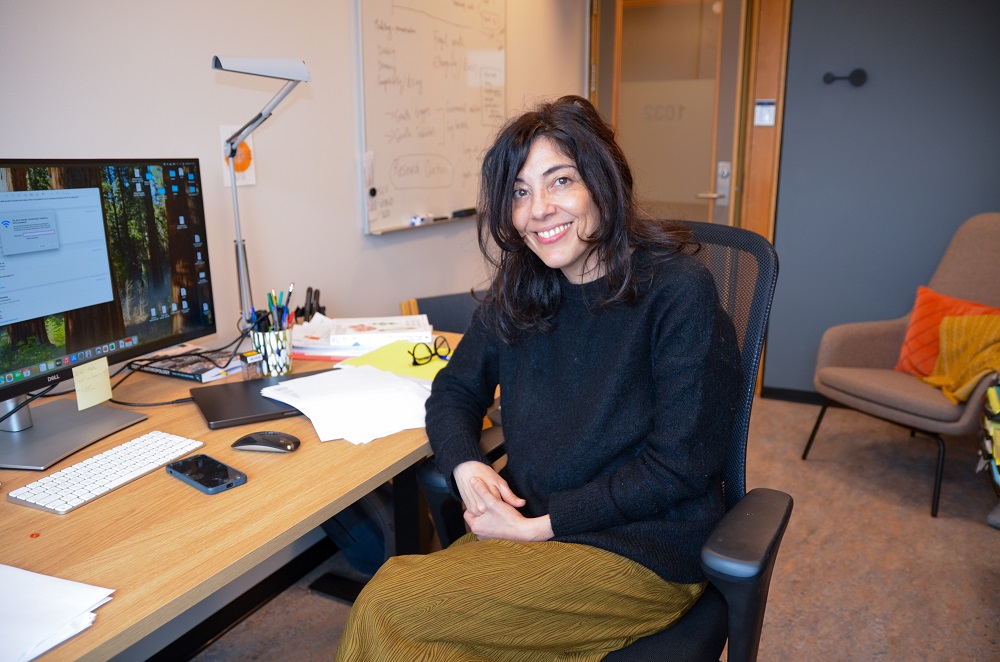
– For me, this means that I get the opportunity to delve deeper into a topic that I have started working on and find very important and exciting. Having the chance to research this in the long term is something I greatly appreciate, says Ana Maria Delgado, who is an associate professor at the TIK Centre for Technology, Innovation and Culture at the Faculty of Social Sciences at the University of Oslo.
The project DataMines: Governing data infrastructures and clouds in digitally mediated natural resource extraction and exploitation sets out to generate a knowledge base on the digitalization of natural resource extraction and exploitation, addressing the complexity of global databases use in biodiversity governance.
Other objectives include:
• Map the various legal and technical instruments and infrastructures for biodiversity governance.
• Develop a track and tracing methodology to follow biodiversity data across sites, from extraction to commercialization
• Develop a conceptualization of ʻextractionsʼ in emerging info-economies, of which biodiversity-governance is an advanced case
• Establish a research program in 'digital extractivism', fostering collaborations across the research traditions of Science and Technology Studies and Political Ecology
– Natural resources exist not only physically but also as data. Our project examines how governance mechanisms for resource extraction are challenged and effectively rendered obsolete when extraction sites are not just physical locations like oceans or mines situated in particular jurisdictions, but increasingly cloud-based databases where valuable resources can be searched for using data mining software and AI, explains Ana Maria Delgado.
Comparing Norway and Brazil
Along with partners from institutions including University College London and the Fridtjof Nansen Institute, she looks forward to fieldwork in Norway and Brazil. They will investigate how both countries position themselves and implement global governance mechanisms for biodiversity at the national level. She is particularly excited about returning to Brazil, where she hasn't been for over 20 years, since conducting fieldwork for her PhD there.
DataMines aims to establish a research program for digital extraction, focusing on the interaction between technology, politics, and legislation. The project specifically examines how digital information in biodiversity governance shifts the politics of global resource management and how this creates new geo-political configurations regarding resource extraction.
More equitable governance
– We hope to contribute relevant knowledge that can be used to develop better policies for fair governance of biodiversity in the future, says Delgado. The faculty has received two grants from FRIPRO for experienced researchers, and both grants have been awarded to TIK.
– It is impressive that a small unit like TIK performs so well in the competition for prestigious grants, and it will be exciting to follow these projects moving forward, says Dean Anne Julie Semb, who congratulates TIK on its important academic activity.
The Minister of Research and Higher Education, Sigrun Aasland, also congratulates all those who have received FRIPRO funding on the Research Council's website: – We need curiosity-driven research from our leading researchers. The projects receiving support now are helping to push the boundaries of what we know by asking entirely new questions. Thus, our best researchers contribute new knowledge that prepares us for the future, says Aasland.