
This text has been translated from Norwegian with the assistance of GPT UiO
– Very good news today! This means a lot to us and allows us to further develop work that we are already deeply engaged with, alongside many talented individuals, while also seizing entirely new opportunities that have arisen, says Professor Thomas Espeseth from the Department of Psychology (PSI).
Espeseth is involved in the new AI centre, TRUST - The Norwegian Centre for Trustworthy AI, which is headed by Arnoldo Frigessi from the Faculty of Medicine.
PSI colleague and Associate Professor Cato Bjørkli is also participating. The Centre for Technology, Innovation and Culture (TIK) is a partner led by Kristin Asdal.
At the core of TIK's research
Asdal coordinates TIK's partnership in TRUST, emphasising that AI research lies squarely within their field of study, with the core focus on the relationship between technology, innovation, and society.

– This will be intellectually stimulating and offers opportunities for multi- and interdisciplinary collaboration with some of the foremost researchers in this field. I'm tremendously looking forward to it, because the collaboration leading up to what has now become funding has already been immensely interesting and inspiring. On behalf of the entire TIK, I must say we are eager to embark on this.
– I must also extend a big thank you and congratulations to those who have carried the heavy load, especially Alfredo Frigessi, Morten Dæhlen, and Malcolm Langford, who have invited us to join. It's rare for an application for projects like these to be genuinely innovative and almost literary in quality. This was just such a case. So I'm not really surprised by the award, adds Asdal.
The brain is not alone
Cato Bjørkli from PSI is also looking forward to contributing to the centre.
– It will be very exciting and a large consortium with fantastic potential.
His project involves studying how we can better understand the type of thinking that emerges when humans and AI technology work together, exploring the development, dynamics, and consequences of what he describes as ‘hybrid cognition’.

– My interest is to challenge the traditional understanding of thinking as something that only occurs inside our heads and enhance it with an approach where cognition arises from the interaction between humans, technology, and the environment, says Bjørkli.
He explains that he aims to investigate how human cognitive abilities and skills evolve and are enhanced when working with digital tools.
The goal, according to Bjørkli, is to understand how this type of "hybrid cognition" develops over time through activity and interaction, creating new forms of problem-solving and learning.
– This can have significant implications for how we design the workplaces, educational systems, and technological solutions of the future that support and develop the potential of humans for sustainable and responsible use of AI, he emphasises.
Teaching people to communicate better
His colleague, Thomas Espeseth from PSI, who is also involved in the AI centre TRUST, has a complementary project.

– I am particularly interested in developing AI tools that can help people learn to more effectively with each other. An intriguing quality of such tools is that they, to some extent, mimic human cognition. This allows comparisons between how knowledge and memories are represented in artificial networks and the human brain, he elaborates.
One of the aims, according to Espeseth, is to discover how AI can be designed not only to be efficient but also to be an understandable and trustworthy tool that can interact with humans in a way that feels natural and beneficial.
Sustainable and user-friendly AI
TIK is also partnering in another AI centre, "Sustainable, Risk-averse and Ethical AI (SURE-AI)," which is led by SIMULA. Here, Professor Fulvio Castelacci is the coordinator.
He explains that the aim of the sure-ai centre is to develop a new and groundbreaking generation of AI that is more sustainable, safer, and more transparent.
To achieve this, Castelacci emphasises that theoretical and fundamental research will be guided by social science research, which will define specific challenges—such as the social and ethical issues related to current AI models, empirical measurement and analysis of scope, and developing alternative future scenarios.
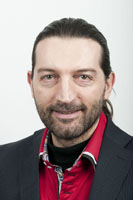
– Our contribution to the sure-ai centre will focus on the problem formulation phase and the scenario analysis phase, which are necessary to develop and implement new AI algorithms, Castelacci announces.
The sub-project he will coordinate within this centre will explore the factors affecting the adoption and implementation of AI by businesses and public organisations in Norway.
– Specifically, we want to examine whether existing regulations—particularly in certain industries—are obstacles to a broader adoption of AI in organisations. We will also investigate if developing more transparent and trust-building algorithms can lead to faster diffusion and more benefits in these sectors, he says, adding
– It's excellent for TIK that we're now building a small new niche within social science studies of artificial intelligence—a topic highly relevant to TIK's research profile.
- Read more about SURE-AI
AI and creativity

The Department of Psychology is also participating in a third AI centre. "mishmash – Centre for AI and Creativity" is led by Professor Alexander Refsum Jensenius from the Department of Musicology at the Faculty of Humanities.
The coordinator at PSI is Professor Jonna Vuoskoski.