
European Strains

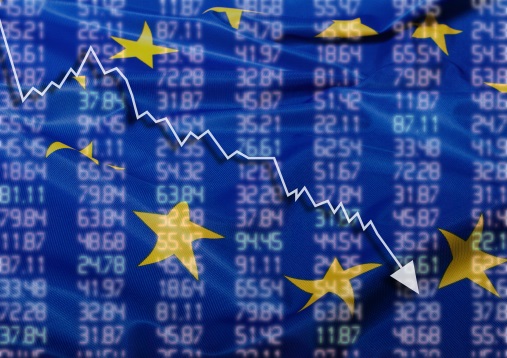
illustration

Illustration photo: colourbox.no

Status
Completed

The economy in Europe is marked by crisis and the European welfare state provides insufficient protection for its citizens. Is the European integration built on fragile compromises that only work in times of prosperity or will European institutions show more stability once they pass the phase of trial and error?

Contact

About the project

This project aims to understand:

  • the current crisis in Europe and its institutional responses, stressing the interaction between politics, economic development, and social change
  • the European migration, mobility, and economic growth in the light of national identities, and social and economic strains
  • the economic and political feasibility of the European Social Model emphasizing how temporary shocks may create permanent institutional changes once we incorporate economic, social, and political relations

National collaboration

ESOP collaborates with the Department of Political Science, the Department of Social Anthropology at UiO, Fafo Institute for Labour and Social Research, the Frisch Centre, and the Institute for Social Research (ISF) about this interdisciplinary research project.

By involving the disciplines political science, social anthropology, sociology, and economics, the project aims to use an integrated social, economic and institutional approach to explore the nature and the effects of the crisis on the European institutions.

Sub-projects

1. The Crisis and its Institutional Responses

Institutional change that prepare for new policies, can be more important than the crisis policy itself. Short-term economic, social and political adjustments can have lasting consequences. One sub-project will look at the crisis as the mother of social reform whereas other projects will study the effects of the crisis when it comes to wage and employment responses and European social values and social cohesion, among other things.

Crisis as the mother of social reform

Participants: Carl Henrik Knutsen and Kalle Moene

Under what conditions can economic and social crisis be conducive to productivity enhancing reforms? Many believe that crisis is the mother of progressive reforms and new social pacts. Our basic assertion is that the institutional response to the crisis reflects more the local national conditions prior to the crisis than the crisis itself.

The effects of the crisis: Wage and employment responses

Participants: Erling Barth, Bernt Bratsberg, Ana Rute Cardoso, David Card, Davis, Christian Dustman, Richard Freeman, Heinung, Kalle Moene and Oddbjørn Raaum

The crisis related labor demand collapses of Europe and North America provide a unique opportunity to explore how wages and employment respond to changes in economic conditions. We plan to estimate how individual wages respond to the crisis.

The effects of the crisis: EU legislative politics

Participants: Simon Hix and Høyland

How does the economic crisis change legislative politics in the EU? We are planning to develop a database that will enable us to compare the political effects of the crisis on different parts of Europe.

The effects of the crisis: European social values and social cohesion

Participants: Erling Barth, Finneraas, Thomas Hylland Eriksen, and Kalle Moene

Another way of approaching the social effects of the crisis is to use survey data on peoples' attitudes and perceptions. There are indications that the crisis has changed social preferences of people. The change seems to go in the direction of more individualism. If true, it indicates that social care disappears when it is most needed.

The effects of the crisis: collective bargaining by riots

Participants: Scott Gates, Halvor Mehlum, Kalle Moene and Stergios Skaperdas

The financial crisis and the euro crisis seem to undermine trust and social cohesion. Instead there are in many places social unrest, riots and anger.

We plan to explore the causes and consequences of rising strike incidences in several European countries. What are the consequences for choice of production techniques, social efficiency and income distribution?

The effects of the crisis: Macroeconomic policies in a union

Participants: Steinar Holden, Halvor Mehlum and Kalle Moene

The introduction of the common currency is the most important milestone in the European  integration. When the European Commission lists the benefits of the euro it boils down to increased transparency in addition to the symbolic value of issuing one of the world's major currencies. These benefits may be substantial but the challenges and problems might prove to be even larger. We want to explore how this cross country fusion of monetary policy works with fiscal policy still at the country level.

The effects of the crisis: How soft is the European cushion? Earnings instability and income replacement in European welfare states

Participants: Tarjei Havnes and Kristin Solberg-Johansen

The income instability faced by individuals and households is both a key determinant of policy and a major policy concern. How much does the earnings instability translate into instability in disposable income in the different countries? How important are household adjustments to cushion against the earnings instability as compared to taxes and transfers, and how does this varies across European countries?

2. Migration, Mobility, and Growth

Before the euro the development in Europe was marked by convergence across countries. Now, the development seems to be marked by more divergence. One sub-project will look further into this current trend. Another sub-project will explore how Europe will restore growth and development.

How will Europe restore growth and employment?

Participants: Rolf Golombek, Andreas Moxnes, Knut Røed and Karen Helene Ulltveit-Moe

Emerging markets challenge Europe’s competitiveness in manufacturing. Almost none of the world’s recent entrepreneurial success stories have taken place in Europe.

In the current crises, European governments have started policy reforms that may boost entrepreneurship. For such reforms to be well designed we need to know more about the determinants of entrepreneurial activities.

Labor migration, structural change and firm response

Participants: Bernt Bratsberg, Chrisitan Dustman, Jon Erik Dølvik, Andreas Moxnes, Knut Røed, Oddbjørn Raaum, Pål Schøne and Karen Helene Ulltveit-Moe

Despite free labor mobility, the 1980s and 90s saw surprisingly little labor migration between European countries. This changed after the Eastern enlargement of the EU in 2004 and 2007.

In the aftermath of the crisis with rising regional imbalances, migration flows between European countries are expected to increase, but magnitude and skill composition are crucial for the effects of free mobility on both receiving and sending countries. We plan to analyze gross cross national flows across Europe, and to break the number
down by skills.

A second study focus on detailed worker flows to Norway. We want to analyze crucial factors that affect these flows to Norway.

The European future: towards divergence or convergence

Participants: Richard Baldwin, Rikard Forslid, Beata Javorcik, Karen Helene Ulltveit-Moe and Anthony Venables

We want to revisit the question of the consequences of establishing the single market and single currency, and investigate how measures that would contribute to the completion of the monetary union and further realization of the four freedoms (free mobility of goods, services, people and capital) affect economic development and inequality across European countries and society groups.

3. The Future of the European Social Model

When promotion of the European Social Model became one of the main EU objectives, the national social models faced new challenges and constraints. One sub-project will focus on the national and European responses to the multilevel governance of the European labour markets.

Multilevel governance of European labour markets: National and European responses

Participants: Jon Erik Dølvik, Line Eldring, Stein Evju, Guglielmo Meardi, Maarten Keune and Thorsten Schulten.

Comparing changes in the Nordic countries, UK, Germany, the Netherlands, Italy and Poland, the study will concentrate on the following main issues:

  1. Mapping changes in EU regulations of labor markets and cross-border work – focusing on their causes and likely consequences for different national systems.
  2. Comparative analyses of key changes in national labor market regulation and institutions with emphasis on minimum wage setting.
  3. Comparative case study of the implications of the currently implemented changes in the rights for temporary agency workers.

A Common European Asylum System Amidst national divergence, international rights and migrant strategies

Participants: Jan-Paul Brekke and Grete Brochmann

The field of migration provides an excellent opportunity for studying the discrepancy and tension between the supranational ambitions at the EU-level and persistent national differences.

We use the contrast between the Southern rim (Italy and Greece) and the prosperous North (Sweden and Norway) as the empirical basis for the study. Our aim is to explore strains between the supranational and the national policy levels. Adding the migrants themselves we get three three levels of analysis: institution, policy and agency.

The paradox of welfare and the optimal unit of social policy

Participants: Erling Barth, Thomas Hylland Eriksen, Halvor Mehlum and Kalle Moene

The welfare paradox can be presented by four observations:

  • a) In contrast to welfare state services the production of private sector commodities are easy to mechanize. This effect, called the Baumol effect, favors the private sector.
  • b) While the private sector produces tempting goods providing immediate pleasure, the welfare state produces services delivered without immediate consumer sovereignty. The temptation effect stages individual preferences in favor the private sector.
  • c) As people get richer they demand relatively more services. This effect, related to the so-called Wagner’s law, favors the welfare state.
  • d) Since both sectors must pay similar wages, the welfare state become relatively more expensive the richer society becomes, making temptation goods cheaper and welfare services relatively more expensive.

The willingness to pay for the welfare state declines with societies' capacity to pay for it.

We believe that the welfare paradox also speaks to the present crisis in Europe, and that it is more evident in some countries than in others.

The paradox of welfare also has implications for possible reforms and for the future of the European social model. For instance, what should be considered an optimal unit
for the redistribution and social insurance when the policy requires majority support?
Is it the family, the commune, the national state, the EU, or the world?

International cooperation

Researchers from Dartmouth College, Graduate Institute of International and Development Studies Geneva, Hans Böckler Stiftung Düsseldorf, Harvard University, Institute für Arbeitsmarkt und Berufsforschung Nürnberg, Institute of Economic Analysis in Barcelona, London School of Economics, University of Amsterdam, University of California at Berkeley, University of California at Irvine, University of Milan, University of Oxford, University of Warwick, Stockholm University and US Census.

More information

Project description (PDF)

Events

2017: The Oslo Turnout Workshop

Time and place: Dec. 19, 2017 12:00 PM – Dec. 20, 2017 4:30 PM, Hannah ryggen meeting room (1004), 10th floor, Lucy Smiths house

ESOP is organising a European Strains workshop set to take place at the University of Oslo 19-20 December.

Host: Halvor Mehlum

Programme

Tuesday December 19
  • 12-13 Keynote: David Nickerson, Temple University. “The Opportunities and Challenges of Leveraging Social Networks by Political Campaigns"
  • 13.15-14.45
    • Karl-Oskar Lindgren, Uppsala University. “Can increased education help reduce the political opportunity gap?”
    • Andreas Kotsadam, Frisch. ” Big Brother Sees You, But Does He Rule You? The Relationship Between Birth Order and Political Participation”
  • 15-16.30
    • Kasper M. Hansen, København Universitet. “Voting is a social act - The Danish Turnout Project”
    • Henning Finseraas, ISF Oslo. “Ancestry Culture and Voter Turnout in Two Generations”
  • 16.45-18.15
    • Pär Nyman, Uppsala University. “The Effects of Having Peers Whose Parents are Politicians”
    • Jon Fiva, BI. “How electoral rules shape party systems: evidence from the 1919 Norwegian electoral reform”
Wednesday December 20
  • 9-10.30
    • Jens Olav Dahlgaard, Copenhagen Business School. “Trickle-up political socialization: The causal effect on turnout of parenting a newly enfranchised voter”
    • Mikael Persson, Gothenburg. Income, Wealth and Voting: Evidence from register data matched with voter studies”
  • 10.45-12.15
    • Giovanni Facchini, University of Nottingham. “Immigrant selection into politics”
    • Hanna Wass, University of Helsinki. “Can’t have enough of a good thing: The findings from the Finnish individual-level turnout data”
  • 13.15-14.45
    • Christopher Dawes, New York University. “Self Control and Voter Turnout”
    • Bernt Bratsberg, Frisch. ”Refugee Settlement and Immigrants’ Political Integration”
  • 15-16.30
    • Jo Thori Lind, UiO. “Hand in hand we vote - The effect of spousal voting on electoral turnout”
    • Hannu Lahtinen, University of Helsinki: “Do surveys overestimate or underestimate socioeconomic differences in voter turnout? Evidence from administrative registers

2017: European Strains Workshop

Time and place:  – , Hannah Ryggen seminar room (1003), Lucy Smiths hus  

ESOP is organising a European Strains workshop set to take place at the University of Oslo August 31.

Host: Halvor Mehlum

Programme

  • 09.00-11.00
    • Andreas Kotsadam, Jørgen Modalsli & Jo Thori Lind (UiO): Call the Midwife. Health Personnel and Mortality in Norway 1887-1921.
    • Gisle Natvik, Ragnar Torvik & Halvor Mehlum (UiO): The Political Dutch Disease
  • 11.30-13.30
    • Bernt Bratsberg, Karen Helene Ulltveit-Moe, Oddbjørn Raaum & Andreas Moxnes (UiO): Opening the Floodgates: Immigration and Structural Change
    • Jon Erik Dølvik (FAFO): Collective Bargaining in Northern Europe under Strain: Multiple drivers of change and differing conditions for responding to them.
  • 13.30-15.30 Lunch (including department seminar with Luigi Pistaferri)
  • 15.45-17.45
    • Anders Kjelsrud (UiO): The rise of China and European labor markets
    • Oddbjørn Raaum (Frisch Centre): Immigrant Election Turnout
  • 18.30 Dinner

2015: European Strains Workshop

Time and place:  – , ES 1047, ESOP Seminar room  

Workshop in the European Strains project.

Programme

  • 12:45: Welcoming remarks by Halvor Mehlum, ESOP, UiO
  • 13:00: Henning Finseraas, ISF: Insurance and redistribution motives? Behaviours and beliefs in the welfare state (with Barth, Moene and Østbakken)
  • 13:20: Oddbjørn Raaum, Frisch: Immigration impacts (with Bratsberg, Brunborg Hoen, Moxnes, Ulltveit Moe)
  • 13:40: Bjørn Høyland, ISV, UiO: Delegation in the European Parliament (with Fang-Yi Chiou and Lyder Hermansen)
  • 14:20: Halvor Mehlum: The political economy of the welfare state (with Moene)
  • 15:00: Cahtrine Moe Thorleifsson, SAI, UiO: Nationalist responses to the crisis in Europe: Old and new hatreds
  • 16:00: Jan-Paul Brekke, ISF: Little room to maneuver. A multi-level approach to asylum governance in Europe (with Brochmann)
  • 16:20: Marianne Røed, ISF: Reduction or deflection? The effect of policy on interconnected asylum flows (with Brekke and Schøne)
  • 16:40: Administrative issues

2014: ERWIT conference 2014

Time and place:  – , Auditorium 2, Georg Sverdrups hus

European Research Workshop in International Trade (ERWIT) takes place in Oslo 4-6 June 2014.

The workshop is part of the activities of the Centre for Economic Policy Research (CEPR) in London and is the most prestigious conference in International Trade.

ERWIT is an annual workshop that brings together international economists from across Europe and key researchers from outside the region. The workshop disseminates the findings of recent research on international trade, and presentations often involve exploratory rather than finished papers. It provides a unique opportunity to discuss trade-related research in a relaxed atmosphere. Another important aim of ERWIT is to provide young researchers with the opportunity to meet and discuss their work with senior economists.

This year's organizers are Diego Puga (CEMFI, Madrid and CEPR), Simon Evenett (University of St. Gallen and CEPR), and Karen Helene Ulltveit-Moe (University of Oslo and CEPR).

Participants

Publications

  • Comment on R.B. Freeman: One Ring to Rule Them All? By: Jon Erik Dølvik. Nordic Economic Policy Review, 2013(1).
  • Immigration wage effects by origin By: Bernt Bratsberg, Oddbjørn Raaum, Marianne Røed, Pål Schøne. Scandinavian Journal of Economics, 2014(116). ISSN/ISBN: 0347-0520.
  • Stabiliseringspolitikk i krisetider. By: Halvor Mehlum. Samfunnsøkonomen, 2014(7). ISSN/ISBN: 1890-5250.
  • Better, Faster, Stronger: Global Innovation and Trade Liberalization. Karen Helene Ullveit-Moe, Andreas Moxnes and Federica Coelli. Centre for Economic Policy Research. Discussion papers, number 11506, 16 September 2016.
  • Åpenhet bringer gevinster for innovasjon og vekst. Karen Helene Ullveit-Moe, Andreas Moxnes and Esther Ann Nisja Bøler. Samfunnsøkonomen , number 03, 2016.
  • European Social Models from Crisis to Crisis: Employment and Inequality in the Era of Monetary Integration. By Jon Erik Dølvik, Head of Research, Fafo Institute for Labour and Social Research, Oslo, and Andrew Martin, Research Associate, Center for European Studies, Harvard University. Includes chapter by Kalle Moene and Erling Barth. Oxford University Press. December 2014.
  • Income Growth and Revolutions. By Carl Henrik Knutsen. Social Science Quarterly Volume 95, Issue 4,  pages 920–937, December 2014.
  • Barth, Erling; Finseraas, Henning; Kjelsrud, Anders & Moene, Karl Ove (Kalle) (2023). Openness and the welfare state: risk and income effects in protection without protectionism. European Journal of Political Economy. ISSN 0176-2680. 79. doi: 10.1016/j.ejpoleco.2023.102405. Full text in Research Archive
  • Alpino, Matteo & Mehlum, Halvor (2022). Two notions of social capital. The Journal of mathematical sociology. ISSN 0022-250X. p. 1–28. doi: 10.1080/0022250X.2021.2004597. Full text in Research Archive
  • Barth, Erling; Finseraas, Henning; Kjelsrud, Anders & Moene, Karl Ove (2022). Hit by the Silk Road: how wage coordination in Europe mitigates the China shock. The Scandinavian Journal of Economics. ISSN 0347-0520. doi: 10.1111/sjoe.12489. Full text in Research Archive
  • Barth, Erling; Moene, Karl Ove (Kalle) & Pedersen, Axel West (2021). Rising Inequality in the Egalitarian Nordics. In Fischer, Georg & Strauss, Robert (Ed.), Europe's Income, Wealth, Consumption, and Inequality. Oxford University Press. ISSN 9780197545706. p. 219–246. doi: 10.1093/oso/9780197545706.003.0006. Full text in Research Archive
  • Chang, Yongsung; Hong, Jay H.; Karabarbounis, Marios; Wang, Yicheng & Zhang, Tao (2021). Income volatility and portfolio choices. Review of economic dynamics. ISSN 1094-2025. 44, p. 65–90. doi: 10.1016/j.red.2021.04.004. Full text in Research Archive
  • Marginson, Paul & Dølvik, Jon Erik (2020). Northern European Collective Wage Bargaining in the Face of Major Political-Economic Challenges: Common and Differing Trajectories. Transfer - European Review of Labour and Research. ISSN 1024-2589. 26(4), p. 383–398. doi: 10.1177/1024258920937961. Full text in Research Archive
  • Bratsberg, Bernt; Dawes, Christopher; Kotsadam, Andreas; Lindgren, Karl-Oskar; Öhrvall, Richard & Oskarsson, Sven [Show all 7 contributors for this article] (2020). Birth Order and Voter Turnout. British Journal of Political Science. ISSN 0007-1234. doi: 10.1017/S0007123419000826. Full text in Research Archive
  • Bratsberg, Bernt; Røed, Knut & Raaum, Oddbjørn (2020). Excess Churn in Integrated Labor Markets. Journal of Population Economics. ISSN 0933-1433. doi: 10.1007/s00148-020-00795-1. Full text in Research Archive
  • Hoen, Maria Forthun (2020). Immigration and the Tower of Babel: Using language barriers to identify individual labor market effects of immigration. Labour Economics. ISSN 0927-5371. 65. doi: 10.1016/j.labeco.2020.101834. Full text in Research Archive
  • Bratsberg, Bernt; Raaum, Oddbjørn & Røed, Knut (2019). Social Insurance Design and the Economic Integration of Immigrants. In Calmfors, Lars & Gassen, Nora Sánchez (Ed.), Integrating immigrants into the Nordic labour markets. Nordisk ministerråd. ISSN 9789289362016. p. 133–158. doi: 10.6027/Nord2019-024. Full text in Research Archive
  • Dølvik, Jon Erik & Oldervoll, Johannes Andresen (2019). Norway: Averting Crisis through Coordination and Keynesian Welfare Policies. In Olafsson, Stefan; Palme, Joachim; Daly, Mary & Kangas, Olli (Ed.), Welfare and the Great Recession. A Comparative Study.. Oxford University Press. ISSN 9780198830962. doi: 10.1093/oso/9780198830962.003.0012. Full text in Research Archive
  • Hoen, Maria Forthun; Markussen, Simen & Røed, Knut (2019). Innvandring og sosial mobilitet. Svar til kritikerne. Tidsskrift for samfunnsforskning (TfS). ISSN 0040-716X. 60(3), p. 309–320. doi: 10.18261/issn.1504-291X-2019-03-09. Full text in Research Archive
  • Bratsberg, Bernt; Raaum, Oddbjørn & Røed, Knut (2018). Job Loss and Immigrant Labour Market Performance. Economica. ISSN 0013-0427. 85(337), p. 124–151. doi: 10.1111/ecca.12244. Full text in Research Archive
  • Brochmann, Grete & Dølvik, Jon Erik (2018). The welfares state and international migration. The European challenge. In Greve, Bent (Eds.), Routledge Handbook of the Welfare State, Second Edition. Routledge. ISSN 9781138631649. p. 508–521. Full text in Research Archive
  • Dølvik, Jon Erik; Marginson, Paul; Alsos, Kristin; Arnholtz, Jens; Meardi, Guglielmo & Müller, Torsten [Show all 7 contributors for this article] (2018). Collective wage regulation in northern Europe under strain: Multiple drivers of change and differing responses. European journal of industrial relations. ISSN 0959-6801. doi: 10.1177/0143831X18790815. Full text in Research Archive
  • Dølvik, Jon Erik & Marginson, Paul (2018). Cross-sectoral coordination and regulation of wage determination in northern Europe: Divergent responses to multiple external pressures. European journal of industrial relations. ISSN 0959-6801. doi: 10.1177/0959680118790820. Full text in Research Archive
  • Alsos, Kristin & Evans, Claire (2018). Temporary work agencies: Triangular disorganization or multilevel regulation? European journal of industrial relations. ISSN 0959-6801. 24(4), p. 391–407. doi: 10.1177/0959680118790819. Full text in Research Archive
  • Müller, Torsten; Dølvik, Jon Erik; Ibsen, Christian Lyhne & Schulten, Thorsten (2018). The manufacturing sector: Still an anchor for pattern bargaining within and across countries? European journal of industrial relations. ISSN 0959-6801. 24(4), p. 357–372. doi: 10.1177/0959680118790817. Full text in Research Archive
  • Dølvik, Jon Erik & Marginson, Paul (2018). Guest Editors Special Issue of European Industrial Relations Vol 24, Issue 4 p.319-425, Collective Wage Regulation in Northern Europe under Strain. European journal of industrial relations. ISSN 0959-6801. 24(4), p. 319–425. doi: 10.1177/0959680118790820. Full text in Research Archive
  • Brekke, Jan-Paul & Staver, Anne Balke (2018). The renationalisation of migration policies in times of crisis: the case of Norway. Journal of Ethnic and Migration Studies. ISSN 1369-183X. 44(13), p. 2163–2181. doi: 10.1080/1369183X.2018.1433026. Full text in Research Archive
  • Barth, Erling; Davis, James Creece; Freeman, Richard & Kerr, Sari Pekkala (2017). Weathering the Great Recession: Variation in Employment Responses, by Establishments and Countries. The Russell Sage Foundation Journal of the Social Sciences. 3(3), p. 50–69. doi: 10.7758/rsf.2017.3.3.03. Full text in Research Archive
  • Mehlum, Halvor; Torvik, Ragnar & Valente, Simone (2017). Sparemultiplikatoren. Samfunnsøkonomen. ISSN 1890-5250. p. 51–53. Full text in Research Archive
  • Thorleifsson, Cathrine Moe (2016). Migrasjonskrisen: Høyreradikale responser. Internasjonal Politikk. ISSN 0020-577X. 74(2), p. 1–9. doi: 10.17585/ip.v74.457. Full text in Research Archive
  • Brekke, Jan-Paul; Røed, Marianne & Schøne, Pål (2016). Reduction or deflection? The effect of asylum policy on interconnected asylum flows. Migration Studies. ISSN 2049-5838. 5(1), p. 65–96. doi: 10.1093/migration/mnw028. Full text in Research Archive

View all works in NVA

  • Moene, Karl Ove (Kalle) (2018). Å lære av de store. Full text in Research Archive
  • Moene, Karl Ove (Kalle) (2018). Mer kritisk årvåkenhet. Full text in Research Archive
  • Moene, Karl Ove (Kalle) (2018). Misforstått bærekraft. p. 4–4. Full text in Research Archive
  • Moene, Karl Ove (Kalle) (2018). Overflødige kapitalister. p. 4–4. Full text in Research Archive
  • Moene, Karl Ove (Kalle) (2018). Profitabel bærekraft. p. 4–4. Full text in Research Archive
  • Moene, Karl Ove (Kalle) (2018). Kapitalismens dynamikk. p. 4–4. Full text in Research Archive
  • Moene, Karl Ove (Kalle) (2018). Hvem skal arve verden? p. 4–4. Full text in Research Archive
  • Moene, Karl Ove (Kalle) (2018). Fattigdommens forbannelse. p. 3–3. Full text in Research Archive
  • Moene, Karl Ove (Kalle) (2018). Olje, utvikling og ansvar. p. 3–3. Full text in Research Archive
  • Moene, Karl Ove (Kalle) (2018). Nye advarsler – nye muligheter? p. 3–3. Full text in Research Archive
  • Moene, Karl Ove (Kalle) (2018). Equinors bortforklaringer. p. 30–30. Full text in Research Archive
  • Moene, Karl Ove (Kalle) (2018). Ulikhet. Full text in Research Archive
  • Moene, Karl Ove (Kalle) (2018). Velferdstat. Full text in Research Archive
  • Moene, Karl Ove (Kalle) (2018). Norden. Full text in Research Archive
  • Ulltveit-Moe, Karen Helene (2018). Forbrukere foren dere! Full text in Research Archive
  • Moene, Karl Ove (Kalle) (2018). Boligmarkedet. Full text in Research Archive
  • Moene, Karl Ove (Kalle) (2018). Kan kapitalistisk dynamikk og sosial trygghet kombineres? Full text in Research Archive
  • Ulltveit-Moe, Karen Helene (2018). EØS som syndebukk. Full text in Research Archive
  • Moene, Karl Ove (2018). Tragedien Zimbabwe. p. 4–4. Full text in Research Archive
  • Moene, Karl Ove (Kalle) (2018). Farlig frustrasjon. p. 2–2. Full text in Research Archive
  • Mehlum, Halvor (2018). Det strukturelle, oljekorrigerte underskuddet. Samfunnsøkonomen. ISSN 1890-5250. p. 15–19. Full text in Research Archive
  • Mehlum, Halvor (2018). Etter neste finanskrise. Full text in Research Archive
  • Ulltveit-Moe, Karen Helene (2017). Brexit bursdag uten feiring. Full text in Research Archive
  • Ulltveit-Moe, Karen Helene; Moxnes, Andreas; Raaum, Oddbjørn & Bratsberg, Bernt (2017). Opening the floodgates: Immigration and structural change. Full text in Research Archive
  • Ulltveit-Moe, Karen Helene (2017). Sammen for EØS. Full text in Research Archive
  • Ulltveit-Moe, Karen Helene (2017). Diskusjon om Theresa Mays kunngjøring om hard Brexit. [Radio]. Dagsnytt 18, NRK. Full text in Research Archive
  • Mehlum, Halvor (2017). Detektor om skattelette og olje. [TV]. nrk1. Full text in Research Archive
  • Ulltveit-Moe, Karen Helene (2017). The European Free Trade Association: L-EFTA behind. [Journal]. The Economist. Full text in Research Archive
  • Brekke, Jan-Paul (2017). Flyktningsituasjonen i Europa. [TV]. NRK1 Urix. Full text in Research Archive
  • Thorleifsson, Cathrine Moe (2016). Overheating hatreds: nationalist responses to migration in Hungary. Full text in Research Archive
  • Thorleifsson, Cathrine Moe (2016). The borders of hospitality: selecting kin and enemies in times of protracted displacement. Full text in Research Archive
  • Thorleifsson, Cathrine Moe (2016). Radicalisation in response to the refugee crisis and consequences for prevention policies. Full text in Research Archive
  • Ulltveit-Moe, Karen Helene (2016). Banking on Women. [Radio]. Newstalk. Full text in Research Archive
  • Moxnes, Andreas (2016). Handelsavtaler i det 21. århundre. Full text in Research Archive
  • Thorleifsson, Cathrine Moe (2016). Politisk og religiøs ekstremisme- et voksende problem? Full text in Research Archive
  • Thorleifsson, Cathrine Moe (2016). Human Rights, Human Wrongs Bodø. Full text in Research Archive
  • Moxnes, Andreas (2016). Industrien flytter hjem igjen fra Kina. [Radio]. E24. Full text in Research Archive
  • Moxnes, Andreas (2016). TTIP og TISA - bra eller dårlig for norsk økonomi? Full text in Research Archive
  • Thorleifsson, Cathrine Moe (2016). Overheating hatreds: local responses to migration in Hungary. Full text in Research Archive
  • Thorleifsson, Cathrine Moe (2016). Solidaritet på prøve. [Journal]. Speilvendt. Full text in Research Archive
  • Brekke, Jan-Paul (2016). Gjest i studio. [TV]. Urix - NRK1. Full text in Research Archive
  • Thorleifsson, Cathrine Moe (2016). The migration crisis in Europe: radicalisation and implications for CVE Communications. Full text in Research Archive
  • Brekke, Jan-Paul (2016). Aleppo og flyktningene. [Radio]. NRK P2 Dagsnytt 18. Full text in Research Archive
  • Brekke, Jan-Paul (2016). Økt skepsis til innvandring. [Radio]. NRK P2 Dagsnytt 18. Full text in Research Archive
  • Thorleifsson, Cathrine Moe (2016). Korleis preger 1956 dagens Ungarn? Høgre og venstresida fortel sine versjonar av oppstanden i Ungarn. [Radio]. NRK P2 Ekko. Full text in Research Archive
  • Thorleifsson, Cathrine Moe (2016). Hegraseminaret- Midtøsten i krise og folkevandringene mot Europa. [Journal]. Stjørdalsnytt. Full text in Research Archive
  • Brekke, Jan-Paul (2016). Færre flyktninger til Norge. [TV]. NRK - Dagsrevyen. Full text in Research Archive
  • Brekke, Jan-Paul (2016). EUs asylpolitikk strammes inn. Full text in Research Archive
  • Brekke, Jan-Paul (2016). Calais - Hvorfor Frankrike? [Radio]. NRK P2 Dagsnytt 18. Full text in Research Archive
  • Ulltveit-Moe, Karen Helene (2016). Arbeidstidsutvalgets innstilling. Full text in Research Archive
  • Ulltveit-Moe, Karen Helene (2016). Vern og fleksibilitet. Full text in Research Archive
  • Ulltveit-Moe, Karen Helene (2016). Arbeidstidsutvalgets innstilling. Full text in Research Archive
  • Ulltveit-Moe, Karen Helene (2016). Arbeidstidsutvalgets innstilling. Full text in Research Archive
  • Ulltveit-Moe, Karen Helene (2016). Grunn til bekymring. Full text in Research Archive
  • Ulltveit-Moe, Karen Helene (2016). Gullalderen er over. [Journal]. Dagbladet. Full text in Research Archive
  • Ulltveit-Moe, Karen Helene (2016). Frykter handelskrig mellom USA og Kina. [Internet]. E24.no. Full text in Research Archive
  • Ulltveit-Moe, Karen Helene (2016). Utvalg vil løse opp arbeidstidsbestemmelsene. [Internet]. Aftenposten.no. Full text in Research Archive
  • Thorleifsson, Cathrine Moe (2016). Gamle og nye fiendebilder: nasjonalisme som respons på tvungen migrasjon til Europa. Full text in Research Archive
  • Thorleifsson, Cathrine Moe (2016). Imagined enemies: nationalist responses to forced migration in Europe. Full text in Research Archive
  • Thorleifsson, Cathrine Moe (2016). Nationalist responses to migration in an overheated Europe. Full text in Research Archive
  • Thorleifsson, Cathrine Moe (2016). Nationalist responses to forced migration: case studies from England and Hungary. Full text in Research Archive
  • Thorleifsson, Cathrine Moe (2016). Radicalisation in response to forced migration in Europe. Full text in Research Archive
  • Thorleifsson, Cathrine Moe (2016). Fryktens politikk i et overopphetet Europa. Full text in Research Archive
  • Thorleifsson, Cathrine Moe (2016). Samtale med forskar Cathrine Moe Thorleifsson. [TV]. NRK2. Full text in Research Archive
  • Thorleifsson, Cathrine Moe (2016). Ukip etter Brexit. [TV]. Dagsnytt18. Full text in Research Archive
  • Thorleifsson, Cathrine Moe (2016). Facist i fåreklær. [Journal]. VG. Full text in Research Archive
  • Thorleifsson, Cathrine Moe (2016). Impact of the current migrant crisis on Europe and the world: Challenges and future scenarios related to extremism, polarisation and terror attacks. Full text in Research Archive
  • Thorleifsson, Cathrine Moe (2016). Hatreds reconfigured: political responses to migration in Hungary and England. Full text in Research Archive
  • Moene, Karl Ove (2016). Lyssky gjester på solfylte øyer. Full text in Research Archive
  • Moene, Karl Ove (2016). Produsere først og fordele siden. Full text in Research Archive
  • Moene, Karl Ove (2016). Kor e alle helter hen? Full text in Research Archive
  • Moene, Karl Ove (2016). Type I- og type II-feil. Full text in Research Archive
  • Thorleifsson, Cathrine Moe (2016). Våpenglad nasjonalist kan bli Østerrikes nye president. [Journal]. Aftenposten (morgenutg. : trykt utg.). Full text in Research Archive
  • Thorleifsson, Cathrine Moe (2016). Europa mot høyre. Full text in Research Archive
  • Barth, Erling; Finseraas, Henning; Kjelsrud, Anders Grøn & Moene, Karl Ove (Kalle) (2021). Does the Rise of China Lead to the Fall of European Welfare States? IZA Institute of Labor Economics. Full text in Research Archive
  • Barth, Erling; Finseraas, Henning; Kjelsrud, Anders Grøn & Moene, Karl Ove (Kalle) (2020). Hit by the Silk Road: How Wage Coordination in Europe Mitigates the China Shock. IZA – Institute of Labor Economics. Full text in Research Archive

View all works in NVA

Funding

Funded by The Research Council of Norway

The project is funded by the Research Council of Norway programme Europe in Transition with NOK 24 million for a five-year period from December 2013 until November 2018.

Norwegian version of this page
Published Aug. 7, 2025 12:48 PM - Last modified Sep. 24, 2025 10:46 AM