Published
Aug. 4, 2026 9:44 AM
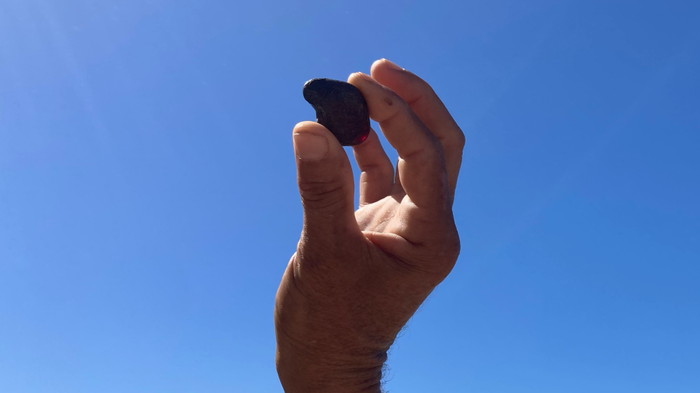
In 2025–2026, Laur did several months of field research on Burmese amber worlds—in Burma (Myanmar), in China, and beyond. Here are some highlights.
In 2025–2026, Laur did several months of field research on Burmese amber worlds—in Burma (Myanmar), in China, and beyond. Here are some highlights.
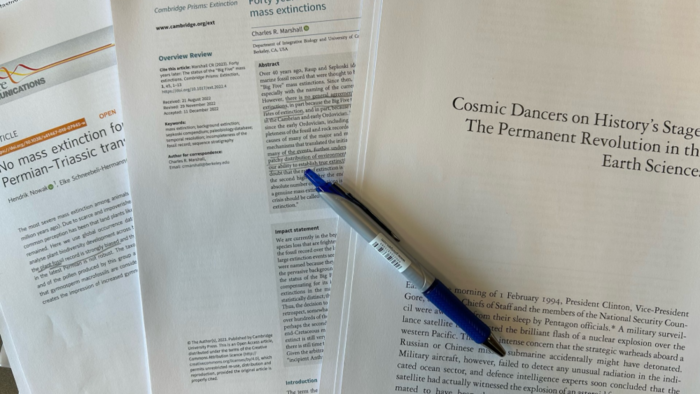
What does it mean to think and write extinction from an antrhropological perspective, and how do old and new paradigms in the earth sciences (might) inform political action today?
An extended meeting and collaborative research experience for the AMBER team, which also participated in the biggest amber trade fair in the world.
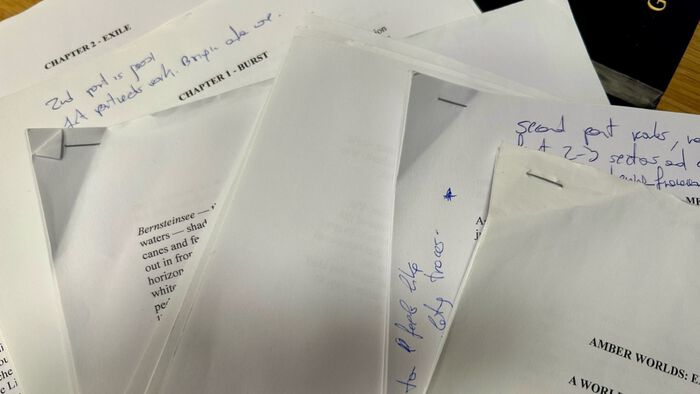
On December 15 Alessandro convened a small workshop to discuss his book manuscript
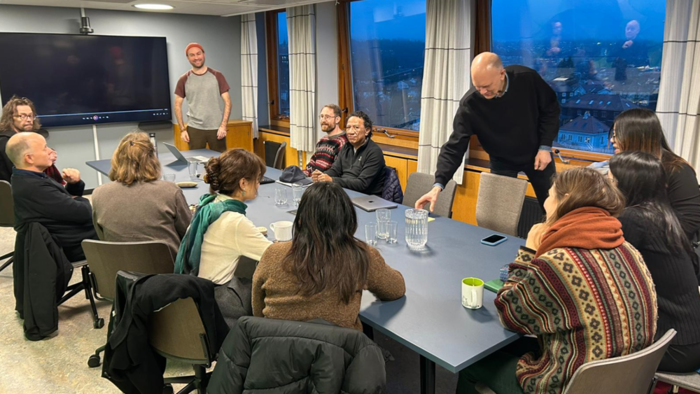
On November 7 the AMBER team convened a small workshop to discuss manuscript drafts on landscapes and their histories.
Alessandro recently joined Nadège Rolland of the National Bureau of Asian Research to discuss the history of China’s engagements with its Southeast Asian neighbours.
We have a vacant 2 year research position at the Department of Social Anthropology
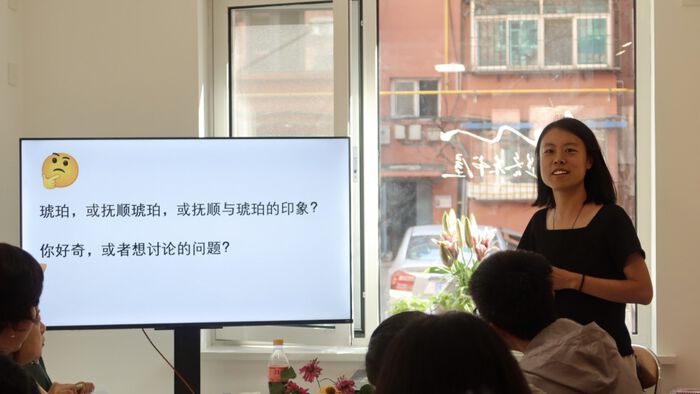
On 21 September 2025, Yayi Zheng joined a seminar organised by Fushun Shuxiang (抚顺书香), a Fushun-based Book Club. The event was hosted by Ludong Shuwu (路东书屋), an independent bookstore.
Alessandro talked about the AMBER and RURALEX projects on the podcast of the Department of Social Anthropology, University of Bergen
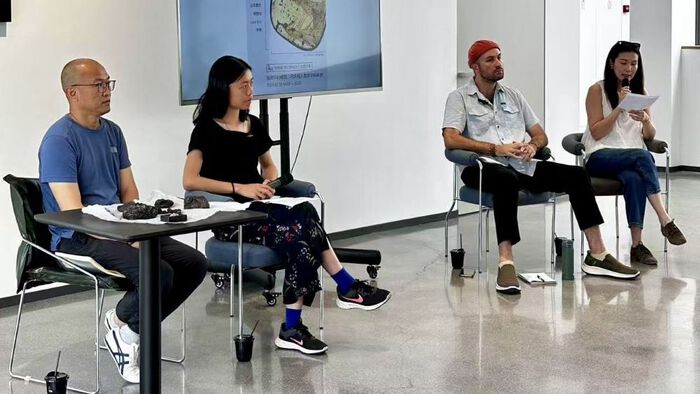
On 13 July, 2025, Yayi Zheng, Laur Kiik, and Fushun-based artist Yong Li joined the seminar “Amber in flux: Art, anthropology, and fieldwork,” organised and hosted by Wu Space, an independent art institution in Shenyang, China.
Vilde Marie Skulstad Henriksen is one of three winners of the University of Oslo's sustainability award for the best master's thesis in 2025. She has explored the contradictions between the tourism industry and sustainable development, using waste as a starting point.
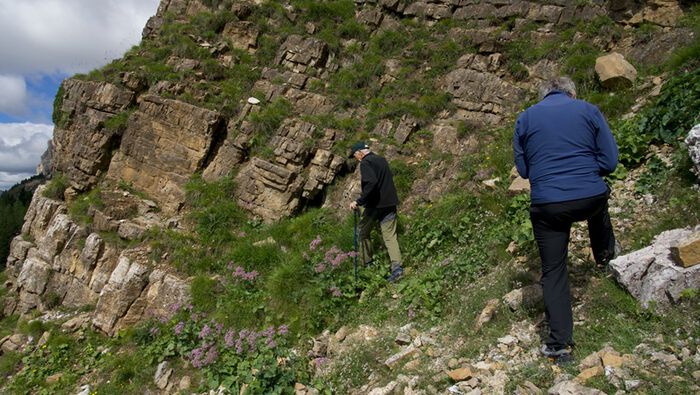
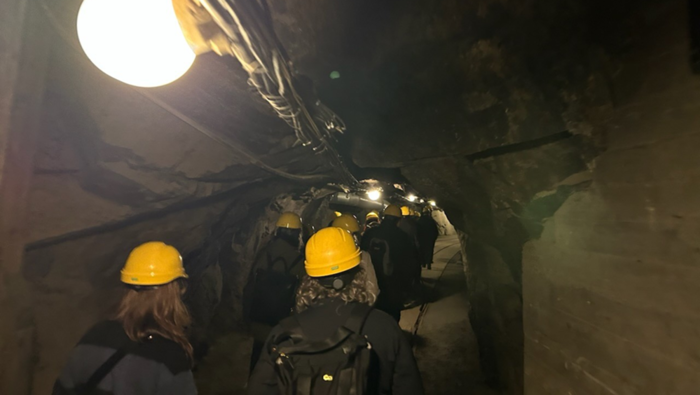
In July Alessandro visited Cortina d'Ampezzo to learn more about the local amber -- some of the oldest ever found
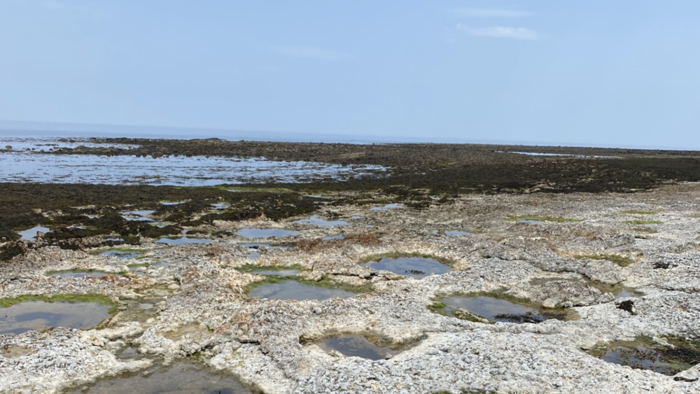
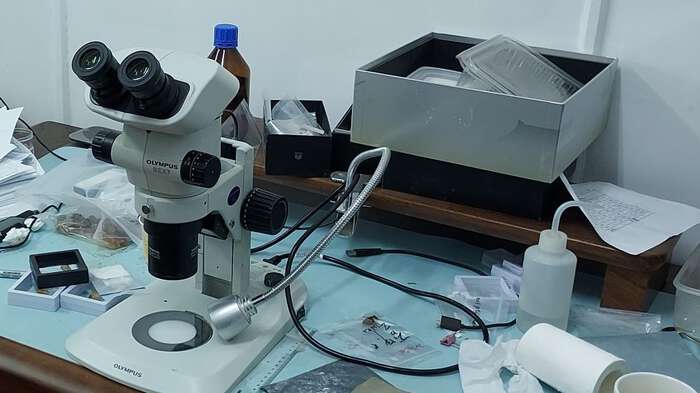
For two weeks in June, Leni traveled between Bristol in England, and Edinburgh, Scotland to visit palaeontology labs and to share the AMBER project in the Progressive Palaeontology conference.
In the end of April, 2025, Laur visited the city of Munich (München) in Germany—to explore the surprisingly diverse Burmese amber worlds there.
In collaboration with the ERC project ECOART, the AMBER team took part in an excursion and workshop at UiO.
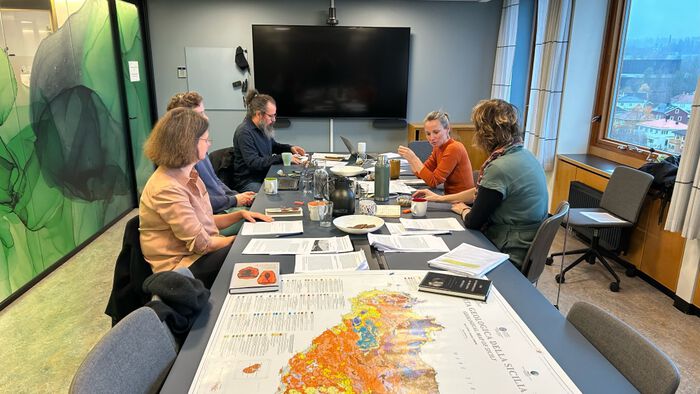
Leni and Alessandro spent a week in Sicily together with two amber experts trying to shed some light on the origins of the amber deposit on the island.
Wenzel Geissler at the Department of Social Anthropology has received EU funding to explore the relationship between environment and health in Africa and Europe.
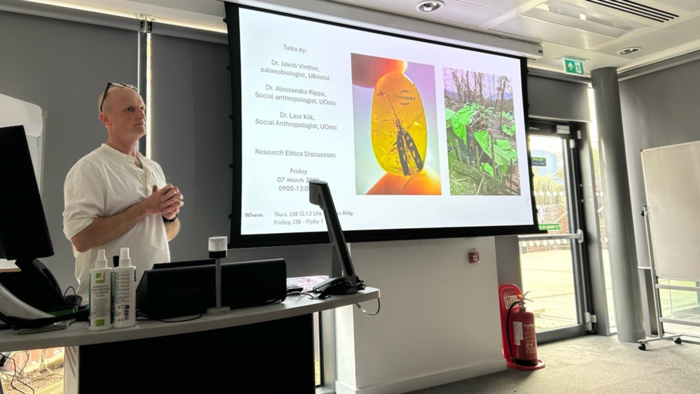
On March 6-7 Laur and Alessandro took part in two events dedicated to discussing the ethics of conducting research on amber extracted in Kachin State.
On December 2, 2024, the AMBER team organised a small gathering with Burma Studies colleagues to watch and discuss the film Blood Amber (2017) by LEE Yong-chao
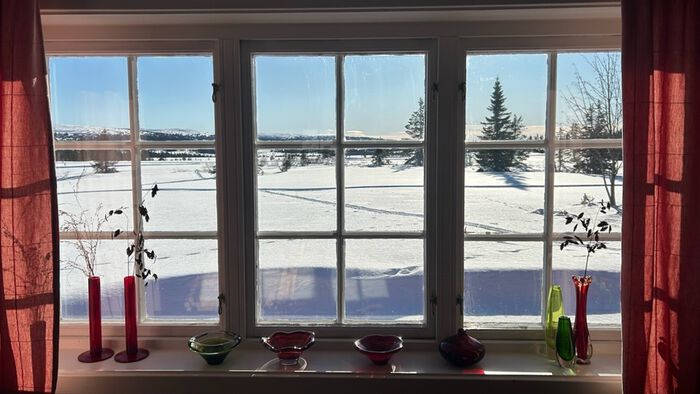
In February the Oslo-based AMBER team spent a few days in the Norwegian mountains writing and planning the project's next milestone events.
One of Norwegian anthropology's brightest stars ceased to shine.
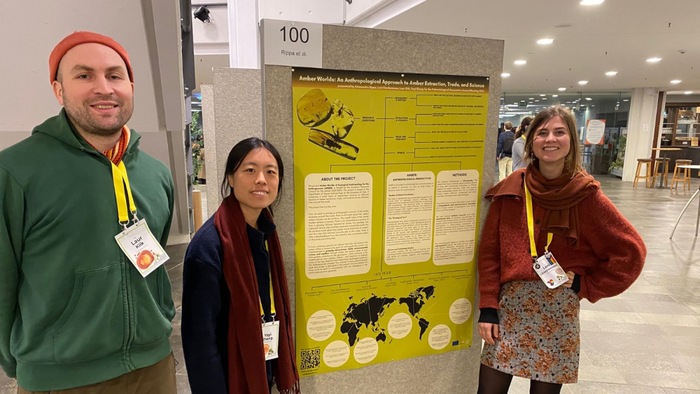
The AMBER team participated in the 68th Annual Meeting of the Palaeontological Association (PaLAss) in the city of Erlangen in Germany from 9 to 13 December. After the conference, the team visited the Paleobotany Group at the Museum für Naturkunde Berlin (MfN).
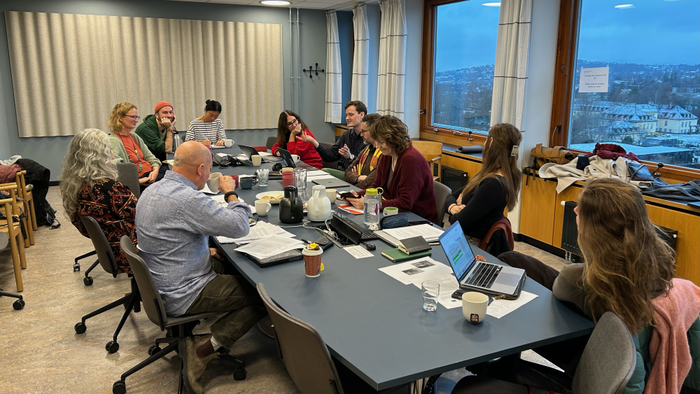
On December 6 the AMBER team, together with the “Forms of Ethnography – Ethnography as Form” research group, organised a writing-focused workshop at SAI.
In September and October 2024 Alessandro returned to Sicily for another phase of fieldwork in and around Catania
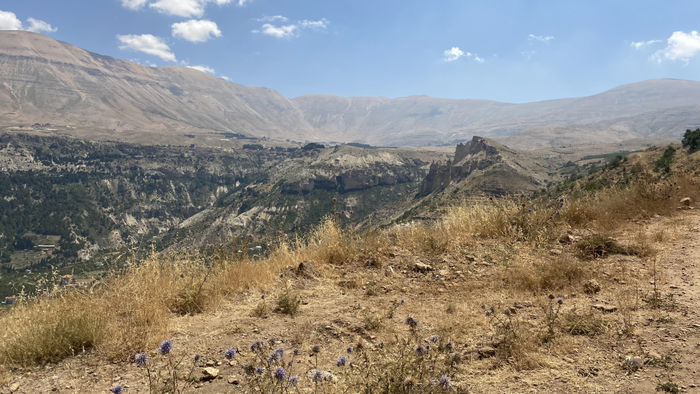
For her PhD research with the AMBER project, Leni Charbonneau carried out preliminary fieldwork in central and northern Lebanon, where amber proliferates upon storied terrain.