
Amber from Lebanon is among the most renowned of global amber sources, particularly when it comes to its applications within the earth-historical sciences such as palaeontology and geology. Throughout July 2024, Leni became acquainted with some of the preeminent palaeontologists who have been responsible for establishing the notoriety of Lebanese amber within these areas of research. She likewise followed these scientists to a variety of field sites throughout the central and northern regions of the country. At these sites she was able to learn about methods and practices of amber harvesting, as well as how to train the eye to consider larger landscape clues that might indicate the presence of amber.

Lebanese amber frequently contains insects as biological inclusions, and these specimens are invaluable sources to re-construct paleo-environments and to subsequently inform the geological record. During a field visit with Professors Dany Azar and Sibelle Maksoud, leading palaeontologists and global amber scholars, a specimen containing a female representative of Diptera Scatopsidae was found – the oldest known representative of this Dipteran family.
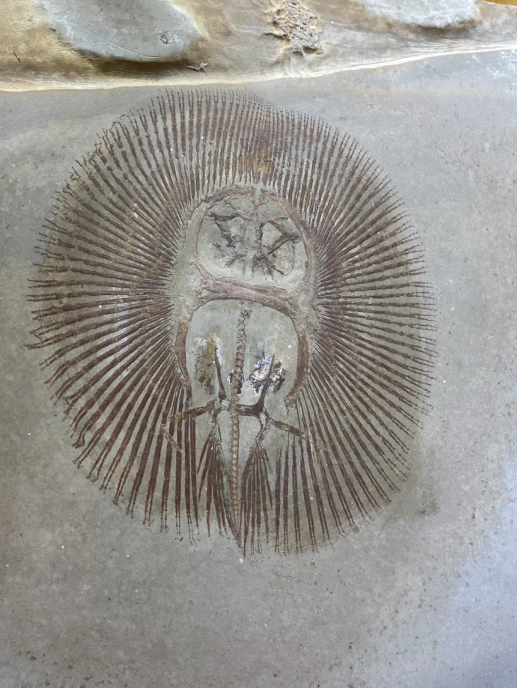
Additionally, Leni became acquainted with other elements of Lebanon’s geological heritage, including its abundance of well-preserved marine fossils. She was hosted by the Nohra family who has established Expo Hakel, an experiential museum and quarry in the Hakel valley. The site is infamous for its well-preserved marine species dated from the Cenomanian age (93 million years ago), when a climatic event triggered mass die-off events in the local marine ecosystem.