This presentation draws from my ongoing postdoctoral research, originally entitled "Amazônia 4.0: A Technology-Driven Green Transition in Brazil", conducted in collaboration with Prof. Steffen Dalsgaard (PI) and funded by the Independent Research Fund Denmark. Through ethnographic fieldwork and document analysis, the project examines how rural communities, state actors, scientists, and technology companies envision and implement green transitions in the Amazon, focusing on the role of emerging technologies in these processes.
One early outcome of this research is a co-authored article with Steffen (here), which explores how technological advancements are framed as tools for both economic extraction and environmental preservation in the Brazilian Amazon. While I will reference some themes and a case from that work, this talk will center on my current writing projects (at early stages), which are developing along two main lines.
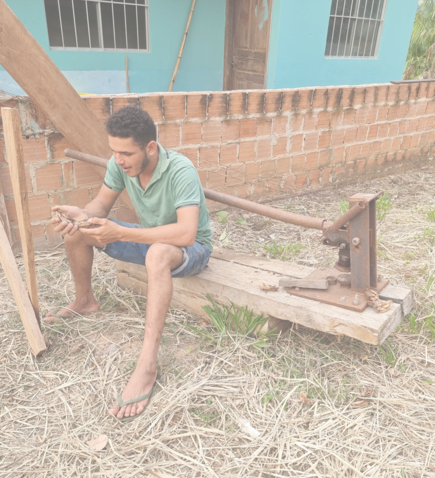
The first is an article that brings together three case studies, each illustrating different yet sometimes overlapping ideologies of innovation and financialization of nature. The first case examines a tech initiative designed to leverage advanced technologies for regional sustainability; the second focuses on the State of Pará’s bioeconomy plan; and the third recounts my encounter with a rural producer along the Transamazônica highway who has devised his own model of technological use and change. Through these cases, I analyze how the presence or absence of certain technology makes visible the economic and social realities of the Amazon, revealing the region’s complicated development trajectories.
My second is a methodological article on using webinars as a research tool. Like the technological initiatives I study, webinars mediate encounters across different geographies and temporalities, linking realities that might otherwise remain disconnected. Beyond facilitating knowledge exchange, they structure self-presentation and shape how actors are perceived by various audiences. In exploring webinars, I aim to reflect not only on their practical implications for research but also on their epistemic effects—how they generate visibility for some voices while marginalizing others.
Priscila Santos da Costa is an Assistant Professor at the IT University of Copenhagen. She holds a Bachelor's degree in Social Sciences from the State University of São Paulo, Brazil, and a PhD in Social Anthropology from the University of St. Andrews, Scotland. Her past research examined the intersections of the state, bureaucracy, and Christianity through fieldwork in the Parliament of Papua New Guinea. Since then, she has conducted fieldwork in Pará, Brazil, exploring the sociotechnical dimensions of technologies in the Amazon region and have also started a second bachelors, this time in Data Science.