BREAD Building Responsibility and Developing Innovative Strategies for Tackling Food Waste

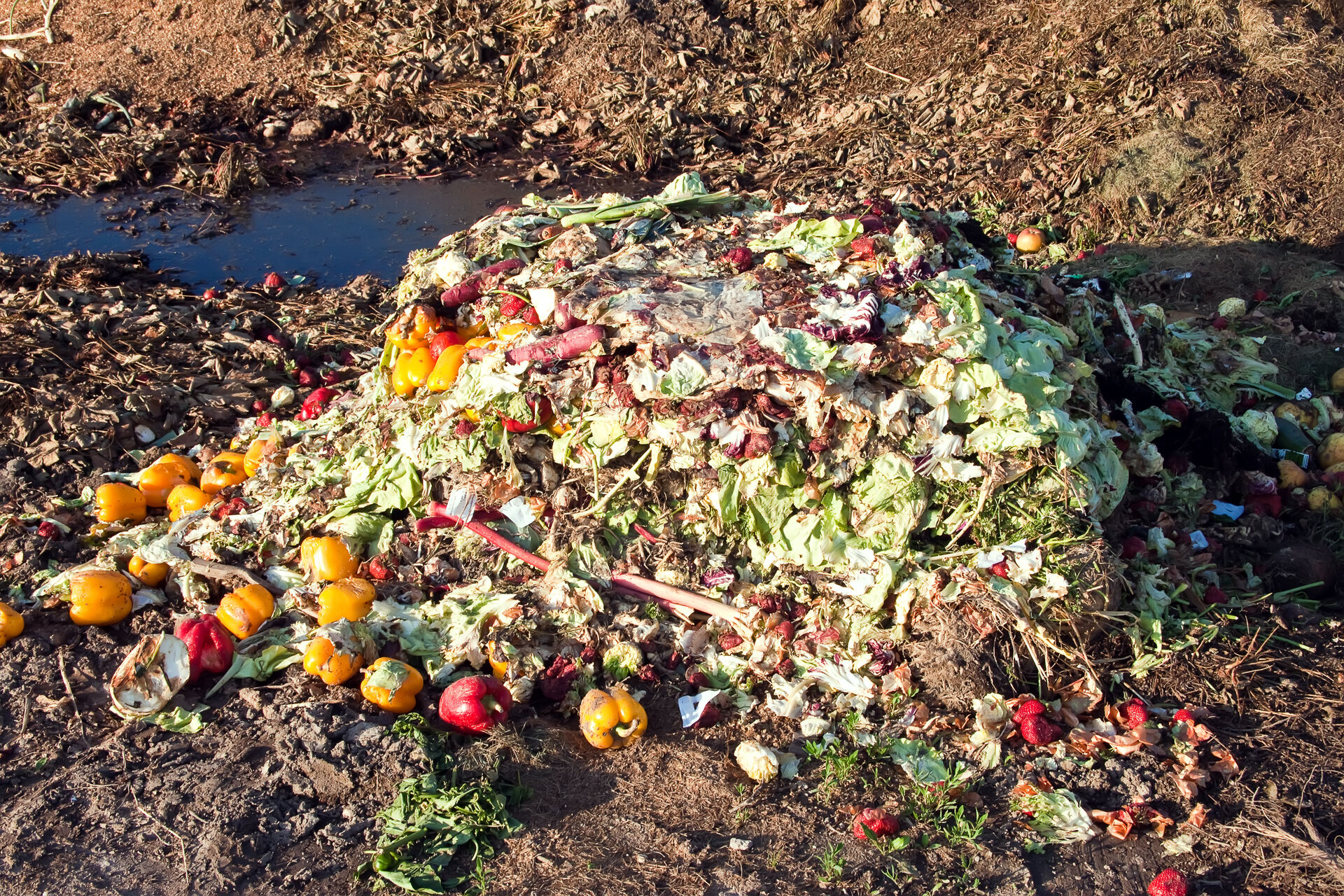
Pile of food waste

Image: Colourbox.

Status
Completed

Avoiding food waste is at the heart of food sector’s societal responsibility. While the goal of reducing and avoiding the wasting of food is broadly accepted, the questions how best to do it require reflection.

BREAD seeks to gather the necessary knowledge about effective and efficient solutions that the Norwegian food sector can implement, adopting a broad governance perspective to the grand societal challenge of food waste. For this, we propose to work across scales and look at responsible innovation on the level of policies (providing the context in which RRI occurs), at the level of companies, and finally, at the business/consumer interface.

The total amount of food waste in Norway for the entire value chain was 68.7 kg per inhabitant in 2015, worth 20 billion NOK and equalling 978 000 tonnes of CO2e. What can be done to accelerate the industry’s and national actions targeting food waste?

BREAD is interested in diagnosing the obstacles for responsible innovation in the food sector and identifying innovation potential that can be unlocked. Our study will be conducted at 3 levels: of policies, firms and on the meeting point of individual consumers and food industry actors. This is reflected in the organization of the project, with 3 Work Packages covering these levels and the fourth aimed at a learning process at Integration. They ask 4 questions:

  1. How can European regulatory experiences enhance responsible innovation in Norway’s food sector?
  2. How can best CSR practices & RRI experiences be scaled-up?
  3. How can consumer perceptions of (co)responsibility in the food sector inform companies responsible innovation?
  4. How to integrate all RRI dimensions to unlock multidirectional learning and food waste reduction innovation?

Organization

BREAD is coordinated by TIK Centre for technology, innovation and culture, and led by Julia Szulecka. There are three partner institutions:

  • REMARC, University of Pisa
  • Østfoldforskning
  • Matvett AS


News

The 10 principles - an industry roadmap for reducing food waste developed by the BREAD project

The collaborative efforts of BREAD researchers and Norwegian food companies in BREAD project’s Work Package 2 aimed at giving a direction for more responsible and inclusive innovation and collaboration processes towards 2030. The 10 principles developed together with our industry and research partners were signed by 12 leading companies from the food industry, retail and HoReCa (Hotel/Restaurant/Café) aligned. Our partners, NORSUS and Matvett, were responsible for leading the process and the 10 points have been announced and launched at Arendalsuka 2022. We look forward to the further development for version 2.0.

Events

Oct. 22, 2020: Futures Literacy Lab Workshop on Food Waste: Developing future scenarios for food waste

Time and place: Oct. 22, 2020 10:00 AM – 15:30 PM, NIFU Nordic Institute for Studies in Innovation, Research and Education, Tøyen Torg

We are very pleased to invite you to a one-day workshop to reflect on, rethink and imagine the future of food waste. Avoiding food waste is at the heart of consumers and the food sector’s societal responsibility. While the goal of reducing and avoiding the wasting of food is broadly accepted, the questions how best to do it require reflection. The point is not to predict the future (which is impossible), but to explore different stories about the future, and use these stories to reflect on our preconceptions, social, economic, environmental and technological drivers, our own potential in the meeting with this important societal challenge. Therefore, we decided to invite participants with diverse backgrounds and expertise and hope that you are available to participate and contribute with your stories and experiences.

What are Futures Literacy Labs?

Developed by UNESCO, Futures Literacy Laboratories are learning-by-doing workshops aimed at developing people’s ability to imagine the future. During the workshops, participants are asked to reveal, reframe and rethink the assumptions they use to imagine different futures. 

Dec. 4, 2019: Kick-off seminar BREAD

Time and place: Dec. 4, 2019 9:00 AM – 12:00 PM, room 101, Harriet Holters hus

On December 4th, the TIK centre is kick-starting a new project called “Building REsponsibility And Developing Innovative Strategies For Tackling Food Waste (BREAD)".

Reducing the levels of food waste is among the most tangible Sustainable Development Goals. While this goal is widely accepted, the tools require wider studies and reflection. The aim of the BREAD project is to analyze food waste reduction as an important issue for Corporate Social Responsibility (CSR) and Responsible Research and Innovation (RRI).

The research will look at three levels:

  • National policies designed and put in place to regulate the food sector,
  • Companies as the main actors of the food industry
  • The business/consumer interface, where most waste is generated.

Participants

  • Picture of Ana Maria Delgado Aleman
    Ana Maria Delgado Aleman University of Oslo
  • Picture of Fulvio Castellacci
    Fulvio Castellacci University of Oslo
  • Julia Szulecka University of Oslo Project leader
  • Nhat Strøm-Andersen University of Oslo
  • Ellen-Marie Forsberg Østfoldforskning
  • Elisa Giuliani REMARC, University of Pisa
  • Anne-Grete Haugen Matvett
  • Matteo Corciolani REMARC, University of Pisa
  • Andreas Brekke Østfoldforskning
  • Aina Stensgård Østfoldforskning
  • Anne Marie Schrøder Matvett
  • Erik Vold Matvett

Publications

  • Strøm-Andersen, Nhat; Szulecka, Julia; Bugge, Markus & Forsberg, Ellen-Marie (2026). Navigating sustainability paradoxes: Unveiling the dynamics of transformative change in the food industry. Research Policy. ISSN 0048-7333. 55(2). doi: 10.1016/j.respol.2025.105407. Full text in Research Archive
  • Biggi, Gianluca; Principato, Ludovica & Castellacci, Fulvio (2024). Food waste reduction, corporate responsibility and national policies: evidence from Europe. British Food Journal. ISSN 0007-070X. 126(13), p. 470–485. doi: 10.1108/BFJ-11-2023-0982. Full text in Research Archive
  • Szulecka, Julia; Bradshaw, Carrie & Principato, Ludovica (2024). Food Waste Governance Architectures in Europe: Actors, Steering Modes, and Harmonization Trends. Global Challenges. 8(11). doi: 10.1002/gch2.202300265. Full text in Research Archive
  • Forsberg, Ellen-Marie; Berntsen, Ina Charlotte; Brekke, Andreas; Haugen, Anne-Grete; Stensgård, Aina Elstad & Strøm-Andersen, Nhat [Show all 8 contributors for this article] (2024). Norwegian supply chain collaboration when it is urgent to reduce food waste: the relation between efforts for good outcomes and engaging in RRI process dimensions. Journal of Responsible Innovation. ISSN 2329-9460. 11(1). doi: 10.1080/23299460.2024.2376781. Full text in Research Archive
  • Forsberg, Ellen-Marie; Corceolani, Matteo; Szulecka, Julia & Strøm-Andersen, Nhat (2023). Widening the scope of responsible innovation: food waste and the role of consumers. Journal of Responsible Innovation. ISSN 2329-9460. 10(1). doi: 10.1080/23299460.2023.2243080. Full text in Research Archive
  • Strøm-Andersen, Nhat (2022). Digital technologies and food waste reduction and prevention: benefits and challenges. In Bruce, Donald & Bruce, Ann (Ed.), Transforming food systems: ethics, innovation and responsibility. Wageningen Academic Publishers. ISSN 9789086863877. p. 475–480. doi: 10.3920/978-90-8686-939-8_74. Full text in Research Archive
  • Szulecka, Julia; Strøm-Andersen, Nhat & Capodistrias, Paula (2022). Food (in)security in a Nordic Welfare State: The Impact of COVID-19 on the Activities of Oslo’s Food Bank. In Calabro, Francesco; Spina, Lucia Della & Mantinan, Maria Jose Pineira (Ed.), New Metropolitan Perspectives. Post COVID Dynamics: Green and Digital Transition, between Metropolitan and Return to Villages Perspectives. Springer Nature. ISSN 9783031068249. p. 1448–1461. doi: 10.1007/978-3-031-06825-6_140. Full text in Research Archive
  • Forsberg, Ellen-Marie; Strøm-Andersen, Nhat; Bugge, Markus Michaelsen; Brekke, Andreas & Prestrud, Kjersti (2021). RRI and Value Chain Collaboration for Innovations Reducing Food Waste. In Bitran, Iain; Conn, Steffen; Huizingh, K.R.E. & Torkkeli, Marko (Ed.), Proceedings on the 2021 ISPIM innovation conference : Innovating our common future. ISPIM Lappeenranta University of Technology Press. ISSN 9789523354678. Full text in Research Archive
  • Szulecka, Julia & Strøm-Andersen, Nhat (2021). Norway's Food Waste Reduction Governance: From Industry Self-Regulation to Governmental Regulation? Scandinavian Political Studies. ISSN 0080-6757. p. 1–24. doi: 10.1111/1467-9477.12219. Full text in Research Archive
  • Capodistrias, Paula; Szulecka, Julia; Corciolani, Matteo & Strøm-Andersen, Nhat (2021). European food banks and COVID-19: Resilience and innovation in times of crisis. Socio-Economic Planning Sciences. ISSN 0038-0121. doi: 10.1016/j.seps.2021.101187. Full text in Research Archive
  • Szulecka, Julia; Strøm-Andersen, Nhat; Scordato, Lisa & Skrivervik, Eili (2019). Multi-level governance of food waste: Comparing Norway, Denmark and Sweden. In Klitkou, Antje; Fevolden, Arne Martin & Capasso, Marco (Ed.), From Waste to Value: Valorisation Pathways for Organic Waste Streams in Circular Bioeconomies. Routledge. ISSN 9780429460289. p. 253–271. doi: 10.4324/9780429460289. Full text in Research Archive

View all works in NVA

  • Strøm-Andersen, Nhat (2022). Digital technologies and food waste reduction and prevention: benefits and challenges. Full text in Research Archive
  • Strøm-Andersen, Nhat (2022). The challenges in adopting digital technologies and the case of food waste. Full text in Research Archive
  • Strøm-Andersen, Nhat (2022). Food systems transformation and digital innovations: the case of food waste. Full text in Research Archive
  • Forsberg, Ellen-Marie; Strøm-Andersen, Nhat; Bugge, Markus Michaelsen; Brekke, Andreas & Prestrud, Kjersti (2022). When urgent challenges demand the time to collaborate: RRI and Value Chain Collaboration for Innovations Reducing Food Waste. Full text in Research Archive
  • Forsberg, Ellen-Marie; Strøm-Andersen, Nhat; Bugge, Markus Michaelsen; Brekke, Andreas & Prestrud, Kjersti (2021). RRI and Value Chain Collaboration for Innovations Reducing Food Waste. Full text in Research Archive
  • Strøm-Andersen, Nhat (2021). BREAD project and its current activities. Full text in Research Archive
  • Strøm-Andersen, Nhat (2021). BREAD project as a case study of the challenges of RRI evaluation. Full text in Research Archive
  • Strøm-Andersen, Nhat (2021). Oppsummering av intervjuer i BREAD -prosjektet. Full text in Research Archive
  • Forsberg, Ellen-Marie; Strøm-Andersen, Nhat; Bugge, Markus Michaelsen; Brekke, Andreas & Prestrud, Kjersti (2021). RRI and Value Chain Collaboration for Innovations Reducing Food Waste. Full text in Research Archive
  • Alm, Siril (2021). Sustainable eaters in Tromsø. Full text in Research Archive
  • Szulecka, Julia (2021). European food banks and COVID-19. Full text in Research Archive
  • Forsberg, Ellen-Marie (2021). Verdenskafé om matsvinn. Full text in Research Archive
  • Bugge, Markus Michaelsen (2021). Verdenskafé om matsvinn. Full text in Research Archive
  • Strøm-Andersen, Nhat; Szulecka, Julia & Bugge, Markus Michaelsen (2021). A systemic negligence? The transition toward food sustainability and the case of food waste. Full text in Research Archive
  • Strøm-Andersen, Nhat (2021). A systemic negligence? The transition toward food sustainability and the case of food waste. Full text in Research Archive
  • Szulecka, Julia (2020). Status of the BREAD project after the first year. Full text in Research Archive
  • Strøm-Andersen, Nhat (2020). BREAD - prosjekt, fremtidige forskningsideer. Full text in Research Archive
  • Szulecka, Julia; Scordato, Lisa & Koch, Per M. (2020). Developing Future Scenarios for Food Waste. Full text in Research Archive
  • Szulecka, Julia (2020). BREAD – Building REsponsibility And Developing Innovative Strategies for Tackling Food Waste. Full text in Research Archive
  • Szulecka, Julia (2020). Food waste in the COVID-19 era: Can the state coerce consumer responsibility? AFINO Blog. Full text in Research Archive
  • Szulecka, Julia (2020). TIK4040 Project presentations. Full text in Research Archive
  • Szulecka, Julia (2020). Will the European Green Deal push for more food waste reductions? AFINO Blog. Full text in Research Archive
  • Szulecka, Julia (2020). Ongoing research in BREAD: Working with the Norwegian food sector. Full text in Research Archive
  • Szulecka, Julia (2020). Ongoing research and progress in BREAD. Full text in Research Archive
  • Bjørnnes, Oda (2020). How to use the future to innovate the present: a look into the future(s) of food waste. Teknovatøren. p. 24–25. Full text in Research Archive
  • Scordato, Lisa; Koch, Per M. & Szulecka, Julia (2020). Futures Literacy Lab on Food Waste. Summary Report. Full text in Research Archive
  • Szulecka, Julia (2019). Tackling Food Waste. Full text in Research Archive
  • Szulecka, Julia (2019). Building REsponsibility And Developing Innovative Strategies for Tackling Food Waste. Full text in Research Archive

View all works in NVA

Funding

Funded by The Research Council of Norway

Project number: 299337

BREAD is financed by the Research Council of Norway's SAMANSVAR programme.

Norwegian version of this page
Published Apr. 15, 2025 12:56 PM - Last modified July 15, 2025 9:35 AM