Infidelity is not just about sex. If you spend hours chatting with a new or former flame and constantly have that person on your mind – then you are engaging in emotional infidelity, according to experts in the field.
Research news
Each time you have an experience that defies your expectations, your brain becomes slightly more fine-tuned.
Can AI models be used to predict the risk of suicide attempts among youth? Yes, according to Haghish Fardzadeh, who has earned a doctorate on the topic.
Some of us try to shield ourselves. Others become completely hooked on the news. Some click "like." Others engage politically. There is no one right way to act when war and conflict draw closer, according to psychology and media researchers.
– The risks associated with opioid use are high, with overdose death as the worst-case scenario, says Siri Leknes. Her team has researched opioids, pain, stress, and reward for over 15 years. The neuroscientist warns against uncritical medical use of opioids.
If you're single and thriving without a steady partner, you have a much better sex life than singles who long for a committed relationship, according to a new study.
A new study reveals that if you have a child with a high genetic risk of learning difficulties, you should send them to a school that scores high on national tests.
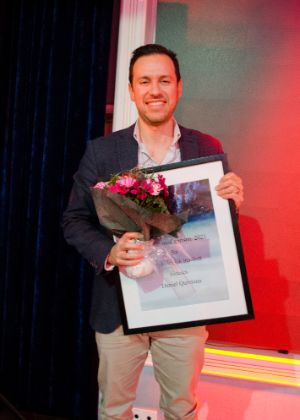
Researcher Daniel Quintana receives UiO Young Researcher Award for his research on the hormone oxytocin and its importance for physical and mental health.
Loneliness in adolescence affects future income, pioneering Norwegian study finds.
Parts of the brain decline faster from age 30, researchers at the University of Oslo find. These brain changes are accelerated in people with Alzheimer’s disease.
- Trump has created an image of himself as the strong man, who will rebuild American values and fight for the forgotten women and men. That he is true to this message is part of his strength, says Sigrun Marie Moss, a researcher who specialises in political psychology.
Despite increased information and knowledge, racism is still alive and kicking around the world. New research suggests racism could be a genetic trait.
"The quality of life in Norway is already unequally distributed. And the marginalized groups are going to increase in the wake of the Corona pandemic," says Ragnhild Bang Nes. She has conducted research into what makes us happy.
Schizophrenia and bipolar disorder are highly hereditary diseases. But is it possible to predict who will get them? That is one of the aims of Associate Professor Lars Tjelta Westlye, who is now to receive the Anders Jahre Prize for Young Scientists.
- Parents, schools and friends matter tremendously in our lives, but they don’t change who we are. We would essentially be the same person if we had been adopted at birth, says Robert Plomin.
University of California and University of Oslo researchers define the sensations associated with the emotion of ‘kama muta’.
A new study shows that Norwegians perceive feminist women as masculine, while they picture feminist men as feminine.
Damaging your body may be a way to control negative emotions. New research from UiO shows that young people also use self-harm to communicate and share difficult feelings, which they are unable to express in words.
Did you believe that young people feel like they are on top of the world? No, no, no, it’s the seniors who rules the roost.
While the differences between rich and poor have never been higher across OECD-countries, new research suggests that increased inequality can lead to higher risk of violence, racism, and extremism.
The health authorities in Norway have not yet established a clinical follow-up program for children born to drug-addicted mothers. New research emphasizes that these children have a real need for it.
We like eating meat more than the thought of eating animals. Scientists conclude that we choose not to really think about what we eat, because if we do we lose the appetite.
Electrical stimulation of the brain´s cells whilst solving challenging tasks can lead to mental overload.
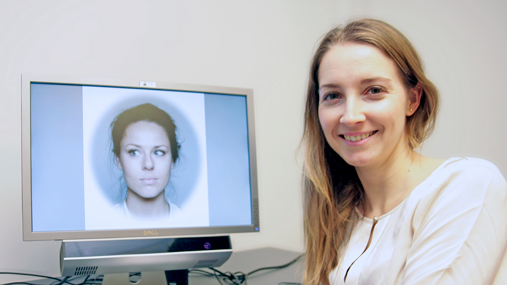
Few visual impressions can be compared to humans’ interest for faces. New research suggests that our brain rewards us for looking at pretty faces.
Instead of shifting the responsibility on to the refugees, we need to treat them as fellow citizens and include them in our everyday lives, according to researcher.