
Translated by UiOGPT
"We want to set a gold standard for conducting survey studies, from the design of questions to the publication of datasets," says Bach.
Permanent pool
The plan is to establish and manage representative online panels with groups of people who regularly fill out questionnaires. These individuals represent key groups in society, such as citizens, elected politicians, bureaucrats, or journalists.
"In this way, we can compare opinions and attitudes among one or more of these groups, both at a specific point in time and over time," he points out.
Grant from the Research Council
The project has applied to the Research Council for almost 59 million kroner. They got approval, but negotiations about the final amount are still pending.
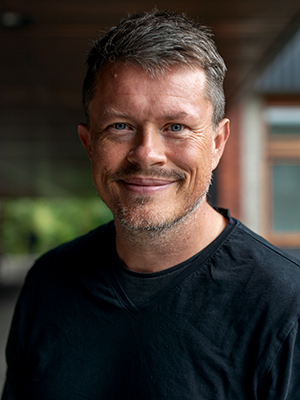
Dean of Research at the Faculty of Social Sciences, Lars Tjelta Westlye, applauds the grant and emphasizes the importance of the project being well-anchored in social sciences communities across the country.
"It is very pleasing that the Research Council supports the development of research infrastructure for social science research. It is particularly positive that the grant comes as a result of long-term planning and collaboration across institutions, and that it is intended to meet a common need defined by a unanimous national academic community," he says.
The short name is KODEM, which stands for "Coordinated Online Panels for Research on Democracy and Governance." It will be managed and coordinated from the Faculty of social sciences in Bergen, while the faculties of Social Sciences and Humanities at UiO are partners, along with other social science institutions in Norway.
Better and faster
"Among other things, we will carry out 'coordinated data collection.' This means that we directly compare opinions and attitudes of key groups in society," he explains.
"The infrastructure ensures that the data collection is of very high quality and is completed in a relatively short time, from idea to dataset."
Bach informs that KODEM is meant to function according to the 'time-sharing' model. Individuals receive questions from multiple research groups in a single questionnaire. The basic idea is to ask a limited number of survey questions or experiments and follow up with additional questions in the next data collection round.
He has extensive experience with using questionnaires in the "old days." Back then, social researchers sent lengthy questionnaires, which took a long time to answer, collect, analyze, and publish data.
"Now we simply get rid of the entire logistics we previously needed to conduct the surveys ourselves, especially with politicians, administrative employees, and journalists."
Data shop
The team also has a plan for how to make KODEM self-sustaining in the long run.
"In the startup phase, we announce seed funding for data collection, but we want to establish a funding model where researchers include data collection costs in applications to, for example, the Research Council of Norway (NFR) or the European Research Council (ERC)," says Bach, encouraging colleagues at the Faculty of Social Sciences to keep an eye on calls for data collection funds.
The professor also believes that the data acquired by the project will open up completely new issues and provide great value beyond the research communities.
"I believe KODEM has significance for the students. Here we collect a large amount of data just waiting to be used in semester assignments, master's theses, and method teaching."

Dean of Research Westlye agrees.
"Kodem will strengthen social science research in Norway and provide new opportunities for students and researchers," he emphasizes.
Large data volumes
The Faculty of Social Sciences' strategy for research infrastructure includes tools, personnel, support, and competence to handle data throughout the entire chain from collection, storage, and analysis to archiving and sharing.
"Our leading environments in brain research, for instance, depend on being at the forefront of technological developments in brain imaging. The increased use of big data and the rise of advanced computational methods and artificial intelligence have already led to an increased need for data management and computing power capabilities within the social sciences," says Westlye.
At the same time, he reminds that the faculty encompasses a great diversity of academic disciplines.
"Our disciplines and researchers have different needs. It is important that these are mapped and made visible so that we can ensure that funding schemes for research infrastructure are adapted to the needs of the researchers, even as those needs change," concludes the Dean of Research
All Good Things Come in Threes
Project leader Elisabeth Ivarsflaten and deputy leader Tobias Bach have collaborated on KODEM for a few years. They succeeded on the third application to the Research Council's national infrastructure funds. Bach is now looking forward to developing the project further.
"We believed in it and did not give up. I became very happy and thought especially about how fun it will be to work with so many incredibly talented people in the coming years," concludes the deputy leader.