The LandBruk seminar series is open to all who are interested in, or curious about the Nordic region and various forms of land use. It is possible to attend the seminars in person or on Zoom. This seminar will be held in English.
ABSTRACT
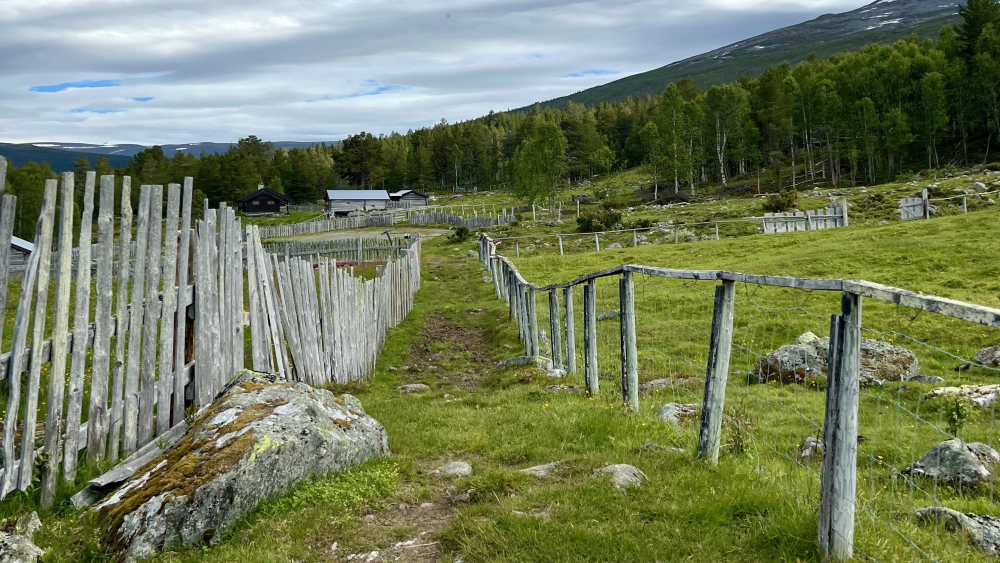
Hunting for migrating wild reindeer, domestication of ruminant animals, foraging, and sharing of land and resources were key elements to the formation of permanent settlements in the mountain valleys of Northern Gudbrandsdalen. In this talk, I discuss how permanent settlements in these mountain valleys were partially made possible through the practice of common grazing, and thus closely linking agriculture, land use, and the rural. Unlike the contemporary Norwegian animal agriculture which relies much on industrial feed from oil-seeds and grains, common grazing is enabled by the vast variation of grasses, dwarf shrubs, and herbs in commons in the outfields. Common grazing made it possible for people to cultivate the marginal soils mostly for food for human consumption, whilst using the resources in the outfields for feeding their domesticated animals, also through winter.
I argue that the practice of common grazing cemented an interconnected relationship between animals, landscapes, and peoples. However, because of an intensified centralization and industrialization of animal agriculture and commodification of animal bodies as a meat, wool, egg, and dairy, this relationship is eroding. Furthermore, alongside new politics of nature and species conservation, outdoor cultures, and suburbanization of the outfields with second home development, the practice of common grazing is becoming contentious, more challenging, and increasingly abandoned. In conclusion, I describe how multispecies relations made human livelihoods possible in rural Norway, as well as possibly leading to rural abandonment as the relations between animals, landscapes, and peoples are changing and dissolving.
About LandBruk
LandBruk (LandUse) is a group of researchers and students associated with the NorLab research group, who come together to discuss anthropological perspectives on land-use in the Nordics.