Policy brief-serien oppsummerer forskning, gir ny innsikt om aktuelle tema og gir anbefalinger til styresmaker og andre aktører.
Demokrati eller autokrati i Ungarn?
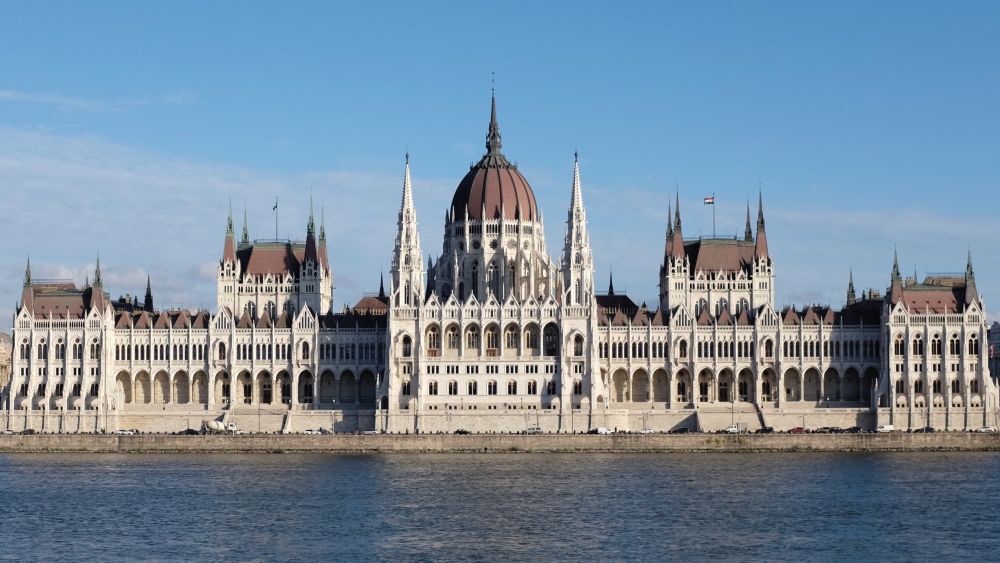
I sin policy brief “Safeguarding EU values in Hungary: Navigating next steps amid increasing repression” skriver Vlagyiszlav Makszimov, stipendiat ved ARENA, om et nytt lovforslag fra regjeringspartiet Fidesz i Ungarn.
Hovedpunktene i notatet (på engelsk):
- With the critical juncture of the 2026 general elections, the Hungarian government has intensified repressive measures targeting independent opposition voices.
- The May 2025 ‘transparency of public life’ bill’s broad scope would enable state sanctioning of any foreign-financed entity, potentially reaching beyond political and civic space actors into the private market.
- This ‘blacklisting bill’ represents a qualitative shift toward autocracy, indicative of increased regime instability commonly observed around election cycles in autocratic states.
- Current empirical research does not support fears that strong EU enforcement will provoke short-term domestic backlash against the European Union.
- Immediate action is necessary to establish legal manoeuvring space for any future democratic government in Hungary.
Nedlatende forhandlinger
Briefen “Europe Knows Best? The European Union’s patronising trade negotiations with the Global South” er skrevet av Elena Escalante-Block, postdoktor ved ARENA.
Hennes funn om forhandlinger mellom Den europeiske union og det søramerikanske økonomiske fellesskapet Mercosur er basert på en artikkel publisert i tidsskriftet Geopolitics.
Hovedpunktene (på engelsk):
- In trade agreement debates, key political actors in Germany, France, Spain, and Ireland often frame the European Union as a global moral authority. But this framing can take on a patronising tone, especially when referring to partners from the Global South.
- The EU-Mercosur case shows how moral standards are not applied equally: European leaders and political actors across different member states often present countries in the Global South as needing the EU’s help or as falling short of European values, therefore showing a moral hierarchy.
- Framing the EU as morally superior in trade negotiations risks damaging its credibility as a fair and equal partner. This can fuel resentment and complicate relationships with Global South countries.
- To build lasting partnerships, EU political actors should replace top-down moral messaging with mutual respect, shared responsibility, and open dialogue.