Background
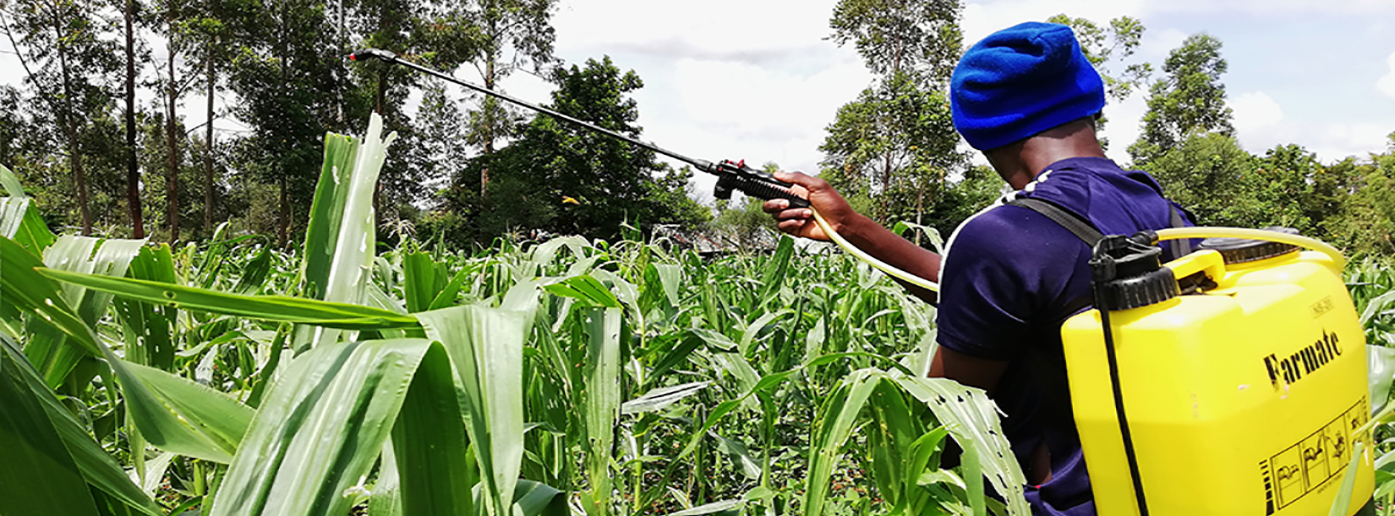
Kenya’s rapidly growing agricultural sector, which contributes a chunk of the country’s gross domestic product (GDP), has long been affected by climatic factors. Reliance on large quantities of imported agrochemicals has been a common approach to mitigating these effects. Many of the imported chemicals—mostly classified as Highly Hazardous Pesticides (HHPs) and banned in their countries of origin—contribute to environmental toxicity, elevated residue levels in food destined for domestic and international markets, and, ultimately, increased chronic disease.
In Kajiado, an arid and semi-arid region with a longstanding pastoral tradition, significant agrarian transformation is underway, driven by the arrival of newcomers and shifts in the livelihood strategies of local residents, who are culturally associated with pastoralism. Newcomers lease land for irrigated commercial horticultural farming, while local residents diversify their livelihoods by combining traditional herding with small-scale horticulture. This transformation has positioned the county as an emerging breadbasket of Kenya, supplying a substantial share of the country’s horticultural produce. At the forefront of this transformation is the intensive use of agrochemicals.
Objective
This project brings together two bodies of inquiry that have often been examined in parallel but rarely in dialogue: agrarian change and the chemicalization of farming. It examines the dynamics underlying the transformation of such agrarian landscapes, the effects of these changes on livelihood diversification, the conditions they create for the agrochemical market, and how, in turn, these dynamics shape dependence on agrochemicals in food production. By doing this, this project seeks to tell a distinct story: how transforming agrarian economies become sites where the global political economy of the agrochemical market manifests.
Methods
This project draws on 12 months of ethnographic fieldwork, including participant observation, informal and semi-structured interviews, and oral histories with farmers, agro-dealers, brokers, agriculture extension officers, activist groups, the Ministry of Agriculture, the Pest Control Product Board of Kenya (PCPB) and other relevant groups working at the intersection of agriculture and agrochemical use.