About the project
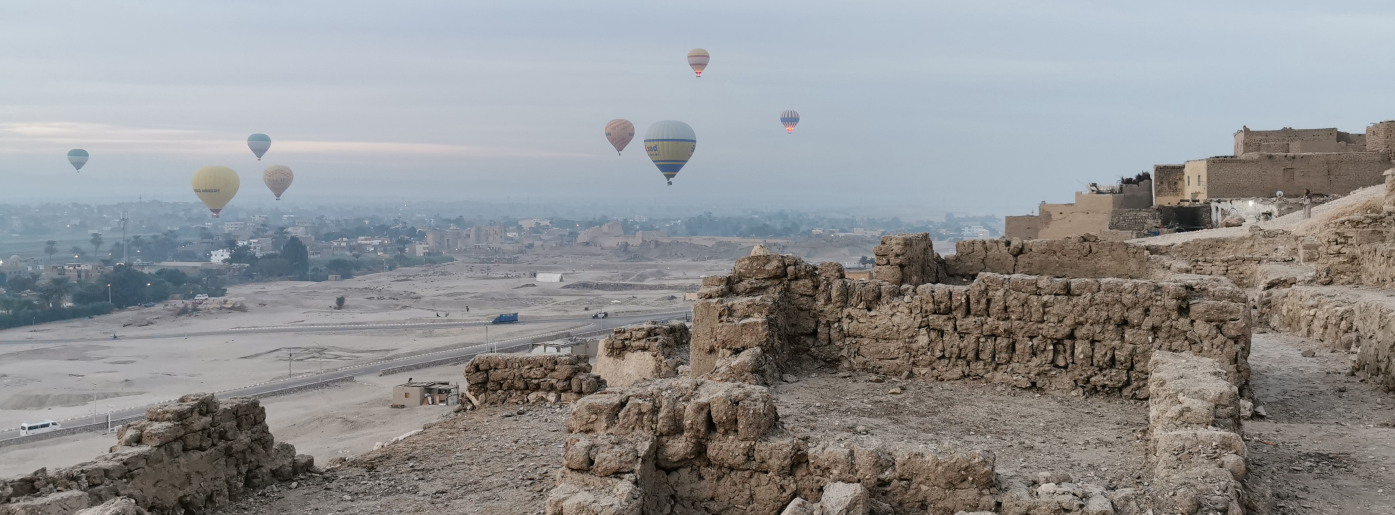
This doctoral research project explores different temporal imaginaries of the landscape, in and around the city of Luxor in Upper Egypt, also known as the World Heritage site of Ancient Thebes and its Necropolis. It looks at the making of the “world’s largest open-air museum”, asking what happens in the edges of this heritage machinery. What is heritage, really, how is it created, who is it conserved for, and what are the consequences? Following these questions, this research project explores different ways that the land and landscape play in people’s lives, particularly studying the role of housing and architectural developments.
Objectives
Through ethnography from an Upper Egyptian village and its surroundings, this doctoral research project seeks to show how different ways of thinking about and relating to time, affects how the landscape is manoeuvred: in making history, in telling it, in creating and conserving heritage, in current sustainability movements and with environmental concerns, in caring for a site, for a nation or for a family, and in making a landscape – and a home - for the future. As such, the project aims to tell a different narrative about this ancient Necropolis in the south of Egypt, focusing on the lived lives, oral histories, knowledges, and memories of the landscape that the local communities inhabit.
Methods
The project is based on 16 months of ethnographic fieldwork in a village in Upper Egypt. The research methods are participant observation, and informal and semi-structured interviews with the inhabitants of the area living close to or within the heritage site, and with Egyptian and international workers of the heritage and archaeological sector.