Abstract
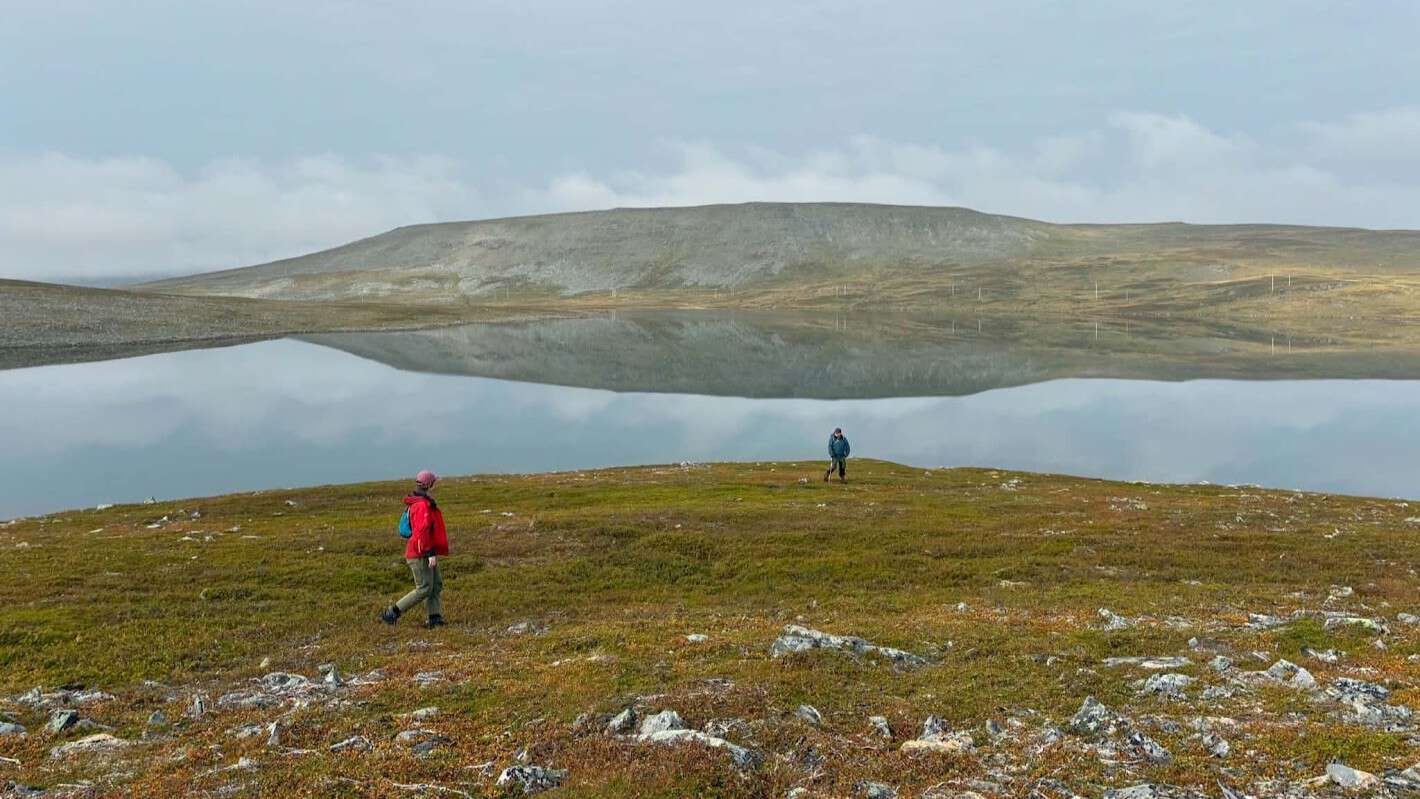
Currently there is an intensive mapping of cultural heritage in Finnmark, which come as a direct response to ongoing wind farm planning in the region. At the Porsanger peninsula two wind energy projects of up to 110km2 are proposed with 250-metre-tall turbines. The peninsula is a reindeer grazing area, and by locals it is also seen as a sacred landscape.
This presentation explores what happens when Sámi sacred places are registered as cultural heritage amid expanding wind power development in Finnmark. How is «the sacred» produced within the current cultural heritage regime? Drawing on fieldwork with Sámi Parliament archaeologists, conversations with members of the reindeer herding community and local knowledge holders, analysis of heritage databases and planning documents I trace the translational process of turning sacred landscapes, and sacred sites into site-bounded, registered coordinates with a 5-metre protection radius. Registration of sites is an important step in documenting, and protecting cultural heritage, but it also has a reductive side: it can fragment sacred landscapes into isolated entries, as the relations between places, stories and beings are hard to capture within the current regime.
The presentation is based on the third article for Friisberg Larssen's PhD project which is a work in progress. She is happy to share ideas and discuss with the LandBruk crowd!
This will be a hybrid seminar with in-person attendance at SAI (see details at the top) and digitally on Zoom.
Language
The seminar will be held in English.
Bio
Marianne Friisberg Larssen is a doctoral research fellow in the Study of Religion at the Department of Culture, Religion, Asian and Middle Eastern Studies at the University of Oslo.
Her doctoral research project focuses on Sámi resistance against wind turbine expansion in northern Norway and how certain actors are mobilizing narratives about “the sacred” and sacred landscapes in their advocacy strategies.
About LandUse
LandBruk (LandUse) is a group of researchers and students associated with the NorLab research group, who come together to discuss anthropological perspectives on land-use in the Nordics.