This text has been translated with the assistance of UiO GPT.
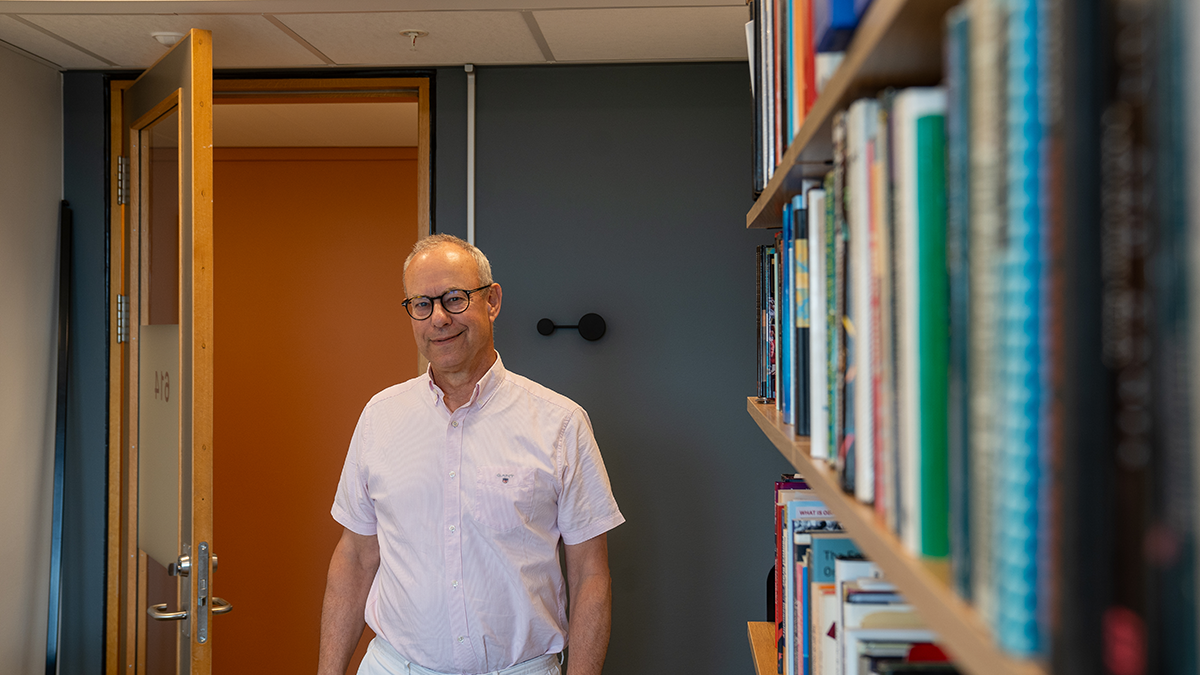
– I think it was the timing that made the application go through, says Scott Gates.
He is a professor at the Department of Political Science and will now conduct the project Waging of War (WOW) supported by The European Research Council (ERC). The project will research how internal organization affects the waging of war, and how the wars, in turn, impact the organizations involved.
– Unfortunately, war is very relevant in the world today, and this project presents a new approach to an important issue, Gates says.
The waging of wars is changing
To illustrate the starting point of the project, Gates uses an example from Syria.
– A rebel group in Syria was struggling to recruit new members and was at risk of being overpowered by Al-Qaeda and ISIS. But then, they changed their ideology – from radical Islamism to Sunni Muslim nationalism – as well as their recruitment standards. As a result, they managed to recruit more members and achieved significant military success, Gates explains.
The group's reorganisation through changes in ideology and methods led to a transformation in the warfare. This represents the circular dynamics at the core of the project:
– The organisations influence the warfare, and the warfare influences the organisations, Gates explains.
The professor's previous research will also be expanded through the WOW project. He is currently doing a study on Russia's attacks on health care facilities in Ukraine and plans to further investigate similar attacks in Israel and Sudan. These kinds of attacks are particularly concerning because they violate international agreements such as the Geneva Conventions and the Rome Statutes.
– Syria was the first country to attack hospitals, thereby disregarding these agreements. Now, government forces in both Israel, Russia, and Sudan have done the same, Gates notes.
He is worried that the research may indicate a decline in respect for human rights and the Geneva Conventions in warfare, potentially resulting in more brutal conflicts in the future.
– I hope the research can reveal that the attacks on health care facilities are deliberate, Gates says. By gaining new and generalisable insights into how wars are waged, theories can be developed and evaluated, which can potentially inform future policy.
Interdisciplinary collaboration
The WOW project will span over five years and includes researchers from institutions such as the University of Oslo – including Håvard Strand and Andres Forø Tollefsen – and UC Berkeley, University of Mannheim, and Peace Research Institute Oslo (PRIO).
– Louise Olsson at PRIO has researched the role of gender in conflict and how women influence war from within organisations, Gates comments.
Also part of the team is Kaushik Roy, a historian with whom Gates has previously co-authored several books. He emphasises that this interdisciplinary collaboration is novel to the field.
– Much previous research has been so-called “siloed research”. Researchers focused solely on their topic, such as child soldiers or women's impact on recruitment, without looking into each other's work, he explains.
The WOW project aims to change that:
– We intend to examine multiple disciplines and dynamic changes over time, says Gates.
He seeks to create a more comprehensive picture of the dynamics of warfare, partly by researching a wide range of conflicts. The wars in Ukraine, Gaza, Nepal, Syria, Colombia and Sudan are amongst the research objects.
Bridging research gaps
– This is fantastic news! We sincerely congratulate Scott Gates, says Elin H. Allern, head of the Department of Political Science (ISV) about the grant award.
– The grant is awarded an important research project aimed at bridging fundamental knowledge gaps in conflict studies, and it will further strengthen our research environment in this area, she says.
Allern emphasizes the significance of success in ERC applications for ISV:
– Such a grant confirms that our staff are at the forefront of research internationally, and it provides us with the opportunity to recruit new, outstanding research talents.
The faculty’s dean, Anne Julie Semb, agree that the grant is a significant achievement:
– It is immensely rewarding that the faculty's staff excel in such tough international competition. We celebrate this achievement alongside Scott and ISV and look forward to following the project, says Semb.