Join Zoom Meeting
Abstract
This presentation explores the diverse worlds of chickens in southwest China. Drawing on ethnographic research in Qingjiang and several neighbouring Miao villages in southeast Guizhou, it traces chickens across courtship and marriage, divination and funerals, protective rituals, house construction, and cockfighting. Through close descriptions of these practices, I show how chickens are repeatedly brought into situations of uncertainty and transformation - when relations are unsettled, boundaries must be crossed, or one social or cosmological state becomes another.
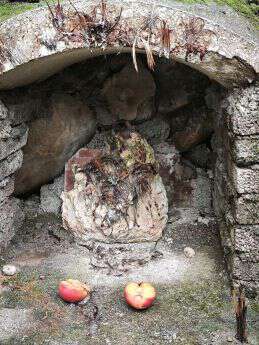
Credit: Richard Fraser
Rather than approaching animals primarily through their representational meanings - asking what they symbolise or stand for - I ask instead what chickens do within these processes of transformation.
Building on multispecies and more-than-human approaches, I develop the concept of threshold beings to describe nonhuman animals recruited when boundaries must be crossed, relations established, or transformations secured. I combine this with the concept of ritual infrastructure to show how animal capacities become materially embedded through their bodies and substances - feathers, blood, and eggs - in houses, ritual objects, and apotropaic forms, allowing ritual efficacy to endure beyond the ceremonial event.
In the process, I argue that chickens are not simply representations or symbols of transformation, but active participants in the material and relational processes through which transformation occurs.
Bionote
Richard Fraser is an anthropologist and Professor in the Anthropology Section of the Department of Social Sciences at UiT – The Arctic University of Norway. His research focuses on multispecies anthropology, human–environment relations, and the social and cultural dimensions of ecological, infrastructural, and zoonotic change. He is particularly interested in how people, animals, landscapes, and other-than-human beings are brought into relations through livelihood, ritual, resource use, and practices that make visible otherwise unseen worlds.
Since 2007, he has conducted long-term ethnographic research in China and Mongolia, focusing on pastoralism, hunting, human–animal relations, materiality, and more-than-human worlds. More recently, he has begun research in Southwest China on multispecies relations, ritual life, and zoonoses.
Professorr Fraser is currently Principal Investigator of the ERC-funded ZOONOSIS: Zoonotic Anthropology and Multispecies Infrastructures Along China's Belt and Road (2026–2031) and the NordForsk-funded SPECIES: Sustainable Multispecies Relations in the Arctic (2025–2028).
READ MORE: Richard Fraser - Job description