Abstract
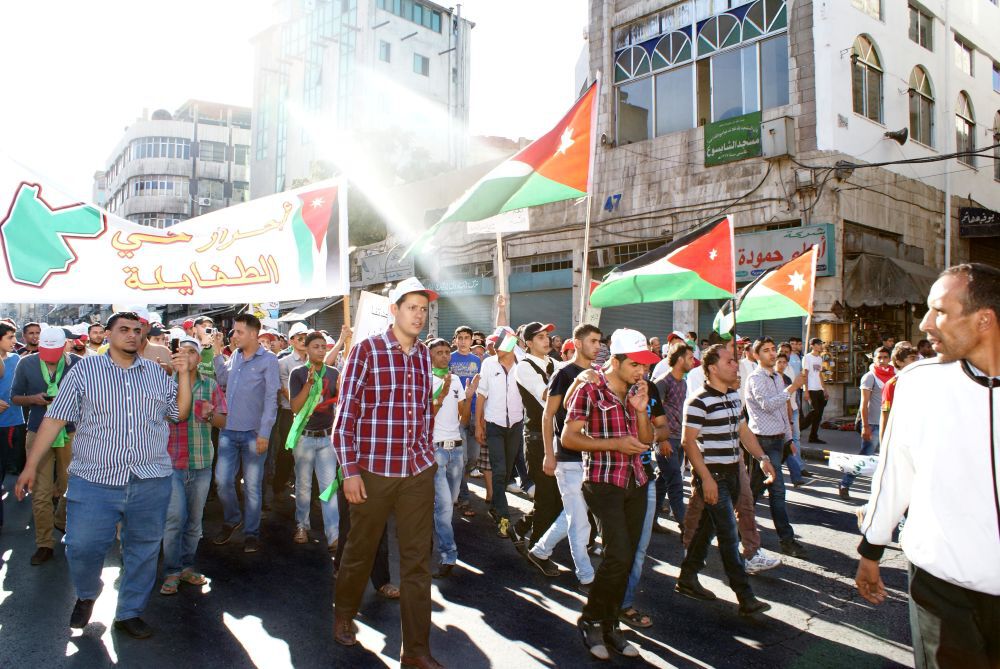
Scholars of populism and mass movements have turned to affect to explain how vital energies that exceed referential language and social roles become potentialities to be invested in various political projects. However, they rarely discuss the particular direction this investment takes beyond notions of “democratic” leaderless multitudes vs. "unruly" crowds who may direct their energies towards a leader figure. In this paper, I revisit the place of affect in populism through an ethnography of activism in Amman, Jordan, during the Arab Spring. Focusing on how populist activists shifted their affective investments from the figure of the King to the abstract entity of the Patrie, I suggest anthropologists should pay attention to how activists reintegrate affective outbursts into their life narratives as a process of reasoning and ethical self-fashioning, which is central to any political action.
Bionote
Yazan Doughan is an Assistant Professor of Anthropology at LSE with a PhD from the University of Chicago. His work straddles the linguistic and socio-cultural branches of the discipline, with close engagement with social and legal theory, conceptual history, and moral philosophy. Blending ethnographic, genealogical, and historical approaches, his research focuses on the question of social justice in present-day postcolonial contexts, with Jordan as a primary field site.
READ MORE: Dr Yazan Doughan - the London School of Economics and Political Science