This text has been translated from Norwegian with the assistance of GPT UiO.
– For me, there was no doubt. We simply had to have this agreement!
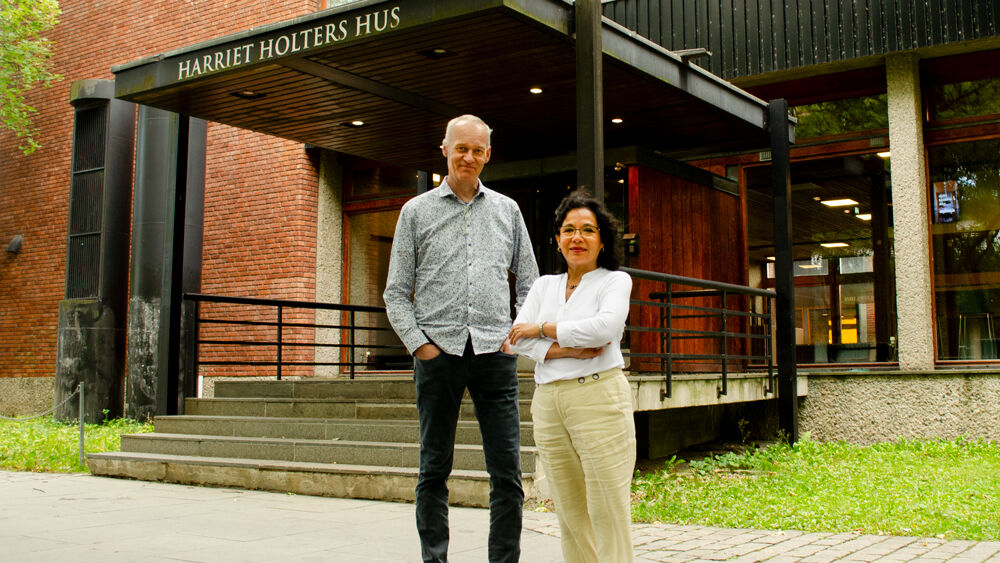
This is according to Jemima García-Godos from the Department of Sociology and Human Geography (ISS), who was personally present at Universidad Nacional de Colombia (UNAL) in Bogotá and ensured the agreement was signed.
– Colombia is a very exciting country for both students and researchers, and UNAL offers many interesting subjects for socially engaged students. An exchange experience there is truly rewarding, she emphasises.
According to the international coordinator at the SV faculty, Tron Trondal, the agreement facilitates the exchange of bachelor and master's students, as well as PhD candidates and researchers. However, exchange opportunities will be announced at the beginning of next year for exchanges scheduled for the autumn semester of 2026.
– I am confident that students will take advantage of the agreement. When the agreement was under the HF faculty's jurisdiction, they sent students from several of our bachelor programmes, including Development Studies and Sustainability, Human Geography, Political Science, and Sociology, as well as from the master's programme in Political Science, he says.
Exciting life experience
One of those who seized the opportunity is PhD candidate Peder Ressem Østring, who travelled to UNAL in Bogotá in 2018 while pursuing his bachelor's degree in Human Geography at ISS.
– My stay in Bogotá in the autumn of 2018 was one of the most exciting and educational experiences I have had as a student, says Østring.

– I was introduced to academic disciplines I couldn't study in Norway, while also gaining valuable perspectives on how the world looks outside Europe.
He believes that all students studying human geography or other social sciences would greatly benefit from participating in such an exchange programme.
– I wholeheartedly recommend other students to study at UNAL! Colombia is an amazing country with so much diversity to offer – in both culture and nature.
– The country is currently in a very exciting political period, having achieved a comprehensive peace agreement that ended the longstanding civil war. Additionally, the current government there has shown inspiring ambitions in their work with the transition to green energy. It is very pleasing that UiO has now resumed the agreement they have with UNAL, Østring affirms.
Nine campuses and no tuition fees
– I hope that students are inspired to spend a semester in Colombia. The agreement can be utilised at all nine campuses. One doesn't have to choose Bogotá but can opt for Amazonía, Medellín, or La Paz, if they prefer. There are plenty of possibilities, García-Godos elaborates and adds
– Realistically, we envision up to 5 Norwegian students per year, and an equivalent number from Colombia.
She also stresses that the exchange agreement will make it easier to establish institutional connections with UNAL for research stays and collaboration.
The agreement lasts for five years, and a public university in Colombia does not require tuition fees. However, personal travel and living expenses must be covered.
Bridging the gap
But the agreement was close to being abandoned due to misinterpretations of UiO's documentation requirements, which, according to García-Godos, stemmed from language misunderstandings and differences in administrative culture between the educational institutions.
– I referred to similar documentation requirements on UiO's Norwegian websites, highlighted specific points, and explained the content in Spanish. Eventually, we were able to proceed with finalising the agreement and signing it in May this year.
While on a research sabbatical in Bogotá, García-Godos assisted in finalising the agreement. A human geographer originally from Peru, she researches Colombia and collaborates with researchers at UNAL.
She tels that she received helpful tips from colleagues there on who to contact to move the process forward.
– I believe that my understanding of Latin American administration and bureaucracy, good advice from my Colombian colleagues, and experience in educational leadership at ISS, contributed to resolving the issue.
Opened doors
Exchange leader Tron Trondal supports her and emphasises the importance of academic involvement when developing such agreements. He believes that academic collaboration and contacts should form the foundation of exchange collaboration, noting that this is how student exchanges originally started. Later, the work with student exchanges has increasingly become an administrative concern, according to Trondal.
– Academic staff contribute both to quality assurance of the agreements and serve as important door openers and relationship builders with partner universities.
– Jemima's great efforts here serve as an excellent example. She specifically helped in ensuring we reached an agreement in the interpretation of documentation requirements by UNAL. The agreement could have actually stalled on technicalities, which she managed to overcome, he concludes.
-
Read more on Student mobility