The March for Wedding Anniversaries and «Real Families»
It should come as no surprise that hostility towards queer and trans people manifests clearly among political extremists and religious fundamentalists. In the worldview of the far right, Jews, feminists and so-called «Cultural Marxists» are responsible for breaking down the nuclear family and traditional gender roles, which will ostensibly lead to low birth rates (among Whites) and «population replacement». When the Nazis of the Nordic Resistance Movement (DNM) marched in Kristiansand in 2017, they advocated for «crushing the gay lobby». The Nazi march caused increased concern among queer people.
Liberal and progressive ideas about gender diversity are viewed by most extremists as the ultimate signs of «degeneracy» and the «unnatural» corruption of society. The reactionary moral panic around gender is evident in a research interview I did with a DNM activist: «The heresy of expressing that there are multiple genders is to proclaim perverse ideas that sexualise children and normalise paedophilia», he said. Another member believes that Pride parades should be replaced with «marches for gold, silver and diamond wedding anniversaries» and «real families». In the latter quote, the notion of «real families» can be understood through the lens of what Elisabeth L. Engebretsen refers to as «scientising gender». She argues that that anti-gender campaigns mobilise «gender» and «science» to present trans and queer populations as counter to biological «facts» and moral values, and thereby as threats to the (gender- and heteronormative) social order.
In an article titled «What Characterises Anti-Gender Mobilisation?», Celestine S. Kunkeler and Iris B. Segers explain that such reactionary moral panics are deeply rooted in anti-feminism, colonialism and capitalism. As an example, anti-feminist activists in the early twentieth century feared that women’s involvement in the public sphere would lead to social decline. They therefore demanded the restoration of «true» masculinity and femininity for men and women. Kunkeler and Segers also describe that, historically, fears of moral and social decay, often perceived through sexist and transantagonistic norms of gendered and sexual morality, have «manifested as exterminatory projects against diverse populations, such as Hijra in colonial India».
In her book «A Short History of Trans Misogyny», Jules Gill-Peterson argues that structural opposition towards trans women in particular combines elements of homophobia, misogyny, racism and class discrimination. She demonstrates the ways in which exclusionary transantagonistic social structures historically have pushed trans people into informal economies such as sex work, leading to financial insecurity, poor access to public services and high vulnerability to violence. Gill-Peterson’s argument is not that trans people suffer from being trans per se, but that their transness forces them into precarious and disadvantaged socio-economic positions. This is particularly the case of Black and brown sex worker trans women.
The Growing Anti-Gender Movement
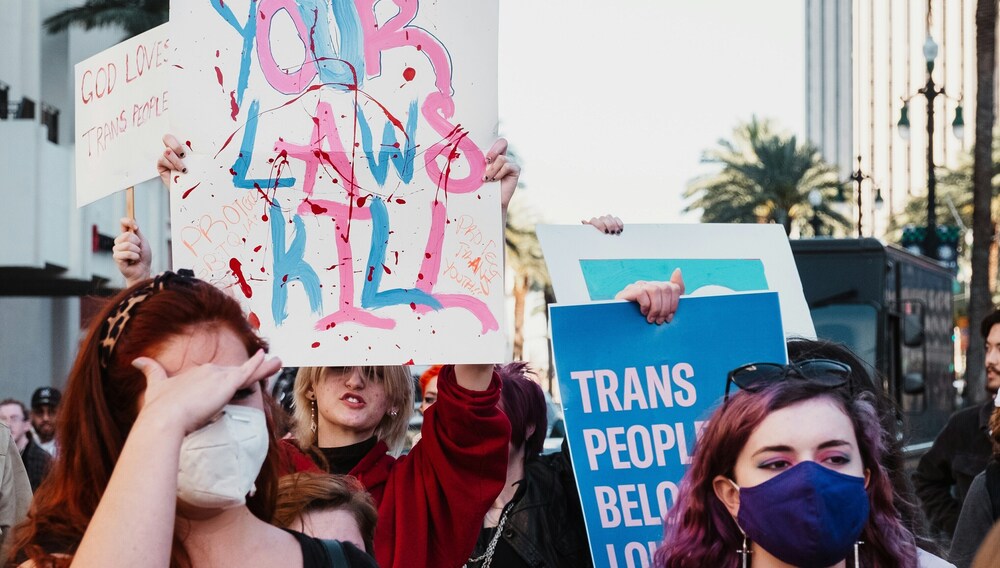
Anti-trans attitudes and behaviours are not, however, reserved for extremists. Indeed, there is an overlap between the rhetoric on trans people used by extremist milieus and the general public, particularly when it comes to suggesting that informing school children about trans-identities and so-called «gender ideology» is a form of «indoctrination», «child grooming», «sexualisation of children» and «normalisation of paedophilia». Trans people also face opposition and hostility from established politicians, mainstream media, anti-trans feminists, conservative religious groups, parts of the LGB community and governments. Until 2016, castration was required to change legal gender in Norway. This requirement is still in place in many European countries. In several places in the United States, murderers can demand criminal acquittal for killing a trans person by claiming that they lost their sanity upon «discovering» that the person was trans. This is referred to as the «trans panic defence».
The International Lesbian, Gay, Bisexual, Trans and Intersex Association (ILGA) publishes annual «rainbow maps» that examine queer human rights in Europe. The review for Norway states that trans people continue to be the target of a «rapidly growing anti-gender movement». This is highlighted in the joint report by the Norwegian Prosecuting Authority (Riksadvokaten) and the National Police Directorate (Politidirektoratet), which show a threefold increase in the number of reports of hate speech based on «sexual orientation and gender identity or gender expression» after the mass shooting on 25 June 2022, compared to the previous year.
There also seems to be an increasing pressure against trans people on the internet. A report on queer people and social media demonstrates that between 2018 and 2022, the number of tweets from Norwegian users about the «trans debate» increased sixteen times (from 1,485 messages to 23,465). The report finds that the proportion of supportive messages fell from fifty-five per cent in 2018 to thirty-five per cent in 2022.
According to the 2022 attitudes survey of the Norwegian Directorate for Children, Youth and Family Affairs (Bufdir), approximately one in three Norwegians would have a problem with their own child being trans or not identifying as a boy or girl. In addition, one in ten agree with the statement «when I think about trans people, I shudder». The «Queer in Agder» survey finds that participants seem to «accept» that negative attitudes exist, which can lead to minority stress and poor physical and mental health. The researchers summarise that queer people appear to «tolerate the injustice that targets them».
Challenges Faced by Trans People Are Due to Transantagonistic Structures, Not Transness
Gill-Peterson argues that the situation of many trans people has changed remarkably little in the past fifty years. ILGA has criticised Norway for conversion therapy, for not recognising a third legal gender category and for not having adequate decentralised health services with actual co-determination for trans people. A report from the Nordland Research Institute (Nordlandsforskning) shows that trans people have low confidence in public health services, which may be connected to poor experiences with health services and lack of access to gender-affirming care.
In 2020, trans people (number of respondents: 232) were included in a survey on living conditions for the first time in Norway. Trans people appear to have consistently poorer physical and mental health than cis people, and be more exposed to bullying, discrimination, threats, abuse and violence. The study shows that:
- Half of the respondents have been harassed at work or at their place of study.
- Several have reduced ability to work due to mental (fifty per cent) or physical (forty per cent) health problems.
- Many have been ashamed of their gender identity or gender expression (between a third and half of the respondents), have tried to hide their gender identity or gender expression (between forty and sixty per cent) and refused to be open with their family (one in three) or the healthcare system (over fifteen per cent).
- Seven in ten have experienced bullying in primary school.
- One in four have experienced direct threats of violence, and about the same number have been assaulted in the past five years.
- Many say they have either been pressured (about half of the respondents) or forced (over a third) into sexual acts.
- Three quarters have had suicidal thoughts, and one in three say they have attempted to kill themselves.
It is important to emphasise that the disproportionate challenges in terms of living conditions faced by trans people compared to cis people are a result of persistent transantagonistic structures and attitudes, not their transness per se. The government’s action plan for gender and sexual diversity states that a country is not truly free and democratic until all its citizens can «live free, independent lives». The implications of this are manifold as there is a need for policies that promote inclusivity and protect trans rights both in the educational, cultural, occupational, health, legal and police sectors.
Importantly, in light of a growing anti-gender movement intent on disenfranchising trans people, it becomes imperative to focus on recognising gender diversity and ensuring that trans individuals can live free from oppressive structures and violence. This way we can pave the way for a more equitable and democratic society where all individuals can thrive.
This is an edited version of an op-ed that was originally published in Klassekampen. See link: https://klassekampen.no/artikkel/2024-06-25/ekkoet-etter-25-juni-terroren